National Wildlife Day is a day that is celebrated biannually on February 22 and September 4 to bring awareness to institutions that allow for the conservation of endangered species, and those species that are endangered. Started in 2005 by animal behaviorist and philanthropist Colleen Paige, the goal of celebrating National Wildlife Day twice per year brings double the awareness to the importance of the conservation of endangered species and support to institutions that contribute to this idea. This day is different than World Wildlife Day, previously celebrated on March 3 of this year, in that World Wildlife Day is the anniversary of the signing of the convention on International Trade in Endangered Species (CITES) of wild fauna and flora, a document maintaining the survival of species that are internationally traded [1,2].
With National Wildlife Day, we will highlight three species at the zoo that are endangered and what we do to protect them.
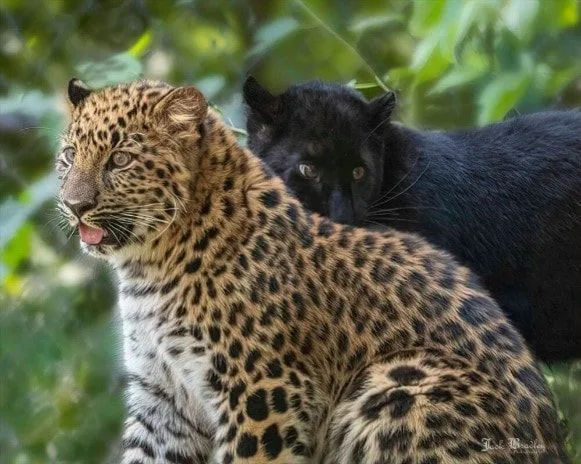
Amur Leopard ( Panthera pardus orientalis )
Photo Credit- Jack Bradley
Amur Leopards are a critically endangered species that is native to the Amur River Valley, an area on the China- Russia border. These cats have become very rare due to habitat loss and destruction, decreasing living areas and food sources, and over-hunting. With 80-100 wild Amur Leopards left in the wild, it is imperative that the zoo participates in the Amur Leopard Species Survival Plan (SSP), which has the goal of maximizing genetic diversity through AZA institutions by breeding individuals to increase wild populations. Connecticut’s Beardsley Zoo had a successful birth of two Amur Leopard cubs, Kallisto and Orion, four years ago, with Kallisto being an exceptionally rare individual due to her melanism (black coloring) [3, 4].
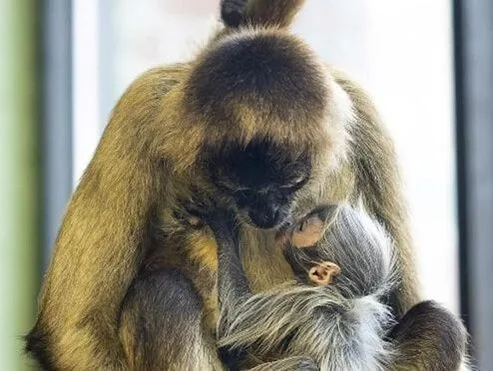
Black-Handed Spider Monkey (Ateles geoffroyi geoffroyi)

Black-Handed Spider Monkeys are an endangered species native to forests in Mexico and Central America. This arboreal primate species uses their hooked hands, which lack thumbs, and their prehensile tails to navigate the rainforests, however, with the loss of trees for agriculture and living spaces for humans, this is unfortunately causing a population decline. While not a part of the SSP, we recently welcomed a fifth member to our troop at the end of August, a significant step in bolstering the Black-Handed Spider Monkey population [5].
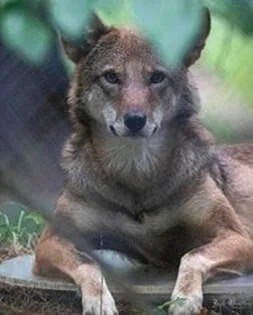
Red Wolf ( Canis rufus )

Photo Credit- Jack Bradley
Red Wolves are a critically endangered species found only in the Albemarle Peninsula in North Carolina. Their previous range included central Texas and southern Pennsylvania down to Florida. There are 16 known individuals in the wild, that are tracked by collaring research, and an estimate of up to 30 individuals total, in the wild. This decrease in species is due to hunting, trapping, poisoning, and hybridization with coyotes. Connecticut’s Beardsley Zoo has contributed eight wolf pups in the past through the Red Wolf SSP, and with the new female wolf Taylor being introduced to our male Peanut, we hope to add more in the future [6].
What can you do?
Visit AZA-accredited zoos and aquariums
Donate to conservation programs
Purchase an adoption box at the zoo, where money goes toward these conservation programs
https://www.beardsleyzoo.org/animal-sponsorship.html
[1]-
http://www.nationalwildlifeday.com/
[2]-
https://www.beardsleyzoo.org/blog/world-wildlife-day-march-3-2023
[3]-
https://www.beardsleyzoo.org/amur-leopard.html
[4]-
https://www.aza.org/species-survival-plan-programs?locale=en
[5]-
https://www.beardsleyzoo.org/spider-monkey.html
[6]-