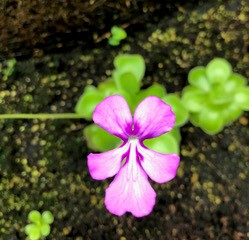
(Pinguicula)
Butterwort
The Butterwort (Pinguicula) is a small herbaceous plant that produces rosettes of flat leaves with upturned margins. The leaves are soft greenish-yellow and have a slightly greasy, buttery feel, inspiring its Latin name, which means “little greasy one.” Some gardeners even use Butterwort as a natural pest control plant.
The leaf surface is covered with tiny, sticky hairs that trap small prey such as gnats, fruit flies, and springtails. As the trapped prey struggles, sessile glands secrete a liquid of enzymes and acids that rapidly dissolve the insect, allowing the plant to absorb a nutrient-rich “soup” that supplements its growth.
In spring, Butterworts bloom with yellow, pink, purple, or white flowers, which appear atop tall, spindly stalks well above the leaves. The genus Pinguicula includes over 80 species, varying in size from 2 to 12 inches in diameter. Plants from colder climates hibernate as small buds during winter, while Mexican species survive the subtropical dry season as non-carnivorous succulents.
Native Range: Butterworts are found across the Northern Hemisphere from Siberia to North America, extending south to Central and South America. Mexico hosts the greatest diversity of species.
Native Range
Butterworts are found across the Northern Hemisphere from Siberia to North America, extending south to Central and South America. Mexico hosts the greatest diversity of species.
Habitat
These plants typically grow in nutrient-poor, alkaline soils, often in wetlands, meadows, or rocky outcrops, depending on the species.
Butterworts are primarily pollinated by hummingbirds.
Life Span
Varies depending on genus and habitat.
Status
Conservation status varies by species and region, with some thriving in the wild while others are more vulnerable.