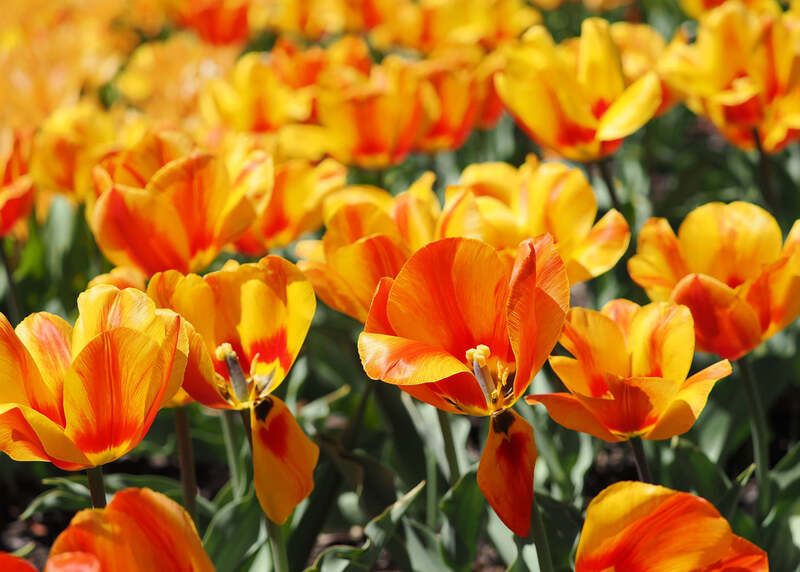
(Tulipa )
Tulips
Tulips (Tulipa), originally native to Turkey and Central Asia, are now found worldwide and are most closely associated with the Netherlands. At Connecticut’s Beardsley Zoo, tulips bloom across the grounds from mid-April through mid-May, showcasing a variety of vibrant colors. These spring-blooming bulbs are known for their ability to respond to temperature—opening in warmth and closing in cooler conditions, a process called thermonasty. Tulips grow from energy-storing bulbs and can return year after year when properly cared for.
Habitat
Tulips are native to mountainous regions with temperate climates. They thrive in environments with long, cool springs and dry summers and are commonly found in meadows, steppes, and gardens.
Family Life
Tulips begin growing as the soil thaws in early spring, with blooms appearing by April and lasting into mid-May. After flowering, leaves must remain until they brown to help store energy for future growth. Tulips are primarily self-pollinating but may also be cross-pollinated by insects, wind, animals, or humans.
Life Span
A tulip bulb can live and rebloom for 1 to 10 years, depending on the species and growing conditions.
Status
Not endangered; widely cultivated and naturalized around the world.