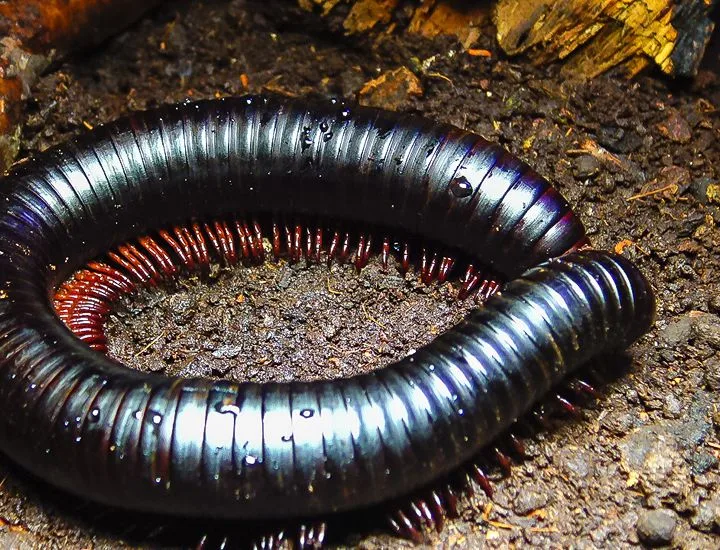
(Archispirostreptus gigas)
African Giant Millipede
Physical Description
African Giant Millipedes can grow up to 15 inches long and have a rounded dark brown or black exoskeleton. As adults, they usually have 30 to 40 body segments, and because they can add segments during molts, their total number of legs can actually change over time. These millipedes have four legs per body segment, along with two antennae and two simple eyes. Their eyesight is poor, so they rely mostly on their antennae to navigate. They also use much of their body to smell and taste the world around them.
Where They Live
African Giant Millipedes are found in parts of western and southern Africa, including Kenya, Mozambique, South Africa, and Tanzania. They live on forest floors, where they can hide among leaves, branches, and other woody debris. Warm, humid, dark spaces are their favorite, especially burrows beneath the soil.
What They Eat
African Giant Millipedes are detritivores, which means they help clean up the forest floor by eating decomposing plant material. That may not sound glamorous, but it plays an important role in the ecosystem by helping break down organic matter and recycle nutrients back into the soil.
Life & Family
Female African Giant Millipedes lay hundreds of fertilized eggs in hollow nests burrowed beneath the soil. The eggs are protected by a tough outer layer and usually hatch after about three months. Once they hatch, the young are on their own. There is no parental care, and they begin growing and molting as they develop.
Social Life & Survival
African Giant Millipedes may move slowly, but they know how to protect themselves. When threatened, they can curl into a tight spiral to shield their softer underside. They also produce a foul-smelling defensive fluid from openings along each body segment. This secretion helps discourage predators and makes the millipede a much less appealing meal. African Giant Millipedes typically live 5 to 7 years in the wild and can live up to 10 years in human care.
Status
Least Concern