(Alligator mississippiensis)
American Alligator
Physical Description
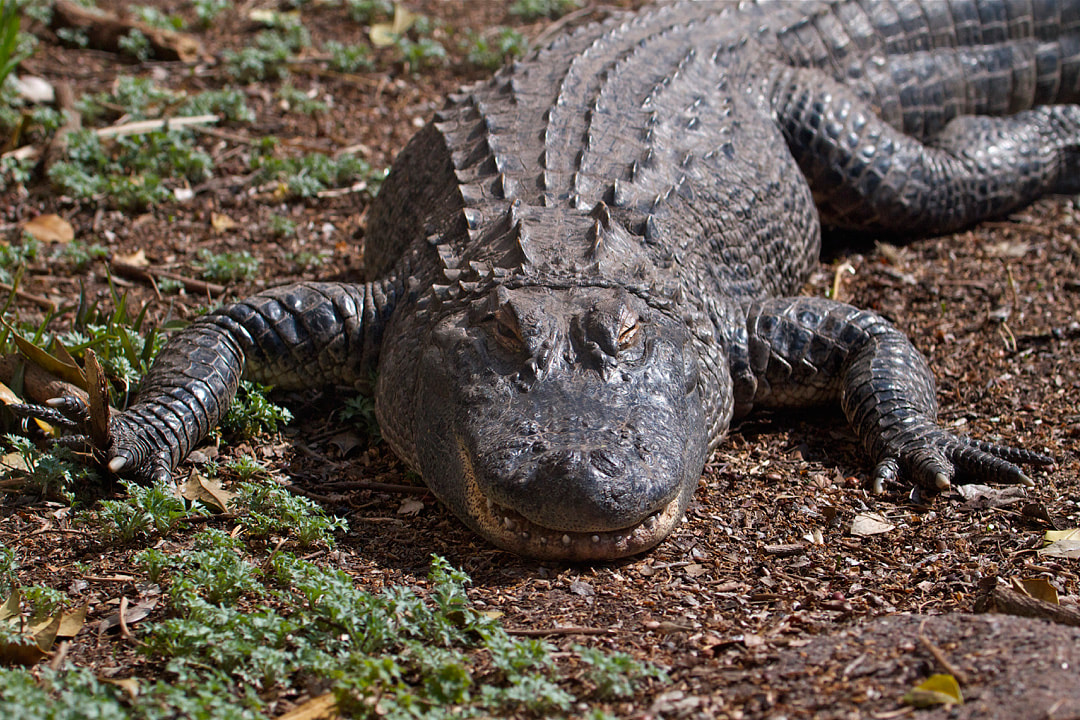
American Alligators may hatch at only 6 to 10 inches long, but they keep growing throughout their lives. Adults can reach lengths of 13 to 20 feet and weigh anywhere from 400 to 2,000 pounds. Young alligators have yellow stripes across their gray bodies, which help them blend in with tall grasses and aquatic plants. As they grow older, those markings fade and their color becomes more solid.
Where They Live
American Alligators live in a variety of wetland habitats, including swamps, bayous, rivers, lakes, canals, and even golf course ponds. When females build nests for their eggs, those nests can later provide shelter for many other species. Because of this, American Alligators are considered a keystone species, meaning they play an important role in supporting their ecosystem. American Alligators are found throughout the southeastern United States, from coastal North Carolina south to the Florida Keys and west to Texas.
What They Eat
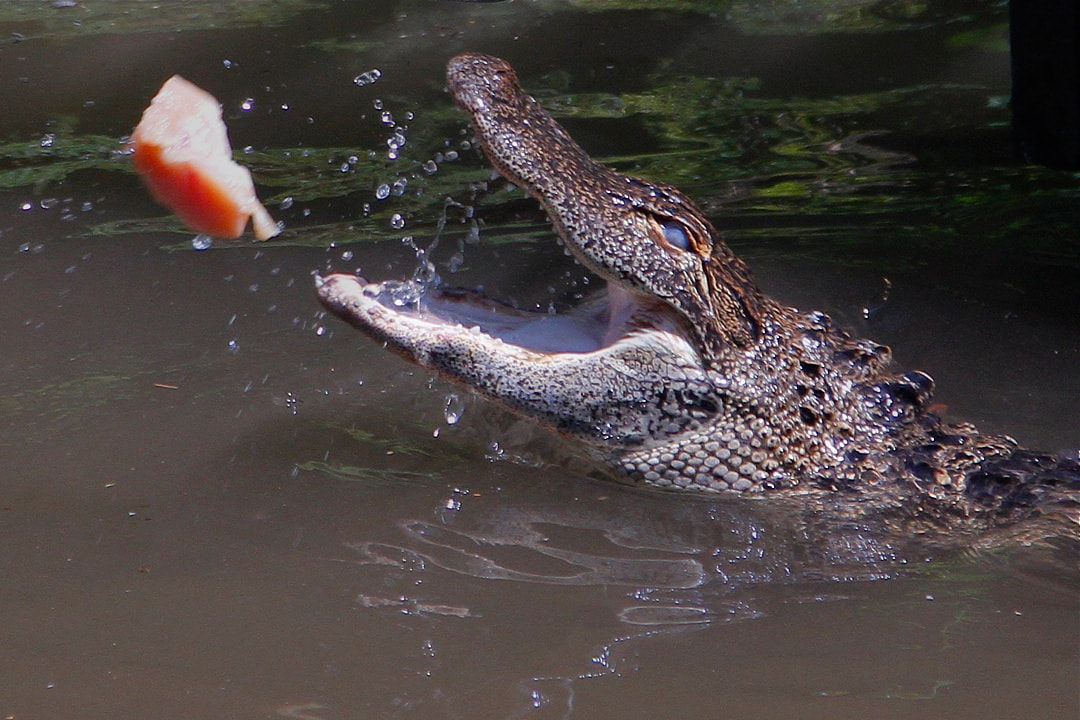
American Alligators are carnivores and apex predators. Their diet includes insects, frogs, fish, turtles, mammals, and sometimes even other alligators.
Life & Family
Female American Alligators lay about 25 to 60 eggs in nests made of damp vegetation and mud. They protect the nest from predators for two to three months until the eggs hatch. After hatching, young alligators begin hunting on their own, but their mother may continue to watch over them for a period of time. Males are more solitary and do not help raise young. American Alligators can live 50 years or more.
Built to Survive
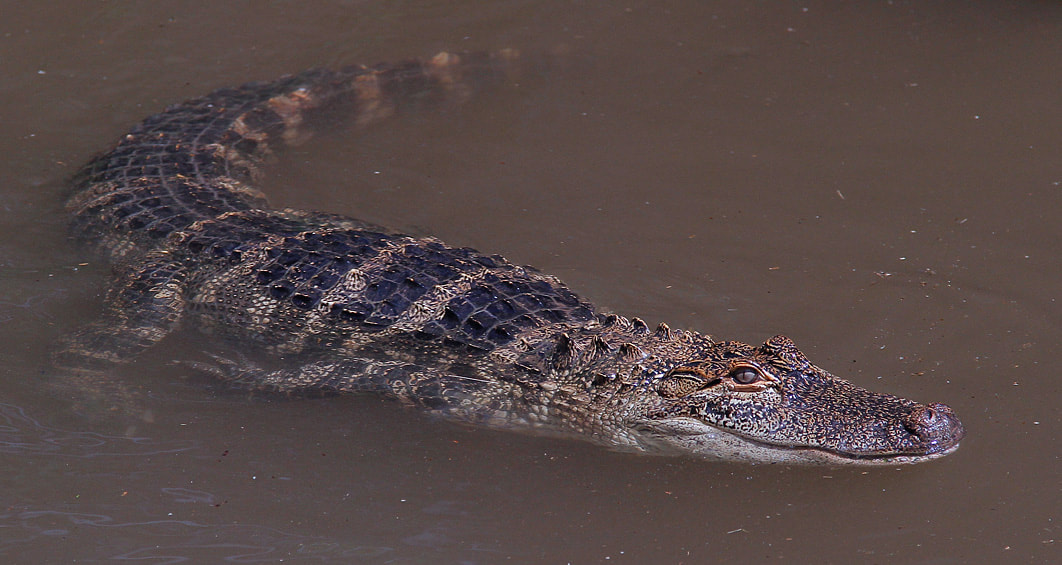
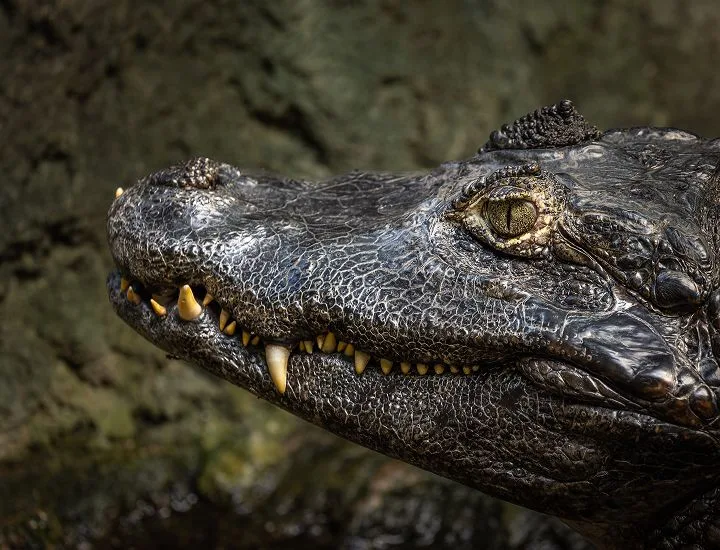
American Alligators have been around for about 65 million years, and their bodies are built for survival. Their eyes, ears, and nostrils sit on top of their heads, allowing them to see, hear, and breathe while the rest of their body stays hidden underwater. They are strong swimmers, fast on land, and can bite down with around 2,000 pounds of pressure. Their teeth are so important to survival that if one is lost, a new one can grow in its place.
Status
Least Concern. Once listed as endangered, the American Alligator is now considered a major conservation success story, with more than one million adults living in the wild today.