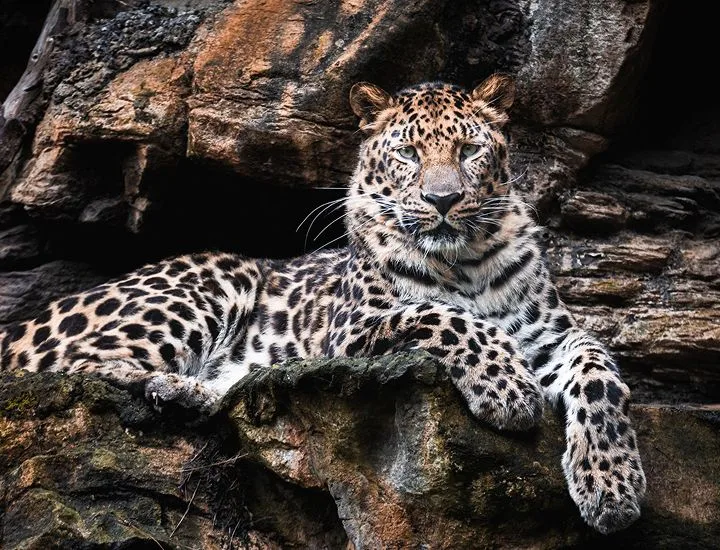
(Panthera pardus orientalis)
Amur Leopard
Physical Description
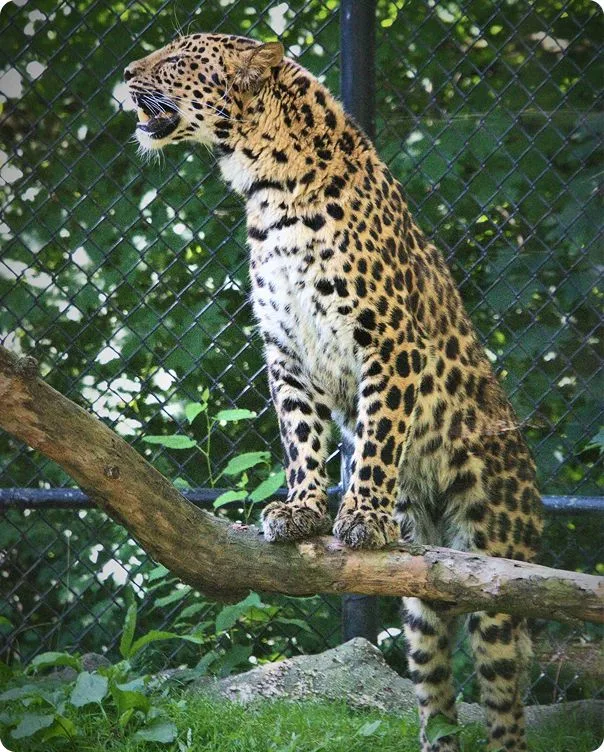
Amur Leopards typically weigh between 70 and 105 pounds and are known for their long legs, which allow them to leap up to 19 feet forward and 10 feet into the air. Their thick, dense fur keeps them warm in snowy conditions, with a lighter coat in winter that shifts to a more reddish-yellow tone in the summer.
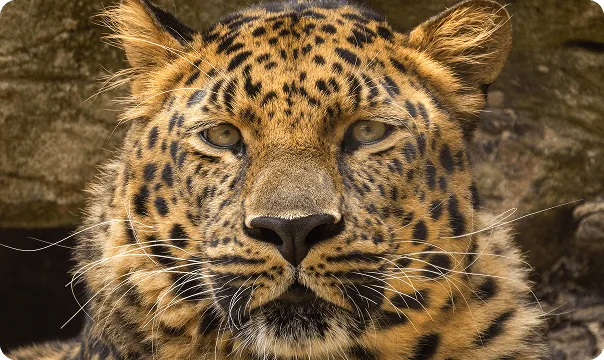
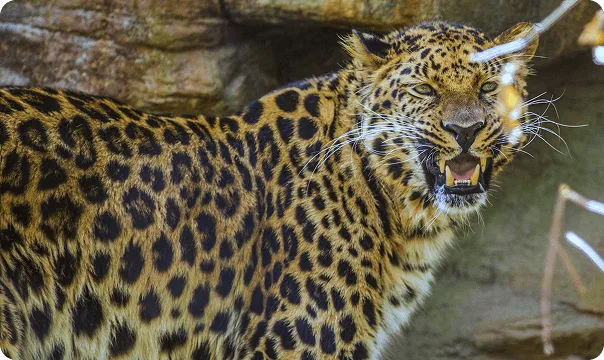
Their rosette spots are larger and more widely spaced than those of other leopard subspecies, with thick black borders. At the Zoo, Orion shows the species’ typical coloration, while his sister Kallisto is melanistic, meaning her coat appears black, though her rosettes can still be seen in bright light.
Where They Live
Amur Leopards live in mountainous forest regions made up of both deciduous and coniferous trees. These environments experience extreme seasonal changes, from harsh, snowy winters to warmer summers.
Once found across a wider area, Amur Leopards are now limited to a small region of far eastern Russia, near the Amur River Valley. Due to habitat loss and over-hunting, their range has shrunk dramatically, with much of their original territory lost in just a few decades.
What They Eat
Amur Leopards are carnivores and hunt a variety of prey, including deer, wild boar, and hare. Their strength and stealth make them highly effective predators, even in challenging terrain.
Life & Family
Amur Leopards are mostly solitary animals, coming together only for mating and raising cubs. Females typically give birth to litters of one to four cubs, which stay with their mother for about one and a half to two years before heading out on their own. While they usually live alone, there have been rare cases of males staying with females to help raise cubs.
Amur Leopards can live 10 to 15 years in the wild and up to 20 years in human care.
Status
Critically Endangered
Conservation Story
Amur Leopards are the rarest big cat in the world, with only about 80 to 100 individuals remaining in the wild.
Habitat destruction and poaching have played a major role in their decline, but conservation efforts are ongoing. Connecticut’s Beardsley Zoo is a proud participant in the Association of Zoos & Aquariums Species Survival Plan (SSP), which helps manage and protect endangered species through coordinated breeding and conservation programs.