(Tremarctos ornatus)
Andean Bear
Physical Description
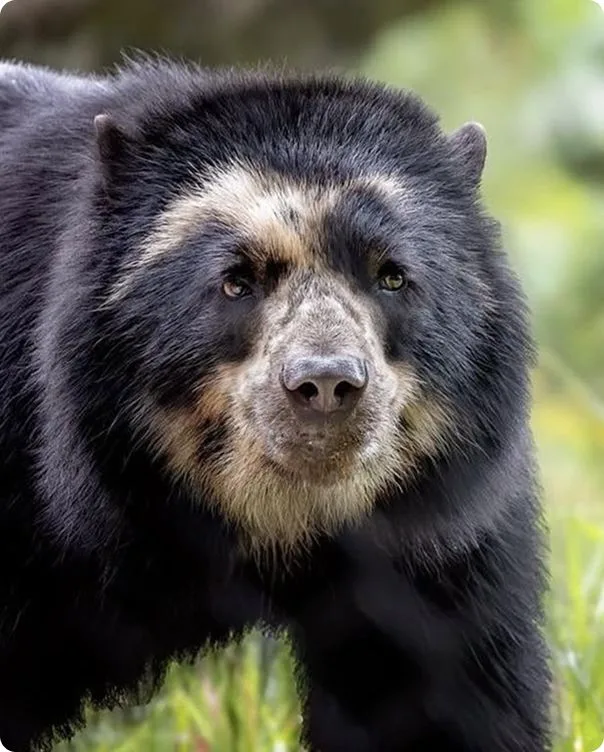
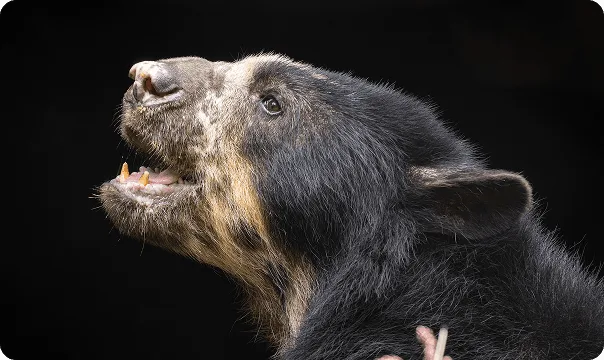
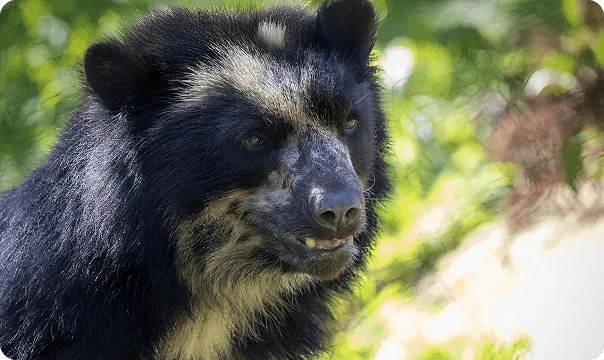
Andean Bears grow about 5 to 6 feet long and stand 2 to 3 feet high at the shoulder. Males are much larger than females and can weigh up to 340 pounds, while females usually stay under 180 pounds. Each bear has its own unique cream- colored markings on the face, throat, and chest, almost like a fingerprint.
Where They Live
Andean Bears live in a variety of mountain habitats, including rainforests, cloud forests, mossy elfin forests, and dry thorn forests. Many are found between 6,000 and 8,800 feet above sea level, though some also forage in nearby grasslands. They are South America’s only bear species and live throughout the Andes Mountains and nearby mountain ranges in Bolivia, Colombia, Ecuador, Peru, and Venezuela.
What They Eat
Andean Bears are omnivores, but unlike many other bear species, they are mostly herbivorous. Their diet can include berries, grasses, bulbs, cactus flowers, and other plant matter, along with small animals like rodents, rabbits, and birds.
Life & Family
Outside of breeding season, Andean Bears usually travel alone. During breeding season, males and females may stay together for a week or two before going their separate ways again. Females experience delayed implantation, which means pregnancy does not fully begin until conditions are right. This helps cubs arrive during a time when food is more abundant. Cubs are usually born between November and February, and litters typically include one or two cubs. Andean Bears can live into their late 20s in human care. Their lifespan in the wild is still not well understood.
Built for the Mountains
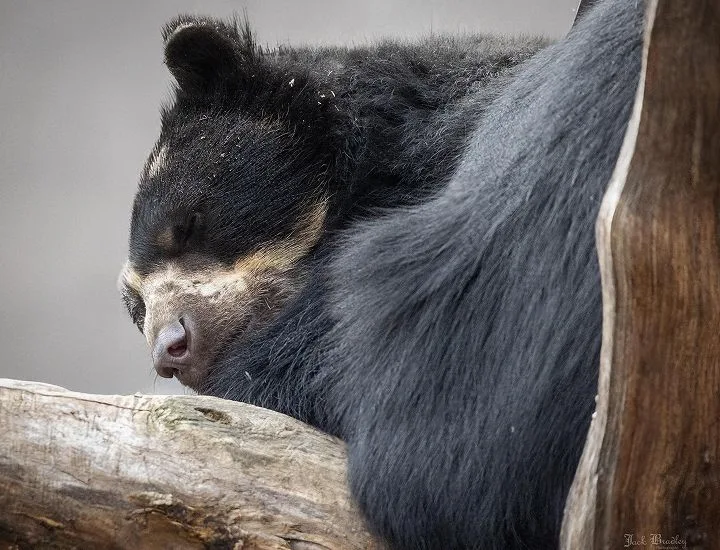
Andean Bears are strong climbers and spend much of their time in trees, where they build platforms to rest and feed. Their ability to move between ground and canopy helps them take advantage of a wide range of food sources. They also play an important role in their ecosystem by spreading seeds and helping forests regenerate as they travel through their habitat.
Status
Vulnerable