(Ambystoma mexicanum)
Axolotl
Physical Description
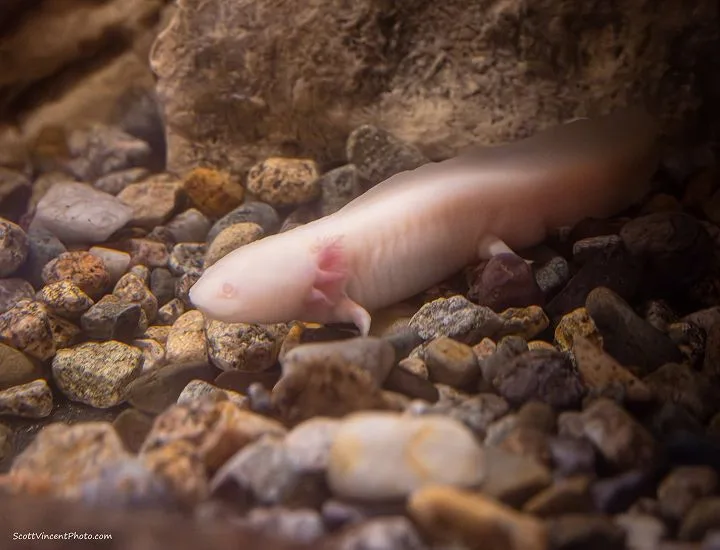
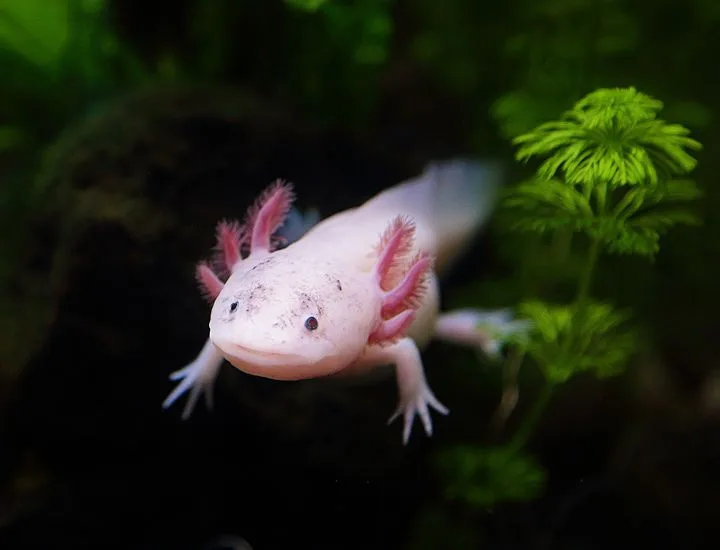
The Axolotl (pronounced axo-LO-tuhl) is a neotenic salamander, which means it keeps certain juvenile features even as an adult. Instead of going through a full metamorphosis like many amphibians, it stays aquatic for life and keeps its feathery external gills and finned tail. Axolotls can grow up to 18 inches long and weigh between 2 and 8 ounces. They have a broad, flat body, a large head, round dark eyes, and strong limbs that help them move along the lake bottom. Wild axolotls are usually dark in color and can shift slightly lighter or darker to help camouflage in their environment.
Where They Live
Axolotls spend their entire lives underwater and are only native to Lake Xochimilco and Lake Chalco in central Mexico. Unfortunately, Lake Chalco no longer exists after being drained by humans, and Lake Xochimilco survives today mostly as a system of canals. This dramatic habitat loss is one of the biggest reasons axolotls are so rare in the wild.
What They Eat
Axolotls are carnivores and feed on worms, tadpoles, insects, small fish, and zooplankton. Rather than chewing, they use suction to pull food into their mouths in one quick motion.
Life & Family
Axolotls are solitary animals and usually only interact with others during breeding season. After mating, a female can lay anywhere from 300 to 1,000 eggs, attaching each one individually to plants, rocks, or other surfaces for protection. The eggs hatch in about two weeks, and the young are independent from the moment they emerge. Axolotls can live up to 15 years in human care and around 5 years on average in the wild.
Regeneration
Axolotls are famous for their incredible ability to regrow body parts. They can regenerate limbs, parts of their spinal cord, and even portions of other organs. Because of this, axolotls are especially important in medical and scientific research, where scientists study how regeneration works and what it might one day teach us about healing.
Status
Critically Endangered. There are an estimated 50 to 1,000 Axolotls left in the wild.