Bald Eagle
Physical Description
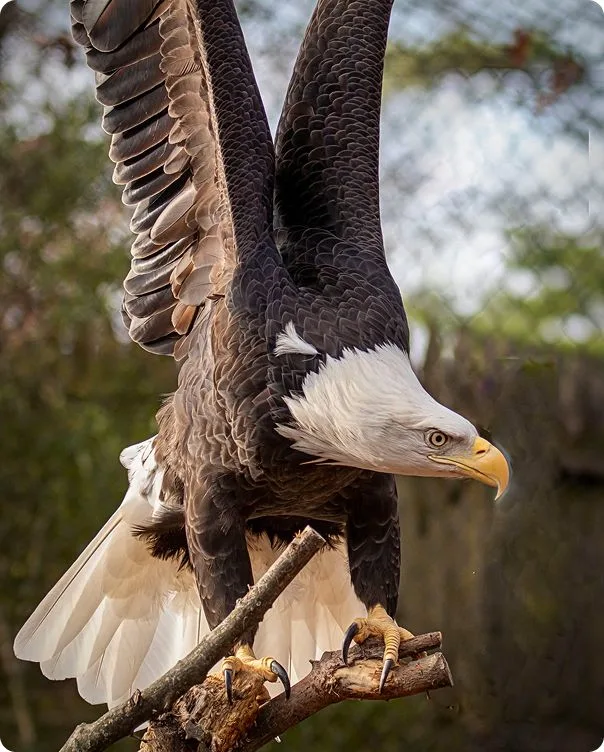
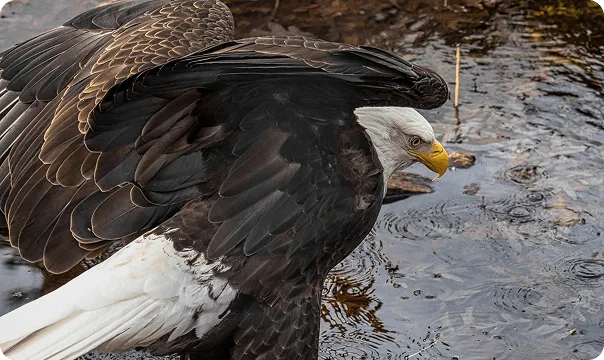
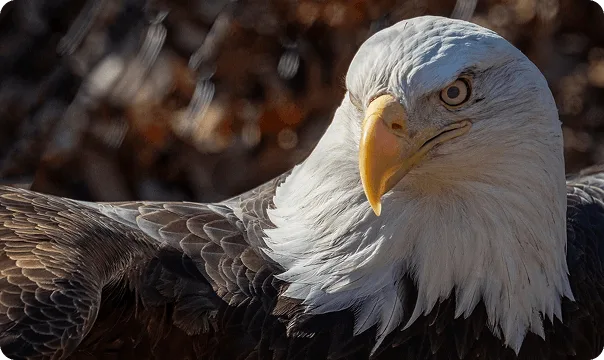
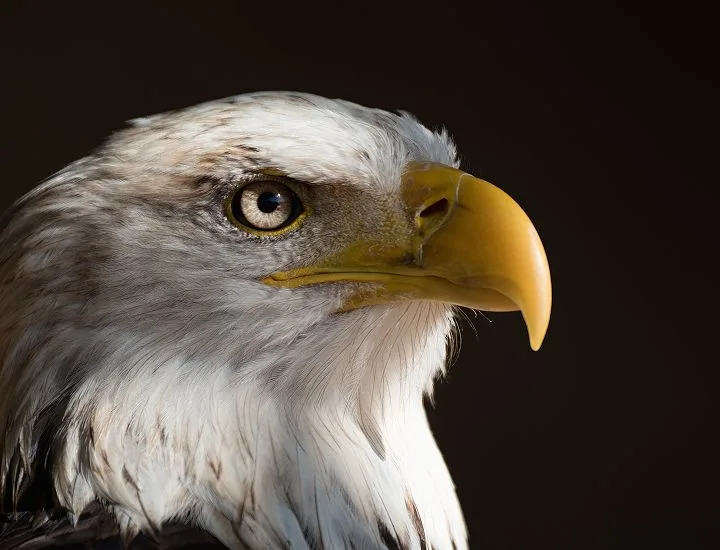
Bald Eagles weigh between 6.5 and 14 pounds and can have a wingspan of up to 8 feet. Adults are known for their dark brown bodies, bright white head and tail feathers, and yellow beak and feet. Young Bald Eagles look quite different, with a mix of brown and white feathers across the body. They don’t develop their full adult coloring until they are about 4 to 5 years old.
Where They Live
Bald Eagles can live in a variety of habitats, but they are most often found near bodies of water such as lakes, rivers, streams, and ponds. They range across much of North America, with especially large populations in Canada and the northern United States.
What They Eat
Bald Eagles are carnivores and feed on a mix of live prey and carrion. They are also known to scavenge or even steal food from other animals when the opportunity arises.
Life & Family
Bald Eagles mate for life and build enormous nests where they raise their young. Females usually lay 1 to 3 eggs, and both parents help incubate them for about 35 days. Once hatched, eaglets may stay in the nest for up to 20 weeks before becoming more independent. Bald Eagles usually live 15 to 30 years in the wild and can live up to 50 years in human care.
Conservation Story
The Bald Eagle, the national symbol of the United States, was once nearly wiped out across much of the country.
Hunting and exposure to DDT, a harmful pesticide, caused major population declines. Thanks to legal protections and changes in pesticide use, Bald Eagle populations were able to recover, making this species one of North America’s best-known conservation success stories.
Status
Least Concern