Barn Owl
Physical Description
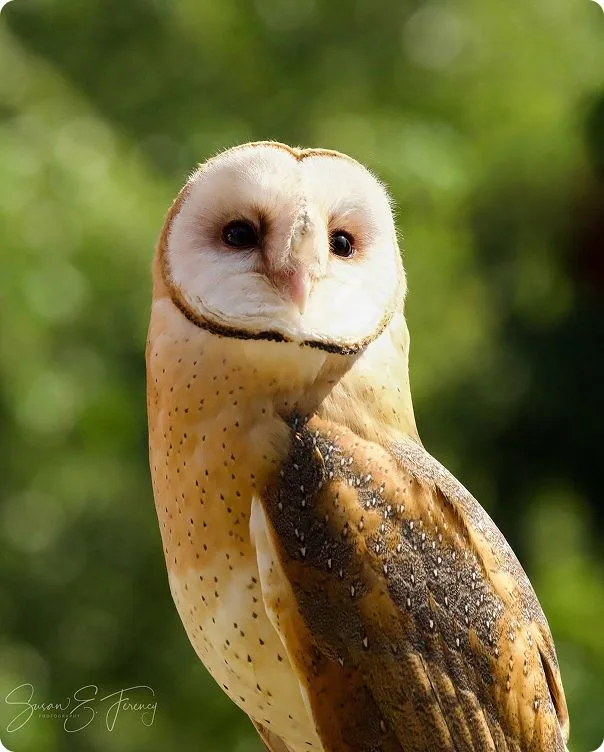
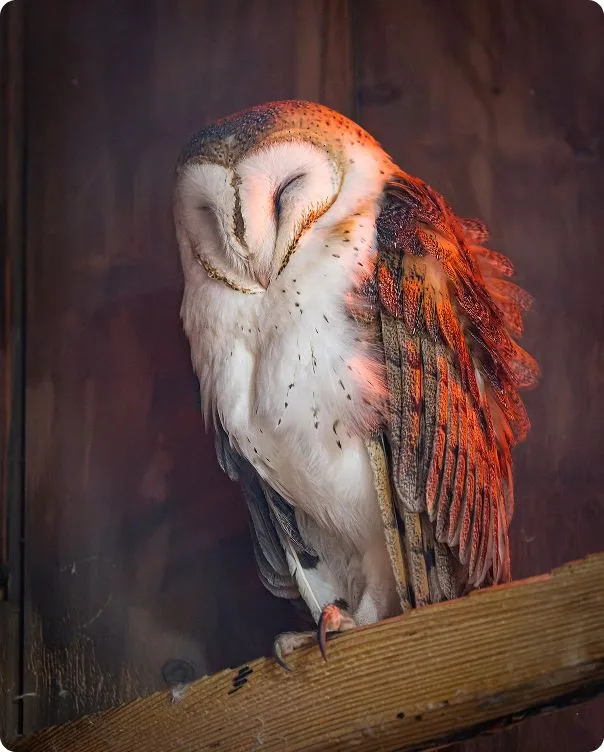
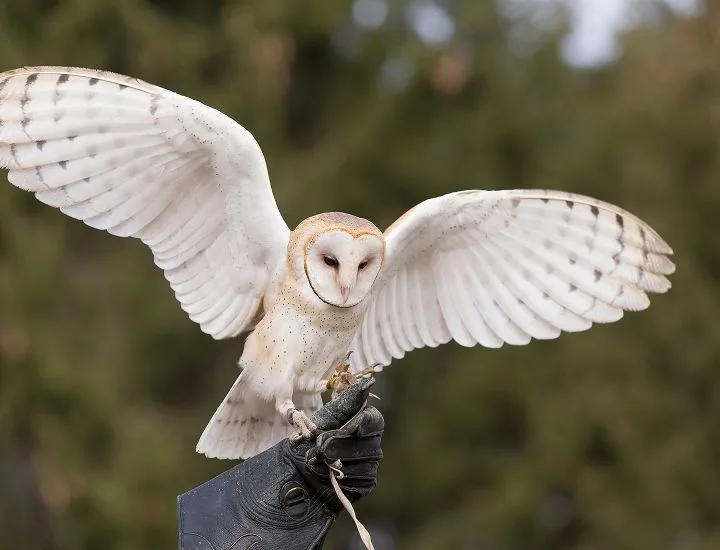
Barn Owls are easy to recognize thanks to their distinctive heart-shaped faces, which are framed by small, stiff feathers that help direct sound. They have a mix of brown and gray on the head, back, and upper wings, with white coloring on the face, body, and underside of the wings. Barn Owls typically grow to about 1 to 1.5 feet tall and weigh around 1 to 1.5 pounds. Females are usually larger and often darker in color than males.
What They Eat
Barn Owls are carnivores and mostly feed on small mammals like rats, voles, shrews, and mice. A wild Barn Owl may eat around four small mammals a night, which adds up to more than 1,400 animals a year. They often swallow prey whole and later cough up the indigestible fur and bones in the form of an owl pellet.
Life & Family
Barn Owls are usually solitary or found in breeding pairs. They are often monogamous, staying with one partner for life unless one of them dies. In the wild, Barn Owls typically live up to 4 years, though in human care they have been known to live as long as 30 years.
Where They Live
Barn Owls live near large open areas where they can hunt, including marshes, grasslands, and agricultural fields. For nesting and roosting, they prefer quiet cavities in trees or man-made structures like barns and silos. They are found on every continent except Antarctica, though they tend to avoid polar and desert regions.
Status
Least Concern