(Strix varia)
Barred Owl
Physical Description
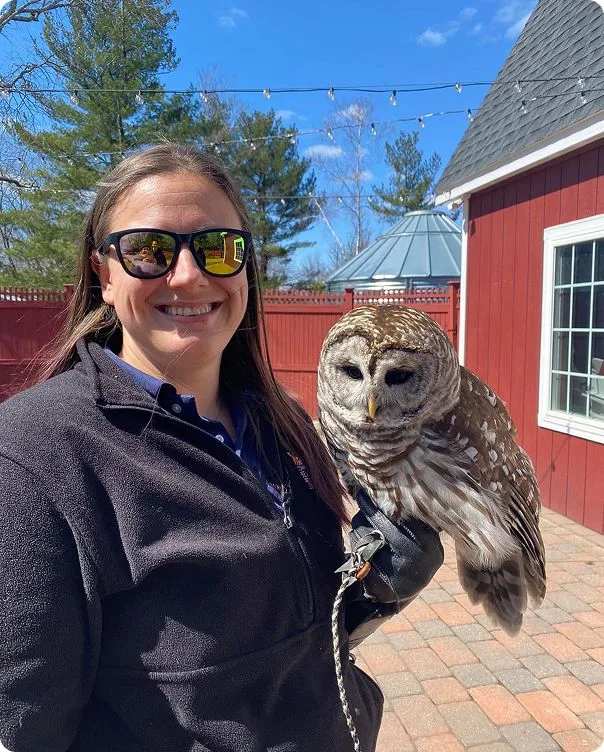
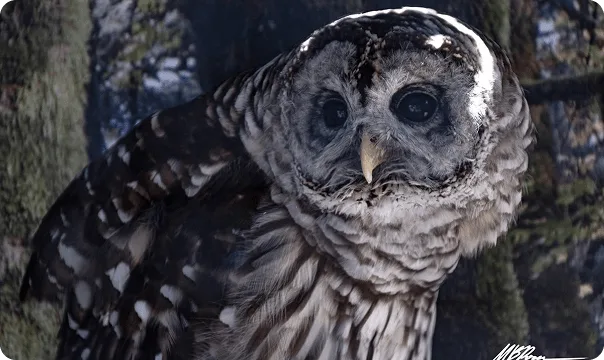
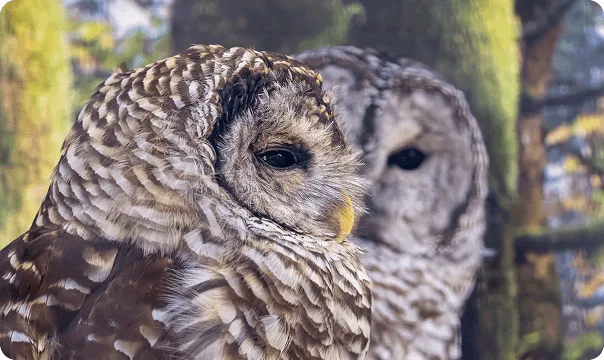
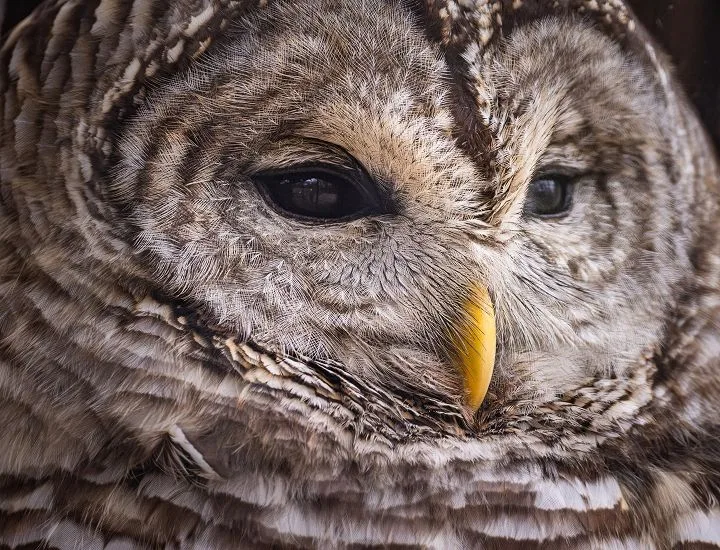
Barred Owls weigh between 1 and 1.5 pounds and have a wingspan of about 3 to 4 feet. Their feathers are a mix of gray, brown, and white, with horizontal bars on the upper body and vertical streaks on the chest and underside. They have dark brown eyes and a yellow to pale beak that is mostly hidden by surrounding feathers.
Where They Live
Barred Owls live in mature forests and heavily wooded swamps, but they may also hunt in nearby open areas such as farmland, roadsides, and along rivers. They are found throughout the eastern United States, parts of Canada, and Texas, and have also expanded into the Pacific Northwest.
What They Eat
Barred Owls are carnivores and opportunistic hunters. Their diet includes insects, amphibians, reptiles, birds, and mammals. They often go after easy-to- catch prey like frogs, lizards, and small rodents, but they are also capable of taking larger animals such as woodchucks, geese, and even herons.
Life & Family
Barred Owls form long-term pair bonds and typically stay with the same partner over time. They nest in abandoned hawk or crow nests, tree cavities, or nest boxes. Females usually lay 2 to 3 eggs, and the female handles incubation. Young owls leave the nest at around 6 weeks old. Barred Owls can live up to 15 years in the wild and as long as 30 years in human care.
Calls & Communication
Barred Owls are best known for their famous call, often described as sounding like “Who cooks for you, who cooks for you all?” They are especially vocal during breeding season, but unlike many owls, they can often be heard calling during the day as well as at night.
Status
Least Concern