(Eptesicus fuscus)
Big Brown Bat
Physical Description
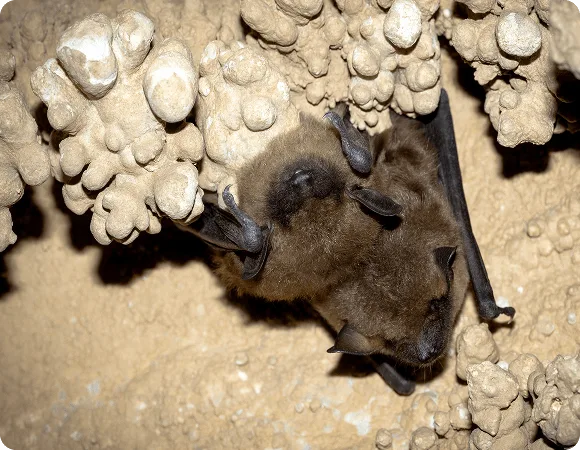
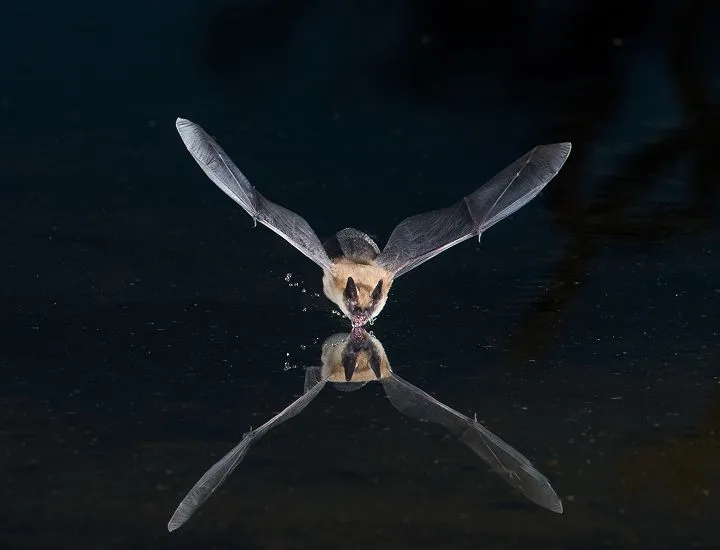
The Big Brown Bat is one of the larger bat species in North America, weighing between ½ and ¾ of an ounce with a wingspan of about 13 to 16 inches. They have long, slightly oily fur that ranges from tan to dark brown, with darker wings, nose, and muzzle. Their strong wings and compact bodies make them well suited for fast, controlled flight.
Where They Live
Big Brown Bats are highly adaptable and can live in a wide range of environments, including forests, caves, cliffs, and underground spaces. They are found throughout North America, Central America, and parts of northern South America, ranging from Canada to Colombia and Venezuela. While they live in many habitats, they are most commonly found in deciduous forests, often roosting under the bark of trees like oak, beech, pine, and bald cypress.
What They Eat
Big Brown Bats are insectivores, meaning they feed on insects. Beetles are a favorite, but they also eat moths, mosquitoes, wasps, lacewings, and dragonflies. During the breeding season, females can eat their body weight in insects in a single night, making them an important part of controlling insect populations.
Life & Family
Female Big Brown Bats gather in large colonies, sometimes reaching hundreds of individuals, to raise their young. Males usually live alone or in smaller groups, joining the females later in the summer. After hibernation, females become pregnant in the spring and typically give birth to one or two pups. Twins are more common in eastern populations, while single pups are more common in the west. Big Brown Bats can live up to 20 years in the wild, though many do not survive their first winter.
Status
Least Concern