(Ara ararauna)
Blue and Gold Macaw
Physical Description
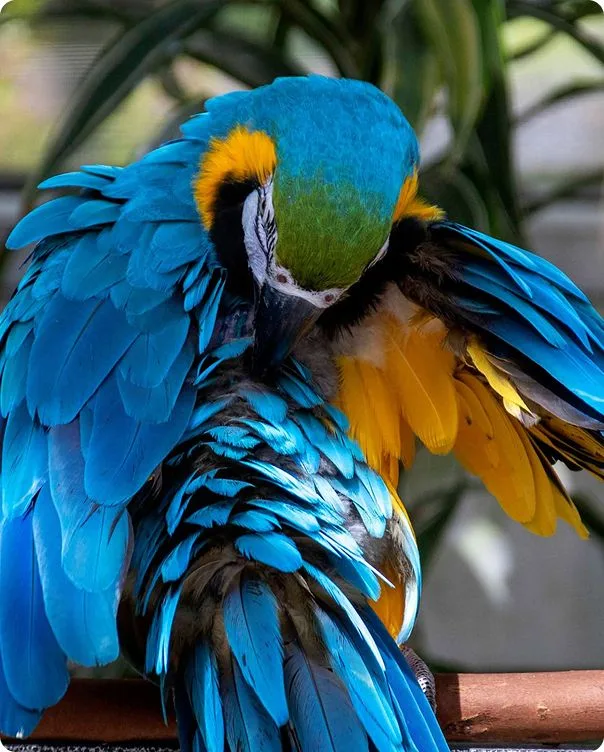
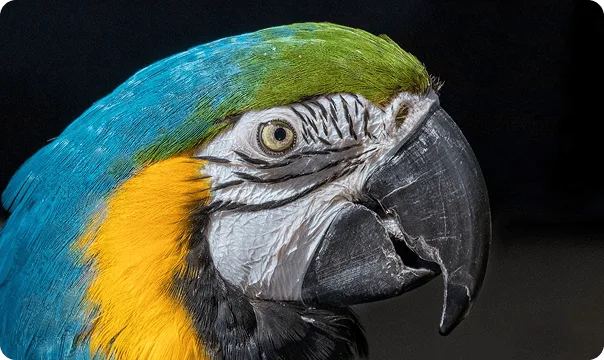
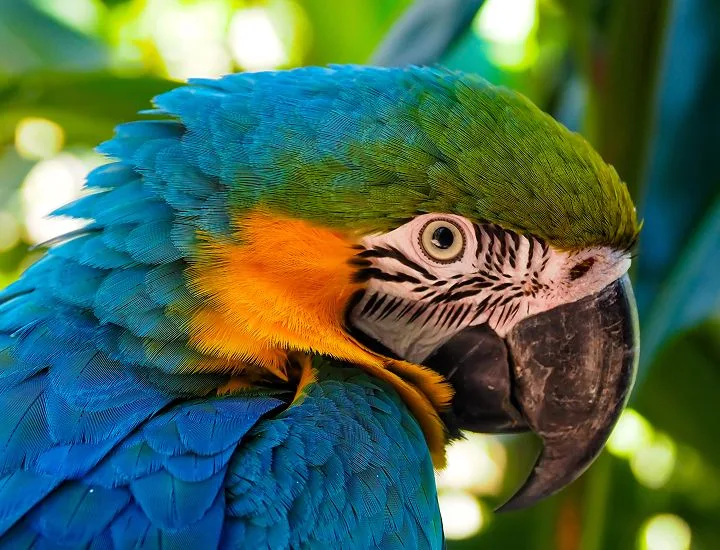
The Blue and Gold Macaw is named for its vibrant blue wings and back and golden-yellow underside. It also has a green forehead, a large curved beak, and a long tail that helps guide it in flight.
They weigh around 2 pounds and can have a wingspan of 3 to 4 feet. Their feet are zygodactyl, meaning two toes face forward and two face backward, helping them grip branches and food. Their powerful beaks can crack open tough shells, while their long tongues help pull food from inside.
Where They Live
Blue and Gold Macaws live in rainforests, woodlands, and savannas, often near rivers and wetlands.
They are found in northern South America, including countries such as Brazil, Bolivia, Peru, Ecuador, Colombia, Venezuela, Guyana, Suriname, and French Guiana.
What They Eat
Blue and Gold Macaws feed on nuts, seeds, fruits, berries, and leaves.
Their strong beaks allow them to break open tough shells that many other animals cannot access.
Life & Family
Blue and Gold Macaws are monogamous, forming long-term pair bonds with a partner. They often live and travel in larger flocks but stay closely connected to their mate.
Both parents help care for their young, which typically leave the nest after about three months.
They can live around 30 to 50 years in the wild and even longer in human care.
Intelligence & Communication
Blue and Gold Macaws are highly intelligent and social birds. They communicate using a variety of loud calls and can even mimic sounds from their environment.
Their strong social bonds and ability to learn make them one of the most recognizable and interactive parrot species.
Status
Least Concern