(Dendrobates tinctorius azures)
Blue Poison Dart Frog
Physical Description
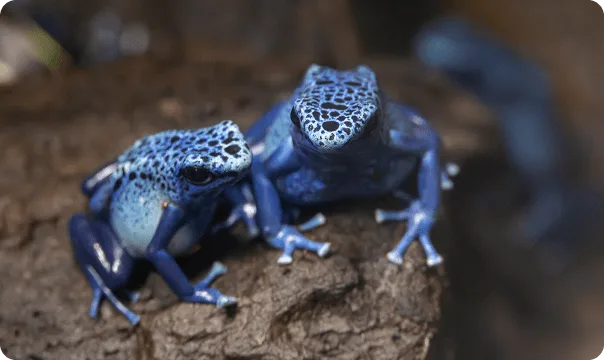
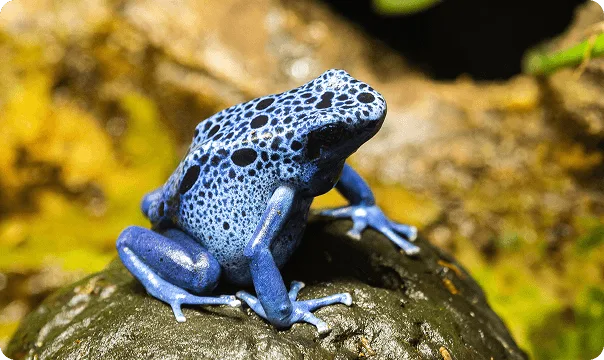
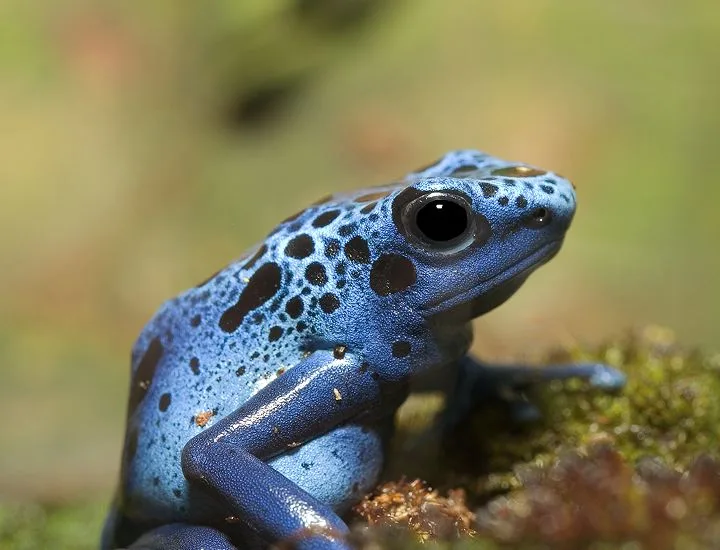
The Blue Poison Dart Frog is a subspecies of the Dyeing Poison Dart Frog and is known for its vivid blue coloring with dark blue and black spots across the body. Its bright appearance serves as aposematic coloration, which is nature’s way of warning predators to stay away. These frogs grow to about 1 to 1.5 inches long and weigh around 8.5 grams on average. They also have sticky toe pads that help them climb, and males have slightly larger pads that help them hold onto a mate during reproduction.
Where They Live
Blue Poison Dart Frogs live in forests and inland wetlands, where warm, humid conditions help support their survival. They are found in parts of northern South America, including Brazil, Guyana, French Guiana, and Suriname. Because wetlands are one of the most threatened habitats in the world, the amount of suitable habitat for this species continues to shrink in some areas.
What They Eat
Blue Poison Dart Frogs are insectivores, feeding on a variety of small insects such as ants, beetles, and flies.
Life & Family
Blue Poison Dart Frogs typically breed during the Southern Hemisphere summer, especially in February and March. Males produce a unique call to attract a mate, and after breeding, females lay eggs that are fertilized and left in a moist environment to develop. They usually live about 4 to 6 years in the wild and can live up to 12 years in human care.
Toxicity & Defense
The Blue Poison Dart Frog’s toxicity comes from its diet. In the wild, chemicals from the insects they eat are absorbed and later secreted through their skin as a defense against predators. In human care, where their diet is different, they do not develop the same toxicity.
Status
Least Concern