(Boa constrictor)
Boa Constrictor
Physical Description
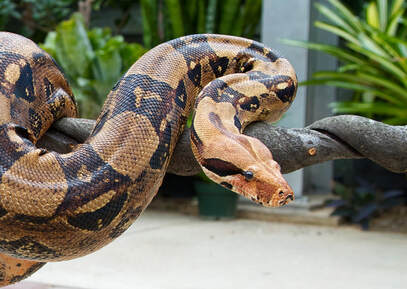
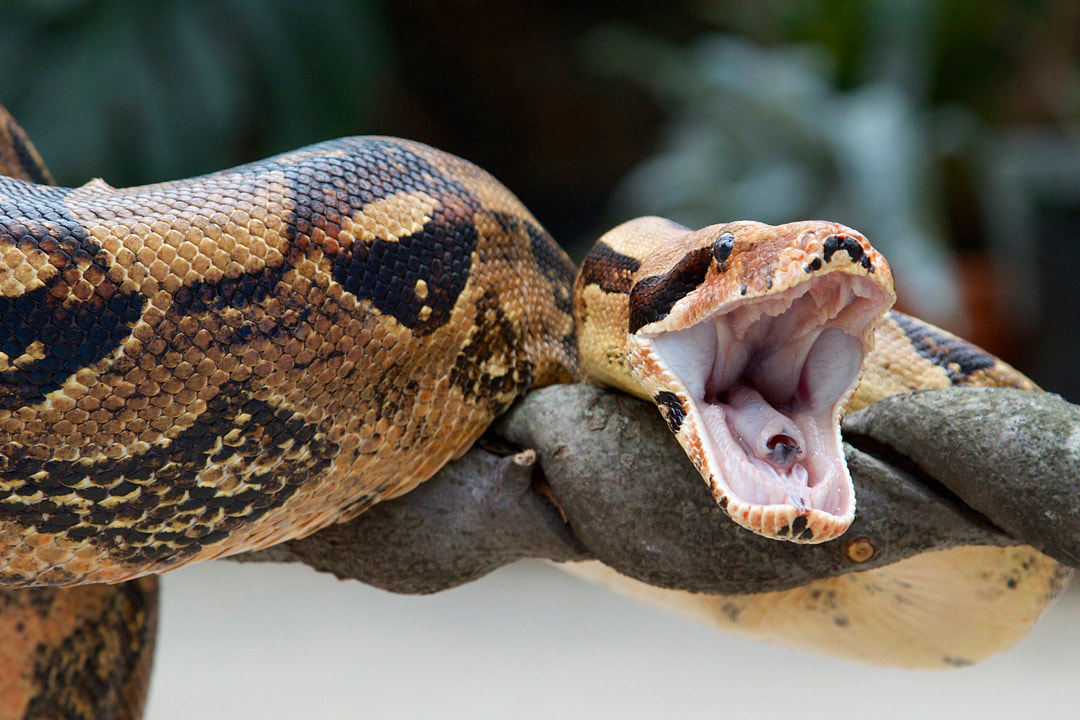
Boa Constrictors have cryptic patterns of brown, tan, and cream that help them blend in with leaf litter and forest floors. This camouflage makes them especially effective ambush predators. Their size can vary depending on where they live. Some island boas may only grow to around 3 feet long, while others in parts of Central and South America can reach 10 feet or more. Large individuals have been known to grow even longer.
Where They Live
Boa Constrictors are found in parts of Central and South America, including countries such as Venezuela, Colombia, and Brazil, as well as areas along the southern edge of Central America. They are highly adaptable and can live in rainforests, savannas, and other warm environments, though they are most often associated with forested habitats.
What They Eat
Boa Constrictors are carnivores that hunt by constriction, wrapping their bodies around prey to subdue it before swallowing it whole. Young boas typically eat mice, small birds, lizards, and frogs, while adults may prey on much larger animals such as monkeys, capybaras, caimans, and wild pigs.
Life & Family
Boa Constrictors are usually solitary and typically only come together during breeding season. They are ovoviviparous, which means females retain eggs inside the body and give birth to live young rather than laying eggs. A female may give birth to 20 to 60 young at a time, and newborn boas are independent from birth. Boa Constrictors usually live around 20 to 30 years, and some can live even longer in human care.
Camouflage & Hunting
Boa Constrictors rely on stealth and patience rather than speed. Their patterned scales help them disappear into their surroundings while they wait for prey to come close. They are also mostly nocturnal, meaning they do most of their hunting at night, when their camouflage and quiet movement are especially effective.
Status
Least Concern. Although protected in much of their range, Boa Constrictors still face threats from habitat loss and collection for the leather and exotic pet trades.