(Cochlearius cochlearius)
Boat-Billed Heron
Physical Description
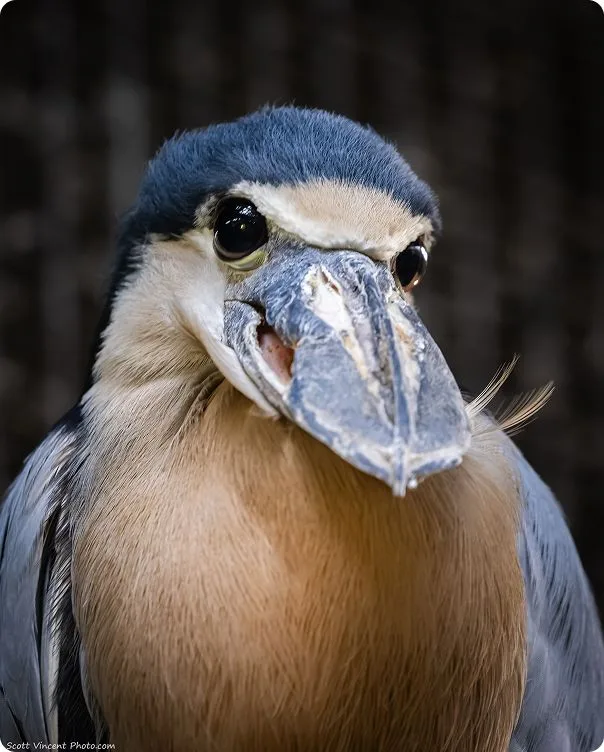
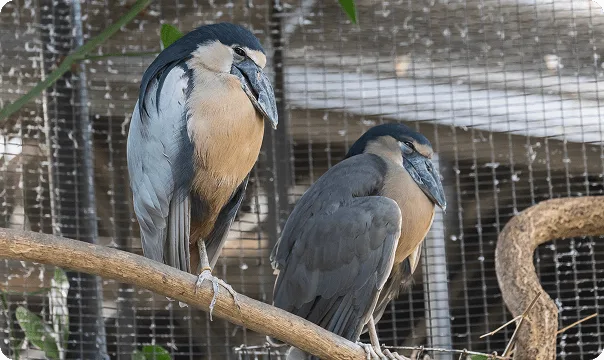
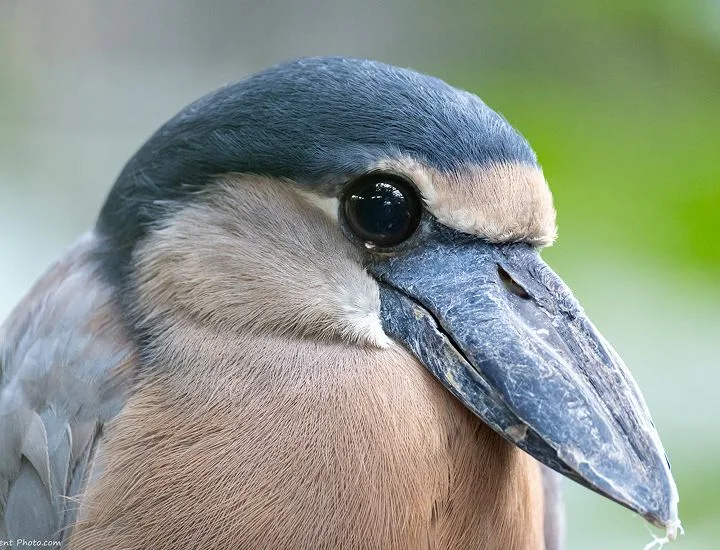
Boat-Billed Herons have soft plumage that ranges from pale gray to white, with chestnut-colored underparts and darker black markings along the sides. Their most distinctive feature is their broad black bill, which is nearly as wide as their head. They are about 20 inches long, weigh a little over one pound, and have a wingspan of around 30 inches. Their large dark eyes help them forage at night, and their bill is sensitive enough to detect prey in murky water. They also have specialized downy feathers that grow continuously and break down into a fine powder, which helps waterproof the rest of their feathers during preening.
Where They Live
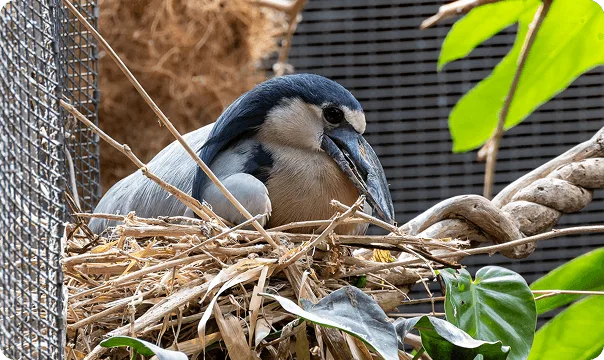
Boat-Billed Herons live in tropical wetland habitats, including marshes, seasonal lagoons, estuaries, and mangrove swamps. They are found in Central and South America, as well as southern Mexico. They often nest in mangrove areas, building platform nests made of sticks and leafy branches that may be reused from year to year.
What They Eat
Boat-Billed Herons are carnivores and feed on fish, amphibians, shrimp, and insects. Their sensitive bills and strong night vision help them locate prey even in low light and muddy water.
Life & Family
Boat-Billed Herons are usually solitary, though they come together during breeding season and are often monogamous at that time. Females typically lay 2 to 4 eggs, and both parents help incubate them for about 21 to 26 days. Chicks hatch blind and fully dependent on their parents, who continue feeding them for 6 to 8 weeks until they are ready to fly. Boat-Billed Herons have a median lifespan of about 8.8 years.
Nighttime Behavior
Boat-Billed Herons are primarily nocturnal, meaning they do most of their feeding after sundown. Interestingly, they have been observed avoiding feeding when a light source is present, including daylight, moonlight, or artificial light, making them especially adapted to hunting in the darkest parts of the night.
Status
Least Concern