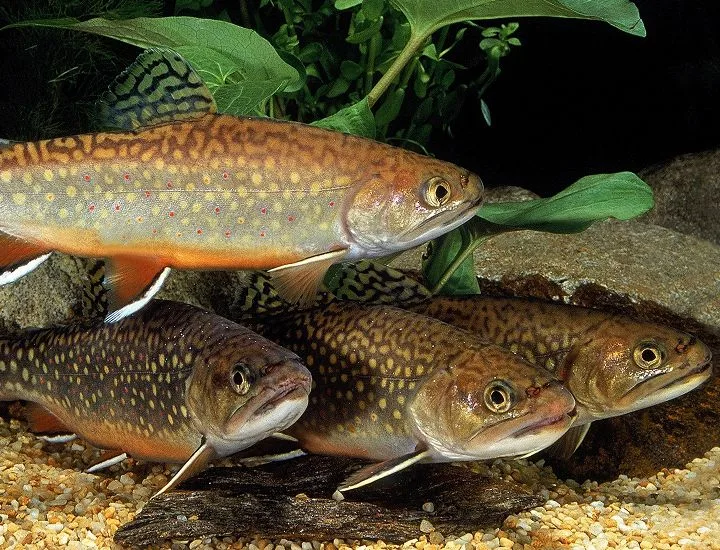
(Salvelinus fontinalis)
Brook Trout
Physical Description
Brook Trout typically grow up to about 10 inches long. Their backs are usually dark green to gray with lighter, mottled spots, while their undersides and fins develop pink to orange tones as they age.
Where They Live
Brook Trout begin life in cold freshwater streams and, as they grow, may move into larger streams, lakes, or even saltwater in some populations. These coastal populations are known as anadromous, meaning they spend much of their lives in saltwater but return to freshwater to reproduce. They are native to eastern North America, from the Great Lakes and Maine down through Georgia and along the Appalachian Mountains.
What They Eat
Brook Trout feed on insects, worms, and small fish, making them important predators within freshwater ecosystems.
Life & Family
Brook Trout often live in schools, sometimes alongside other fish species. They spawn in the fall, with females laying hundreds of eggs in shallow depressions called redds. Males then fertilize the eggs, which remain in place until they hatch in the spring when water temperatures rise. Brook Trout typically live about 2 to 3 years.
Conservation & Community
Brook Trout play an important role in local conservation efforts. Through the Zoo’s Trout in the Classroom program, students help raise young fish from hatchery fry. Once they reach about 3 to 5 inches in length, the trout are released into the Pequonnock River, helping support population restoration and connecting students directly to conservation work.
Status
Unlisted