(Testudo horsfieldii)
Central Asian Tortoise
Physical Description
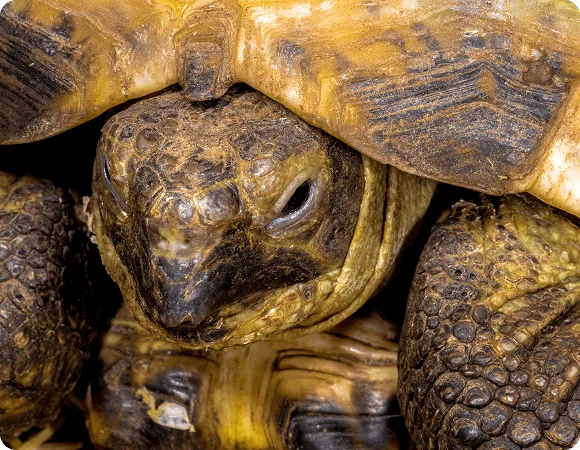
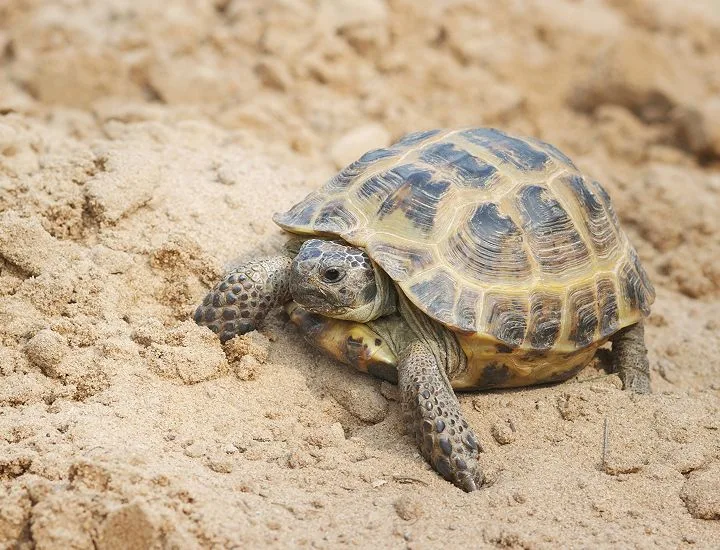
The Central Asian Tortoise has a high-domed shell with yellow and dark brown scutes, or scales, that create a patterned, layered look. As the tortoise grows, these scutes gradually shed.
They typically have 13 scutes on their shell and four toes on each foot, each with strong claws used for digging burrows.
Where They Live
Central Asian Tortoises live in dry, rocky, and grassy environments, often in areas with extreme seasonal temperatures.
They are found across the Central Asian steppes, including regions of Afghanistan, Armenia, Uzbekistan, Azerbaijan, and parts of Russia.
What They Eat
Central Asian Tortoises are herbivores, feeding on a variety of grasses, plants, and vegetation.
Life & Family
Central Asian Tortoises are solitary animals, coming together only during breeding.
They can live a long time, often reaching 50 years or more, especially in stable environments.
Status
Vulnerable.
Surviving the Extremes
Central Asian Tortoises are well adapted to harsh climates. During colder periods, they enter a state called brumation, where their metabolism slows and they may stop eating or moving for extended periods.
They can also enter torpor, a shorter-term state that helps them survive sudden drops in temperature. These adaptations allow them to handle both seasonal changes and extreme daily conditions.
References:
https://zoo.gda.pl/en/animals/central-asian-tortoise/
https://www.norcalherp.com/uploads/8/0/8/3/80835988/online_version_outdoorrussiantortoise_4.pdf
https://www.iucnredlist.org/species/21651/9306759