(Catagonus wagneri)
Chacoan Peccary
Physical Description
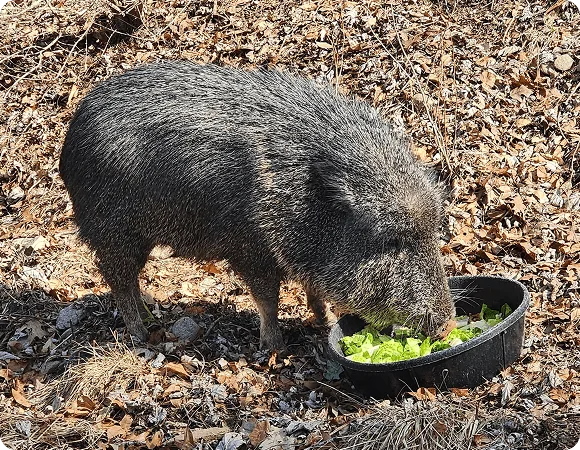
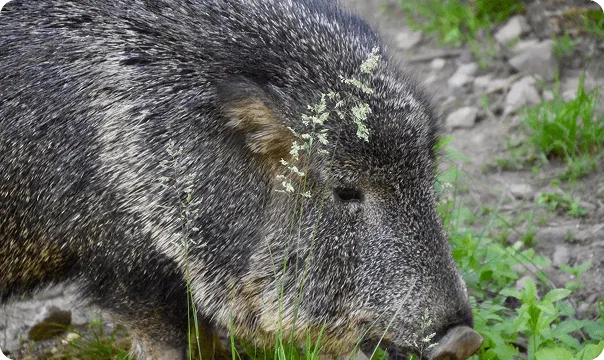
Chacoan Peccaries stand about 1.5 to 2.5 feet tall at the shoulder and typically weigh between 66 and 88 pounds. Their coats are coarse and gray to gray-brown, with longer guard hairs mixed throughout.
Compared to other peccary species, they have longer ears, longer snouts, and longer tails. They also have a pale collar across the shoulders and under the chin. Their large heads and tough, cartilaginous snouts help them forage in rough, thorny environments. They communicate using a variety of sounds, including grunts and teeth chattering.
Where They Live
Chacoan Peccaries live in semi-arid thorn forests, savanna plains, and seasonal marshes where temperatures are high and rainfall is low.
They are found in the Alto Chaco region of Paraguay, one of the hottest and driest parts of South America. These habitats are filled with small trees, dense shrubs, and cacti, all of which play an important role in their survival.
What They Eat
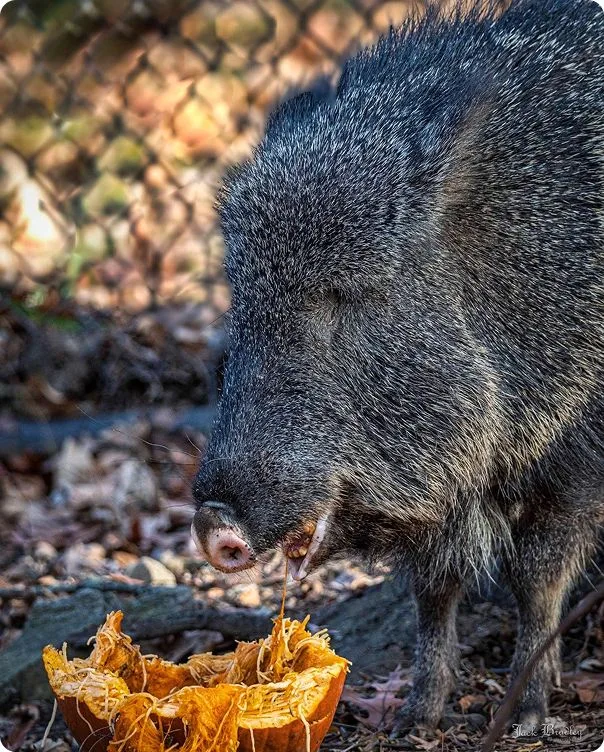
Chacoan Peccaries feed on a variety of cacti, fruits, roots, herbs, and occasionally invertebrates. They use their tough snouts to roll cacti on the ground and rub off the spines before eating. They may also remove spines with their teeth and spit them out.
Their kidneys are specially adapted to help process the acidic compounds found in cacti, and they also seek out salt licks for important minerals.
Life & Family
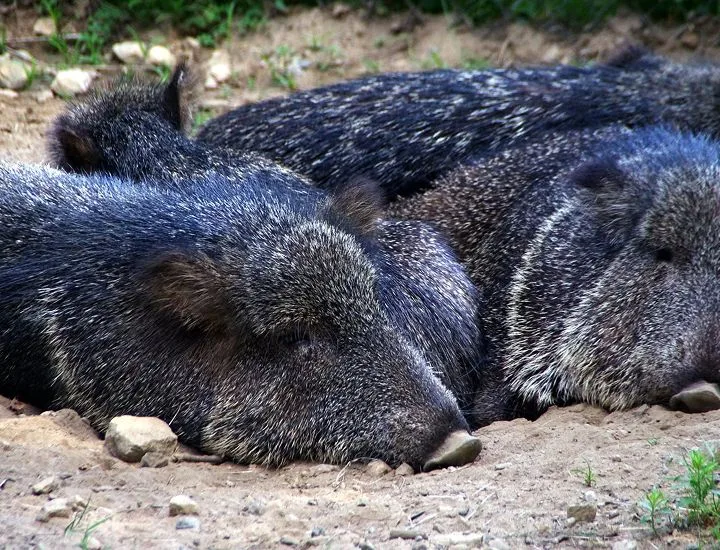
Chacoan Peccaries live in small social groups, usually made up of 2 to 10 individuals, with many groups consisting of a few adults and their young. If they cannot escape danger, they may form a defensive wall, standing together as a group.
Breeding usually takes place between September and January. Females typically give birth to 1 to 4 young, usually with about a year between litters. Chacoan Peccaries live about 9 years on average.
Status
Endangered
Adapted for Survival
Chacoan Peccaries are diurnal, meaning they are most active during the day, especially in the cooler morning hours.
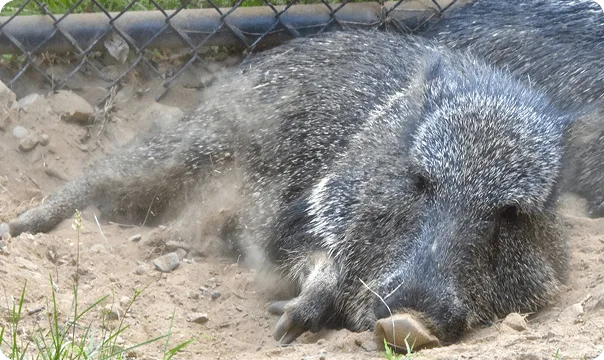
As temperatures rise, they often seek out mud wallows or dusty areas to cool off. When alarmed, they may raise the long hairs on their backs and release a scent from glands along the body, which helps keep the group connected through dense vegetation.
References