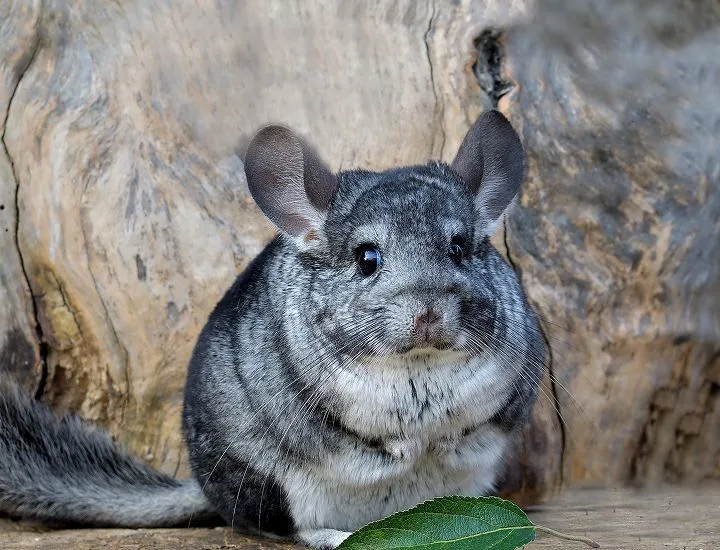
(Chinchilla lanigera)
Chinchilla
Physical Description
Chinchillas are typically 9 to 14 inches long with a 3 to 6-inch bushy tail. Females are usually larger than males, with females weighing up to about 1.76 pounds and males closer to 1 pound. They have large dark eyes, rounded ears, and strong hind legs that help them leap and move easily through rocky terrain. Their fur is usually gray with lighter undersides, and it is incredibly dense, with as many as 60 hairs growing from a single follicle. That gives them one of the densest fur coats of any land mammal.
Where They Live
Chinchillas live in the dry, rocky mountain regions of the Andes in northern Chile. They are adapted to life at high elevations, often between 10,000 and 16,000 feet, where temperatures can be harsh and the landscape is sparse.
What They Eat
Chinchillas are mostly herbivores, feeding on a variety of seeds, grasses, leaves, roots, mosses, and lichens. They may also occasionally eat insects or eggs if available.
Life & Family
Chinchillas are social animals and have been known to live in colonies of more than 100 individuals. They usually shelter in rock crevices and burrows, and they are often monogamous. Females may have two litters per year, usually with 2 to 4 young, called kits. Kits are born fully furred, with their eyes open, and are fairly well developed from the start. They are usually weaned after about 6 to 8 weeks. Chinchillas live around 10 years in the wild and can live up to 20 years in human care.
Fur & Dust Baths
Chinchillas do not bathe in water. Instead, they keep clean by taking dust baths, rolling and flipping in fine dust to remove oils and debris from their fur. Because their fur is so dense, getting wet can actually be dangerous and may lead to skin or fungal problems. They also do not sweat, instead releasing heat through their ears and nose.
Status
Endangered