(Corvus corax)
Common Raven
Physical Description
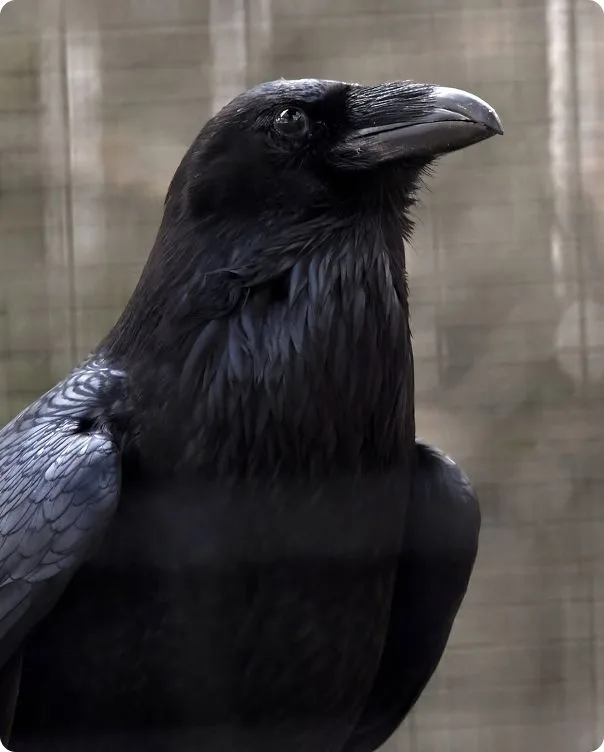
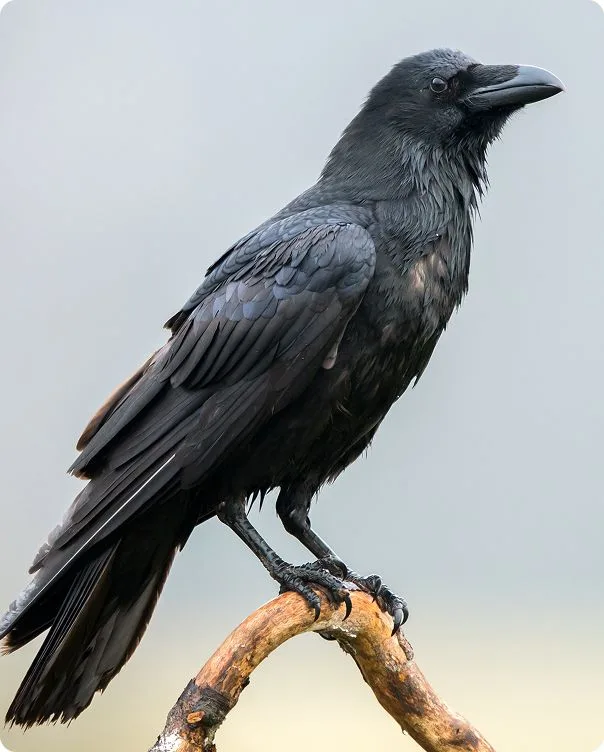
Common Ravens have large curved bills, shaggy throat feathers called hackles, and glossy black plumage with a bluish-purple sheen. Their legs, feet, and bills are black as well, and their long tails appear wedge-shaped in flight. They typically weigh between 24 and 53 ounces and have wingspans of just over 4 feet. Ravens are the largest species of songbird.
Where They Live
Common Ravens are found in a wide range of habitats, including open woodlands, rocky mountains, coasts, rivers, deserts, and plains. They have an enormous range and can be found throughout North America, Eurasia, parts of North Africa, and even mountainous areas of South America.
What They Eat
Common Ravens are mostly scavengers, but they are highly opportunistic feeders. Their diet includes small rodents, lizards, frogs, mollusks, insects, seeds, fruit, eggs, and nestlings. They are also known to cache, or hide, extra food to return to later.
Life & Family
Adult Common Ravens often form long-term pair bonds and may stay with the same mate for life. Pairs aggressively defend their nesting territory and often reuse the same nest site year after year. They build large stick nests in tall trees or rocky cliffs, where females usually lay 3 to 7 eggs each spring. Both parents care for the chicks, and young birds may stay with their parents for several months after fledging. Common Ravens can live up to about 15 years in the wild and more than 40 years in human care.
Intelligence & Behavior
Common Ravens are famous for their intelligence. Studies have shown they are capable of advanced problem-solving, cooperation, and even forms of communication that resemble gesturing. Young ravens are especially playful and have been observed throwing sticks, sliding down snowy hills, teasing other animals, and performing acrobatic flight displays. They can also mimic sounds, including animal calls and even human voices, making them one of the most behaviorally fascinating birds in the animal world.
Status
Least Concern