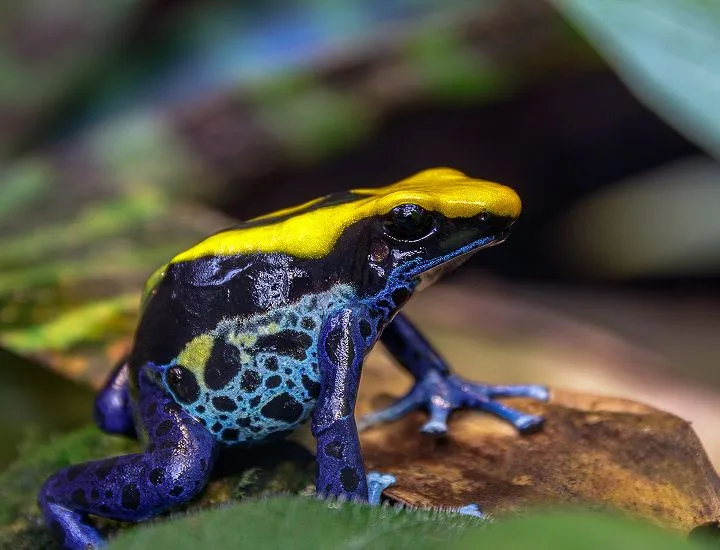
(Dendrobates tinctorius)
Dyeing Poison Dart Frog
Physical Description
Dyeing Poison Dart Frogs are known for their bright, bold coloration, which can vary widely from one individual to another. One of the most common color forms includes a yellow head with blue legs and chest. They usually grow to about 1.5 to 2 inches long and weigh up to 8.5 grams. Their bright appearance acts as a warning to predators, signaling that they may be toxic. During breeding season, males also produce calls using a specialized breathing process that allows them to move air back and forth across their vocal cords.
Where They Live
Dyeing Poison Dart Frogs live in forests and inland wetlands. They are found in parts of northern South America, including Brazil, Guyana, French Guiana, and Suriname. These frogs rely on humid environments and access to water-rich habitats such as streams, ponds, and forest wetlands.
What They Eat
Dyeing Poison Dart Frogs are insectivores and feed on small insects such as ants, beetles, and flies.
Life & Family
These frogs breed during the Southern Hemisphere summer, usually in February and March. Males use their calls to help attract mates during breeding season. In the wild, Dyeing Poison Dart Frogs typically live about 4 to 6 years, while in human care they may live up to 12 years.
Color & Defense
The Dyeing Poison Dart Frog's bright coloring is more than just eye-catching. It serves as a warning to predators that the frog may be toxic. That toxicity comes from its diet. In the wild, certain insects provide the chemical compounds that help these frogs produce toxins. Frogs raised in human care do not develop the same toxicity because their diet is different.
Status
Least Concern