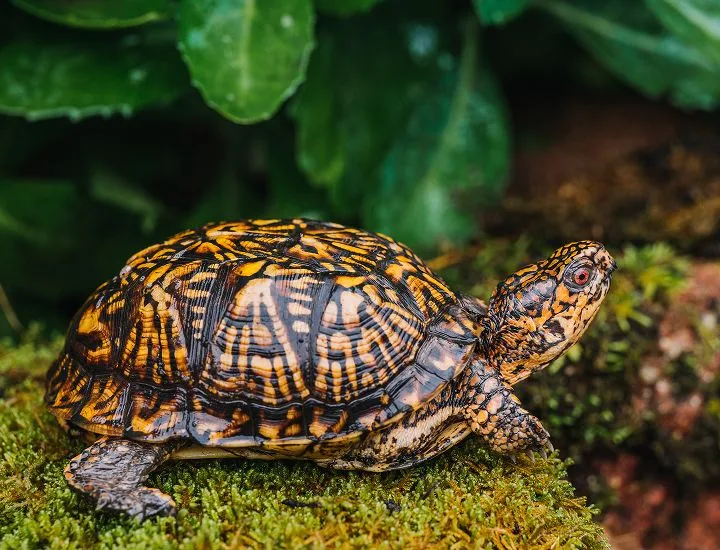
(Terrapene carolina carolina)
Eastern Box Turtle
Physical Description
Eastern Box Turtles are easy to recognize by their high-domed shells, which can feature a mix of brown, yellow, orange, and black patterns. No two shells look exactly alike.
They typically grow to about 4 to 6 inches long and have a special hinged plastron, or bottom shell, that allows them to close themselves up tightly when threatened. This ability to "box up" is what gives them their name.
Males often have red eyes, while females usually have brown eyes.
Where They Live
Eastern Box Turtles live in a variety of habitats, including woodlands, forests, fields, and stream banks.
They are found throughout much of the eastern United States, east of the Mississippi River and south of the Great Lakes, with their range extending into Mexico.
What They Eat
Eastern Box Turtles eat a wide range of foods, and their diet often changes with age.
Young turtles tend to eat more earthworms, slugs, and snails, while adults often feed on berries, fruit, fungi, insects, crayfish, and bivalves.
Life & Family
Eastern Box Turtles are generally solitary animals outside of breeding season.
Females usually lay 2 to 8 eggs in nests dug into the ground, and the eggs incubate for around 70 to 114 days. Like some other reptiles, the temperature of the nest helps determine whether hatchlings are male or female.
Eastern Box Turtles can live for around 50 years on average, and some individuals have been known to live for 100 years or more.
Shell & Survival
The Eastern Box Turtle's shell is one of its best defenses. When threatened, it can close itself almost completely inside, helping protect its head and limbs from predators.
Because they can live so long, some Eastern Box Turtles have become living links across generations.
Status
Vulnerable