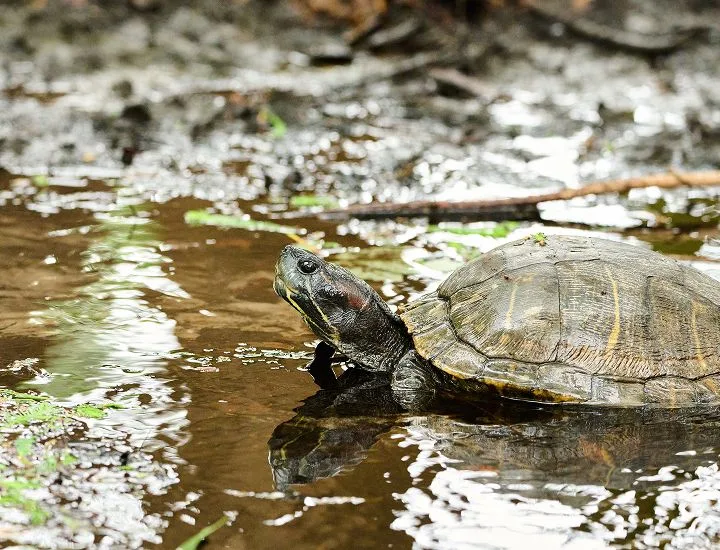
(Kinosternon subrubrum)
Eastern Mud Turtle
Physical Description
Eastern Mud Turtles are small freshwater turtles that typically grow between 3 and 5 inches long.
They have smooth, high-domed shells that range from olive-brown to dark brown or black. Their undersides are yellowish to brown and feature a hinged plastron that allows them to partially close their shells for protection. Their heads are usually dark with lighter markings along the chin and throat.
Where They Live
Eastern Mud Turtles inhabit ponds, marshes, swamps, ditches, slow-moving streams, and other shallow freshwater habitats.
They are found throughout much of the eastern United States, from New England south through Florida and west into parts of Texas and the Midwest.
These turtles prefer areas with soft, muddy bottoms and abundant aquatic vegetation where they can forage and seek shelter.
What They Eat
Eastern Mud Turtles are omnivores with a varied diet.
They feed on insects, worms, snails, small crustaceans, tadpoles, aquatic plants, seeds, and decaying organic matter. Their flexible diet helps them thrive in a wide range of wetland environments.
Life & Family
Breeding typically takes place in spring and early summer.
Females lay one to six eggs in shallow nests dug into sandy or soft soil near the water's edge. Hatchlings emerge in late summer or early fall and are independent from birth.
Eastern Mud Turtles can live for several decades, with some individuals reaching 30 years or more.
Behavior
Eastern Mud Turtles are generally solitary and spend much of their time hidden among vegetation or buried in mud.
They are active both in and out of the water and may travel over land during wet weather or when moving between habitats. When threatened, they can release a strong musky odor from scent glands near their shell, earning them the nickname "stinkpot" among some turtle species.
Status
Least Concern