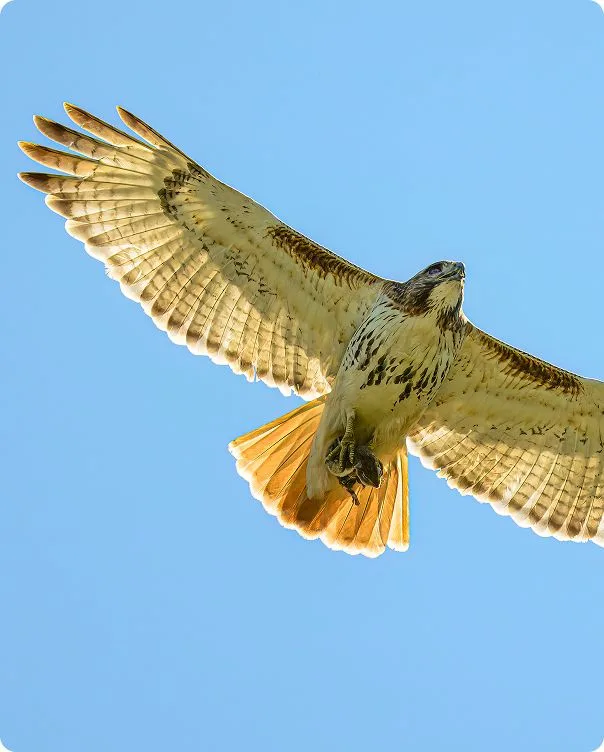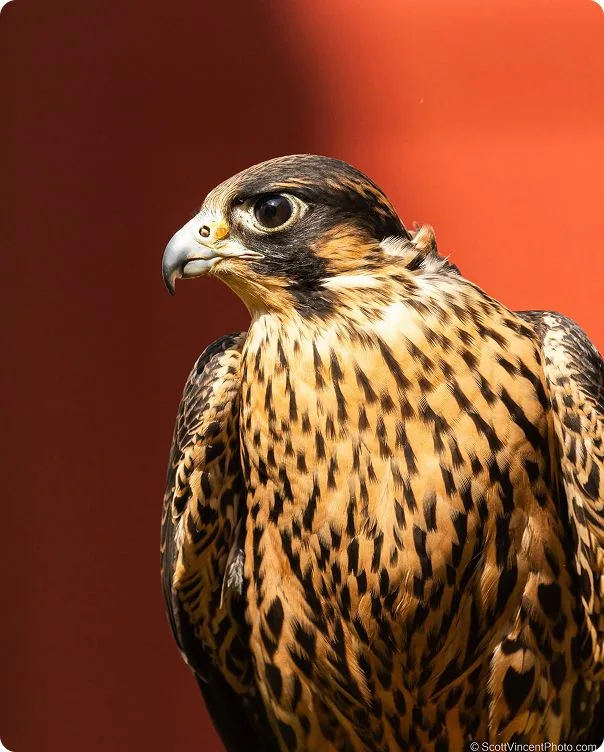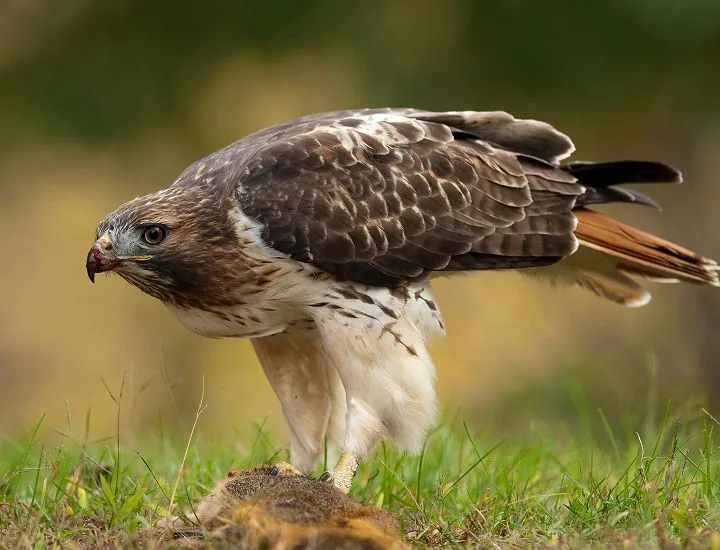
(Buteo jamaicensis borealis)
Eastern Red-tailed Hawk
Physical Description
Eastern Red-Tailed Hawks are large raptors with broad rounded wings, a hooked beak, and a short, wide tail. Their feathers are usually shades of brown on top and lighter underneath, with darker streaking across the chest and belly. Their most recognizable feature is their reddish-brown tail, which gives them their name. They also have strong featherless feet equipped with sharp talons for catching prey. These hawks are usually about 1.5 to 2 feet long, with a 4-foot wingspan, and females are typically larger than males.
Where They Live
Eastern Red-Tailed Hawks prefer open country, especially areas with fields, roadsides, scattered trees, cliffs, and perches like fence posts or telephone poles. They are found across much of North and Central America, from Alaska to Panama. Birds that live in the far north often migrate south during the winter.
What They Eat
Eastern Red-Tailed Hawks are carnivores and feed on a wide variety of animals, including hares, rabbits, squirrels, rodents, reptiles, birds, and carrion.
Life & Family
Eastern Red-Tailed Hawks are usually monogamous and often mate for life. They build large nests made of sticks, bark, leaves, and dry vegetation, usually high in trees, on cliffs, or on tall man-made structures. Females typically lay 1 to 5 eggs, and both parents help incubate them and care for the chicks. Young hawks remain dependent on their parents for several weeks after hatching and continue developing even after they first leave the nest. Eastern Red-Tailed Hawks can live around 21 years in the wild and up to 30 years in human care.
Sight & Hunting
Eastern Red-Tailed Hawks rely heavily on their exceptional eyesight to hunt. Like many raptors, they can focus quickly and spot movement far below while soaring overhead. They are often seen circling high in the sky or hovering into the wind, watching the ground before diving down in a slow, controlled strike. Their famous raspy scream is also one of the most recognizable bird calls in popular culture.
Status
Least Concern