(Myrmecophaga tridactyla)
Giant Anteater
Physical Description
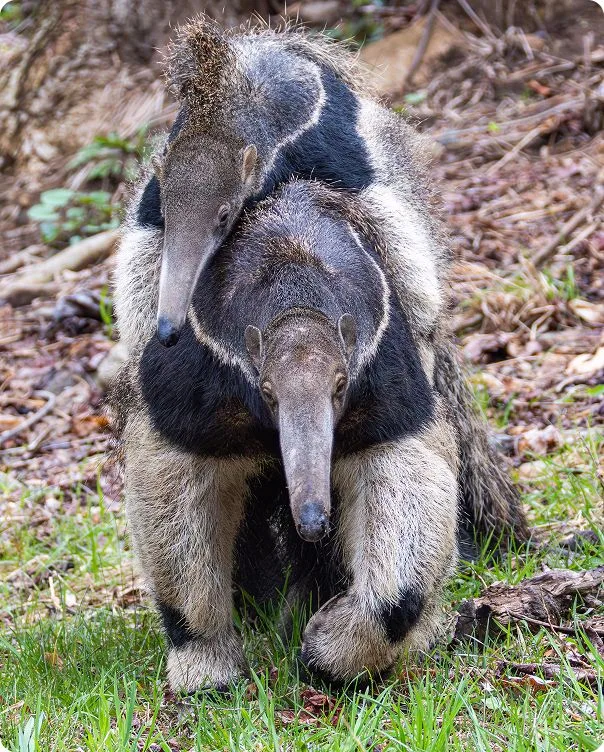
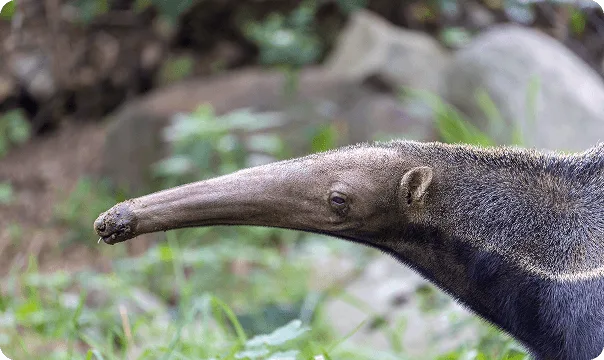
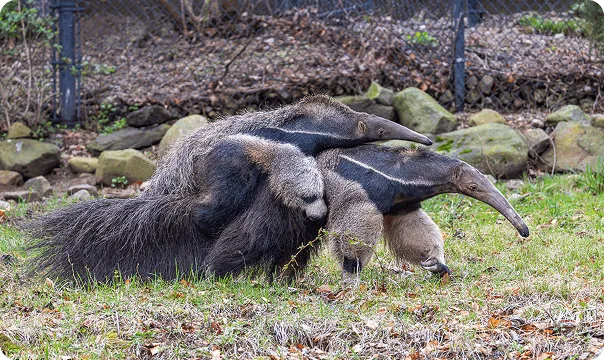
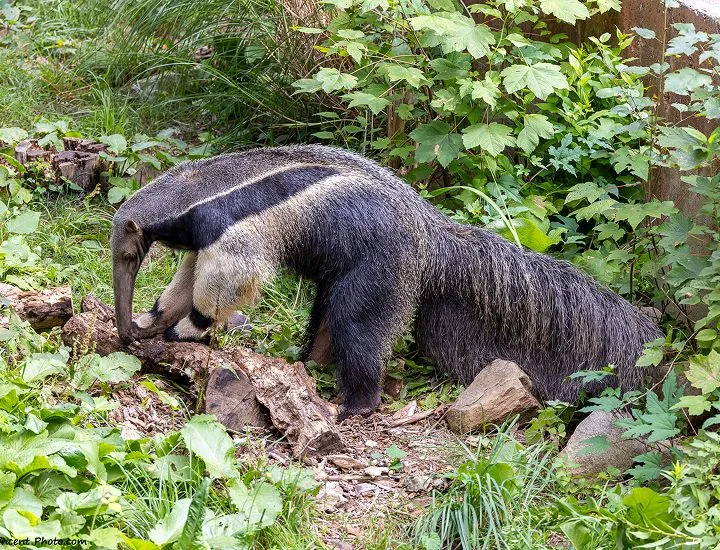
Giant Anteaters are the largest of all anteater species, weighing up to 100 pounds and growing as long as 7 feet from nose to tail. They have long narrow snouts, small eyes, rounded ears, and large bushy tails. Their coarse fur is usually gray and brown with a distinctive black stripe bordered in white running along the body. Giant Anteaters have no teeth, but they do have one of the most impressive tongues in the animal kingdom. Their sticky tongues can grow up to 2 feet long and flick in and out as many as 160 times per minute. They also have powerful front claws used for tearing into insect nests. To protect those claws, they walk with them curled under, almost like walking on their fists.
Where They Live
Giant Anteaters live in a range of habitats, including grasslands, humid forests, and woodlands. They are found throughout Central and South America, from southern Belize to northern Argentina.
What They Eat
Giant Anteaters are insectivores. Their diet mainly consists of ants, termites, and insect eggs. They use their sharp claws to open ant hills and termite mounds, then insert their long snouts and sticky tongues to feed. Interestingly, they usually do not destroy the entire nest, which gives the colony a chance to recover and provides a future food source.
Life & Family
Giant Anteaters are solitary animals and usually spend most of their time alone. Females typically give birth to one pup per year. At birth, the pup is already fully furred and looks like a miniature version of the adult. Young anteaters often ride on their mother's back for many months and may stay with her for up to two years. Giant Anteaters live around 14 years in the wild and can live up to 26 years in human care.
Built For A Very Specific Job
Almost every part of a Giant Anteater's body is specialized for feeding on insects. They have a powerful sense of smell to locate food, strong claws to break open nests, and a long, sticky tongue perfectly suited for reaching deep inside. They also have one of the lowest body temperatures of any mammal, usually between 91 and 97 degrees Fahrenheit, which is one reason they prefer warmer climates.
Status
Vulnerable