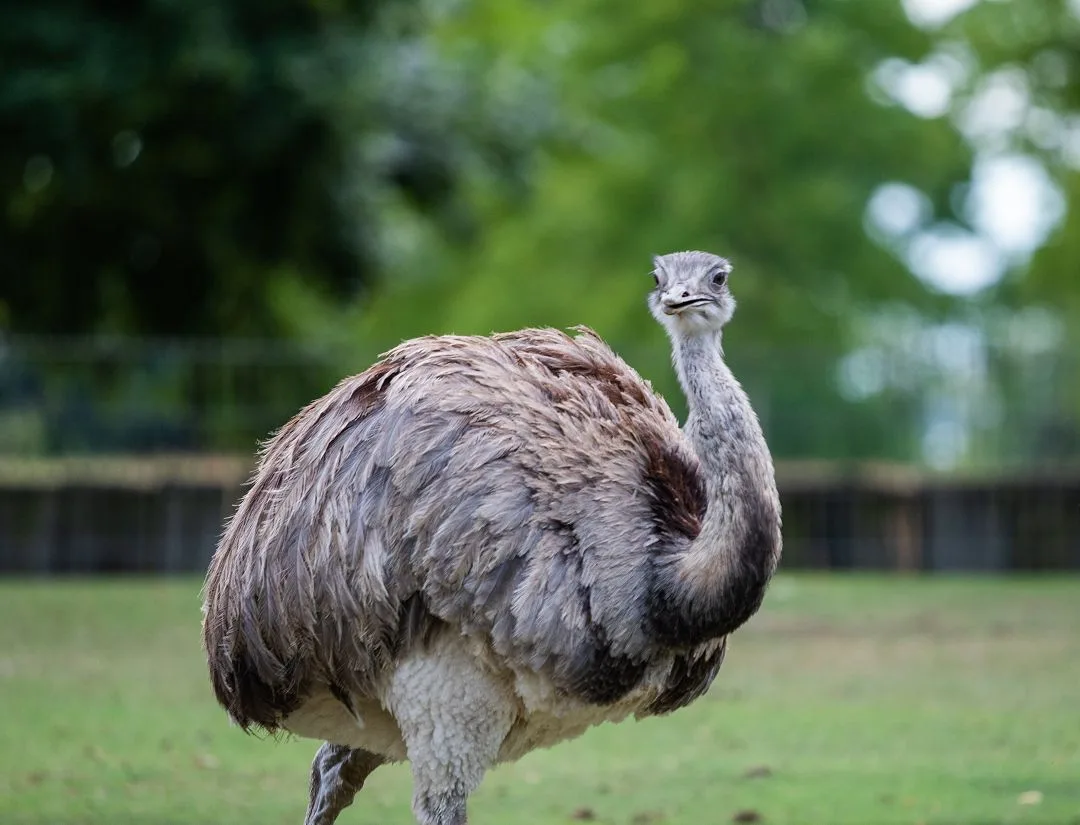
(Rhea americana)
Greater Rhea
Physical Description
The Greater Rhea is the largest bird in South America, growing up to about 5 feet tall and weighing as much as 90 pounds. Although they cannot fly, they are excellent runners. Their long powerful legs and three-toed feet help them move quickly across open terrain, while their broad wings help with balance and quick turns. Their feathers are usually gray or brown and have a soft, shaggy appearance. Males are typically larger and darker than females.
Where They Live
Greater Rheas live in open grasslands, grassy wetlands, and sparse woodlands. They are native to parts of South America, including Argentina, Bolivia, Brazil, Paraguay, and Uruguay.
What They Eat
Greater Rheas are omnivores. They eat a mix of plants, seeds, fruits, insects, lizards, birds, and other small animals. Like some other birds, they may also swallow small pebbles to help grind up food during digestion.
Life & Family
Greater Rheas have a unique family structure. During breeding season, males mate with multiple females and build a ground nest where several females may lay their eggs. A single nest can contain 50 or more eggs. Once the eggs are laid, the male takes over, incubating the eggs and caring for the chicks after they hatch. He also protects the young from threats for several months. Greater Rheas live about 15 years on average in the wild.
Built For Open Spaces
Because they live in wide open habitats, Greater Rheas rely more on speed and awareness than hiding. In cooler months, they often gather into social flocks and may even move alongside other large animals such as deer and guanacos, forming mixed groups across the landscape.
Status
Near Threatened