(Sus scrofa scrofa)
Guinea Hog
Physical Description
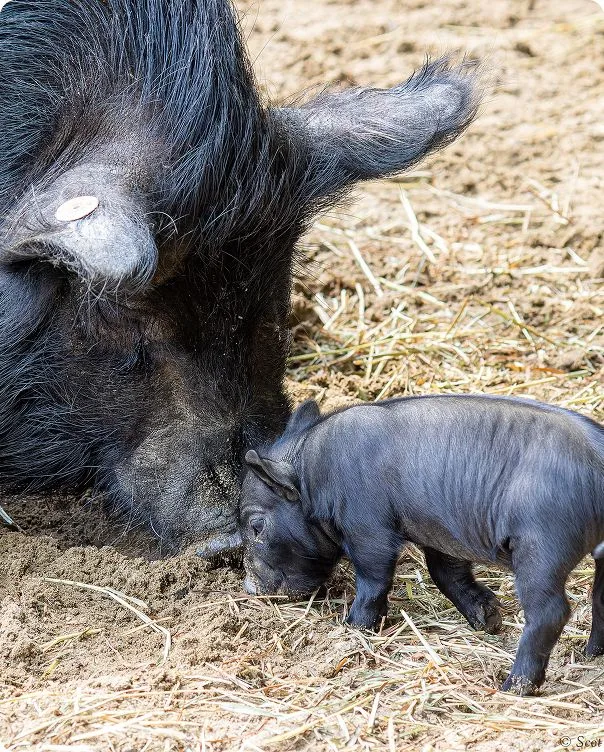
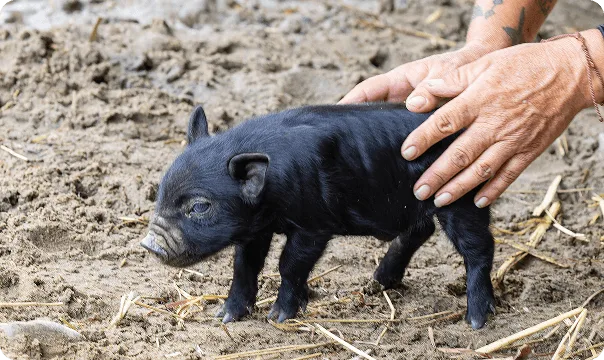
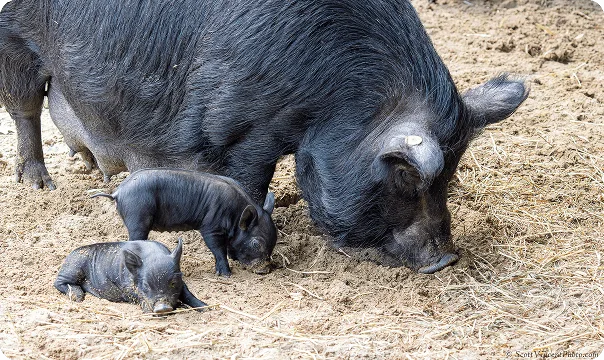
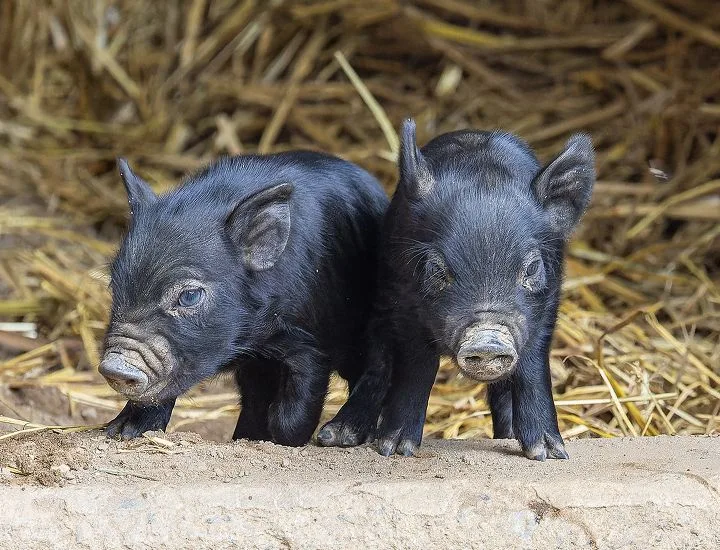
Guinea Hogs are sturdy, square-bodied pigs with a compact frame and a stocky build. They typically stand about 21 to 24 inches tall and weigh between 150 and 300 pounds. While they were once more commonly described as having reddish bristly hair, most Guinea Hogs today are known for their dark or black coats. They also have pointed ears, long tails, and strong snouts built for rooting and exploring. Guinea Hogs are also considered intelligent animals with a strong memory and a highly developed sense of taste.
Where They Live
Guinea Hogs are a domesticated breed and are typically found on farms. The breed traces its roots to West Africa and later became established on farms in Africa, Europe, and the United States.
What They Eat
Guinea Hogs are natural grazers and foragers. They eat a wide variety of foods, including grasses, roots, tubers, weeds, shrubs, insects, bird eggs, mice, and other small food sources they may come across while rooting.
Life & Family
Guinea Hogs are social animals and typically live in small herds. Females can give birth to litters of around 6 to 10 piglets, which they nurse during the early months of life. Because they are a domesticated breed, their lifespan can vary depending on care and living conditions.
A Heritage Farm Breed
Guinea Hogs are considered a heritage breed, meaning they are part of an older agricultural lineage that has become less common over time. They are especially valued for their hardiness, foraging ability, and calm temperament, which has helped keep them part of traditional and small-scale farming communities.
Status
As a domesticated breed, Guinea Hogs are not classified by the IUCN Red List. They are considered Threatened by The Livestock Conservancy.