(Parabuteo unicinctus)
Harris's Hawk
Physical Description
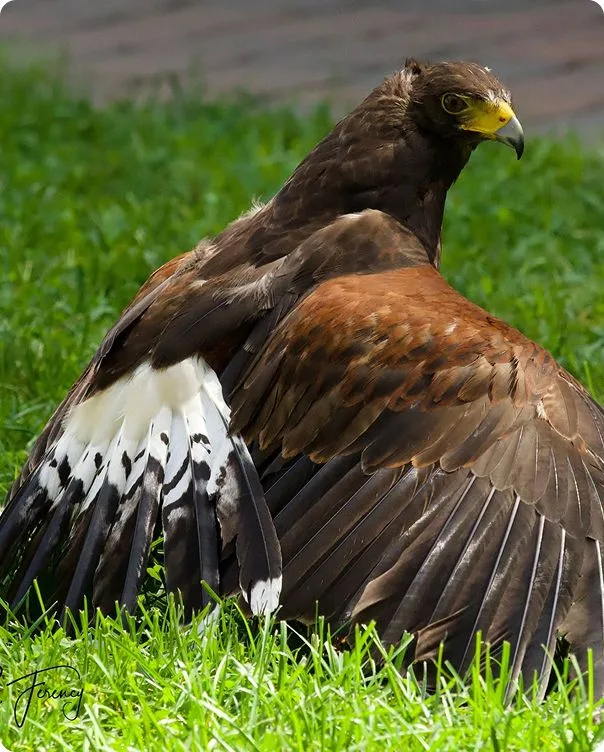
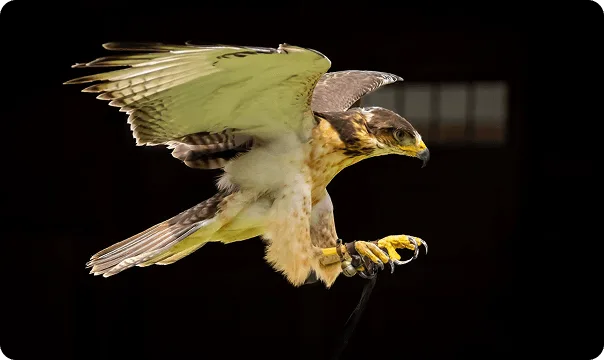
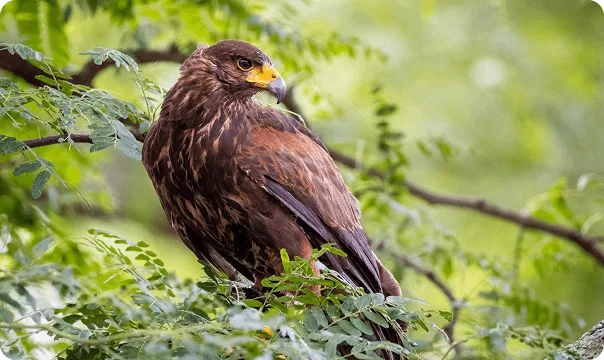
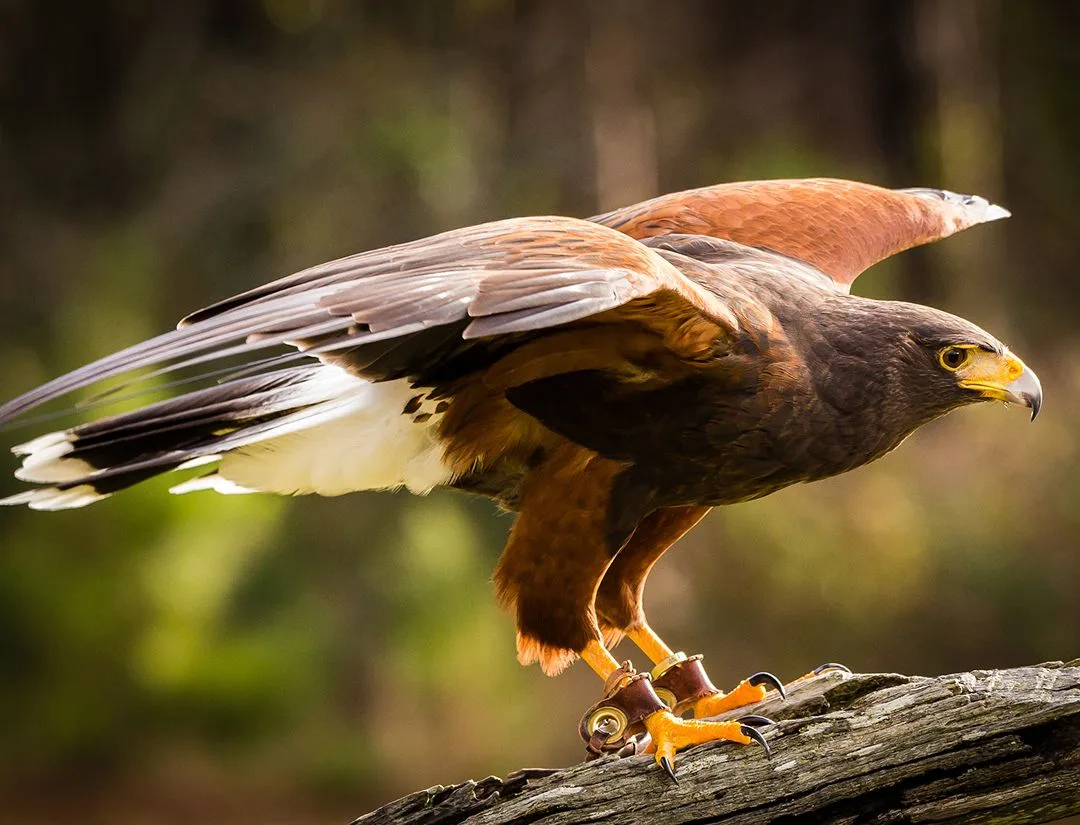
Harris's Hawks are large raptors with broad wings, long tails, and strong yellow legs built for perching and hunting. They typically grow 18 to 30 inches long, weigh between 25 and 36 ounces, and have a wingspan of about 40 to 47 inches. Females are generally larger than males. Adults have rich dark brown and chestnut plumage with bold markings and yellow coloring around the face and legs. Their tails are dark with contrasting lighter markings. Juveniles look similar but are usually less sharply defined in color, with paler undersides and more streaking. Harris's Hawks are diurnal, meaning they are active during the day, and they are known for having excellent vision and hearing.
Where They Live
Harris's Hawks prefer desert and savannah habitats, especially areas that include access to water. They are found in the southwestern United States, northwestern Mexico, and extend through parts of Central and South America as far south as Chile and Patagonia.
What They Eat
Harris's Hawks are carnivores. Their diet includes hares, rabbits, squirrels, rodents, quail, reptiles, and medium-sized birds. They are agile hunters and may hunt both from the air and on the ground.
Life & Family
Unlike many birds of prey, Harris's Hawks are highly social and often live in family groups. Most groups include a single breeding pair, though some groups may include more than one male breeding with one female. They build large nests made of sticks, cactus parts, grass, moss, and feathers, often in tall trees, cacti, cliffs, or even man-made structures. Females usually lay 2 to 5 eggs, and both males and females help incubate the eggs and care for the young. Once hatched, the chicks are completely dependent on the adults and remain near the nest for several months. Harris's Hawks live about 11 years in the wild and up to 25 years in human care.
Teamwork In Action
Harris's Hawks are especially known for their cooperative hunting, one of the most advanced social hunting strategies seen in birds. They may work together to flush out prey, take turns chasing, or coordinate movement through brush and open habitat. They also show a unique behavior called "back stacking," where they will perch on top of one another when space is limited.
Status
Least Concern