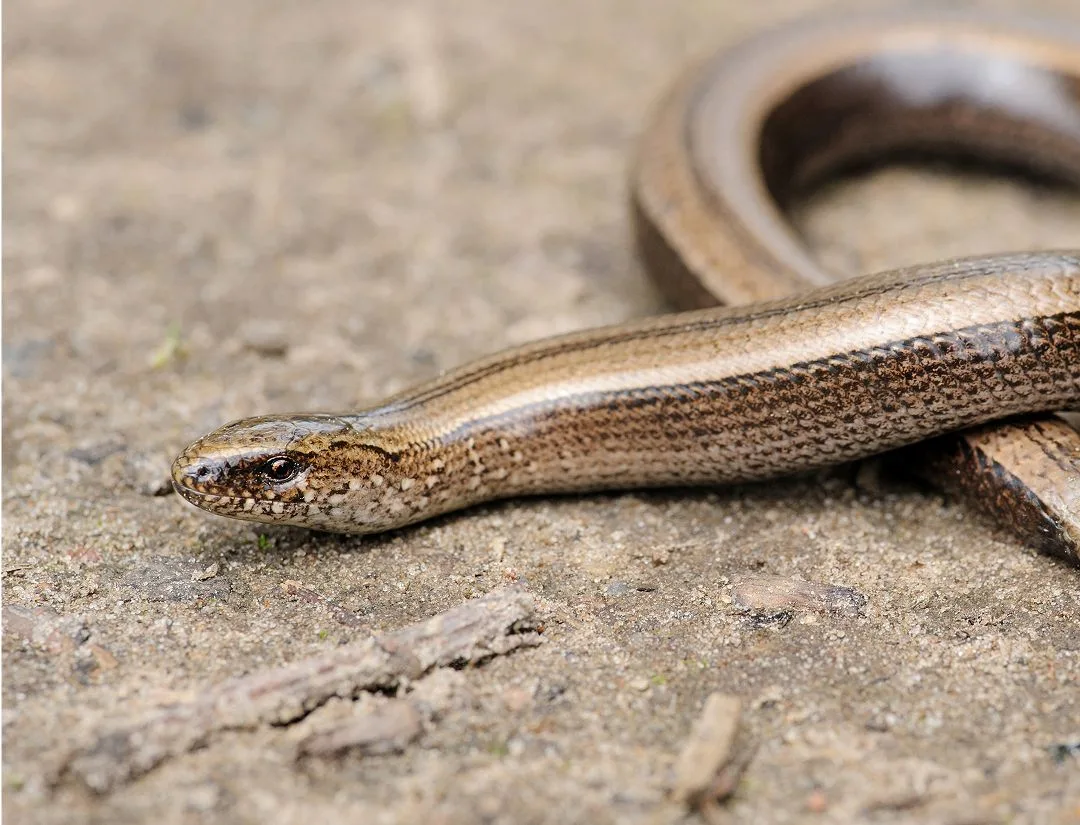
(Pseudopus apodus)
Legless Lizard
Physical Description
Legless Lizards can grow up to 4 feet long, though about two-thirds of that length is tail. They have a shovel-shaped snout, smooth shiny scales, and a tan body with a paler head and underside. Although they are often mistaken for snakes, they have several features snakes do not, including eyelids, ear openings, and small remnants of hind limbs visible as tiny nubs near the tail. They also have a distinctive fold of skin running down each side of the body called a lateral groove.
Where They Live
Legless Lizards prefer light woods, dry open areas, grasslands, scrubby vegetation, and rocky outcrops. They spend much of their time in underbrush or burrowing through loose soil and leaf litter, especially during the cooler parts of the day.
What They Eat
Legless Lizards are carnivores. Their diet includes snails, slugs, insects, eggs, and occasionally very small mammals or birds.
Life & Family
Legless Lizards are usually solitary and mate once each year after emerging from winter dormancy. Females lay around 8 eggs about 10 weeks after mating, often hiding them in a crevice and guarding them until they hatch. The young are about 6 inches long at birth and are fully independent right away. They can live around 30 years in the wild and up to 50 years in human care.
Not A Snake
One of the most interesting things about the Legless Lizard is how often it gets mistaken for a snake. But unlike snakes, it can blink, hear through external ear openings, and even drop its tail when threatened. That tail-dropping defense is what gives it another common name: the Glass Lizard, because the tail can break off in pieces when attacked.
Status
Least Concern