(Chrysocyon brachyurus)
Maned Wolf
Physical Description
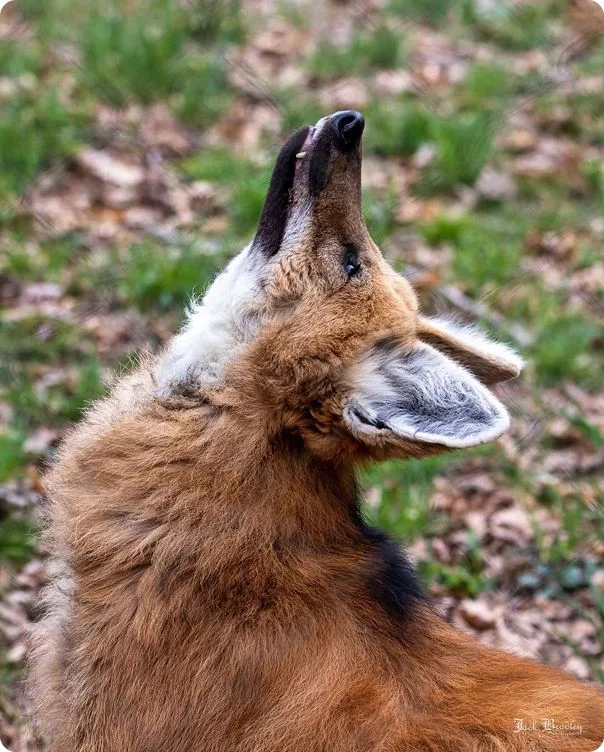
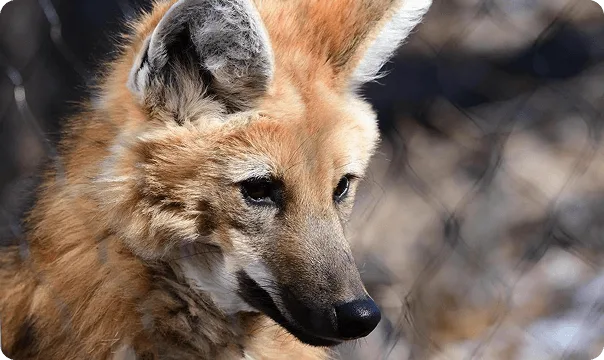
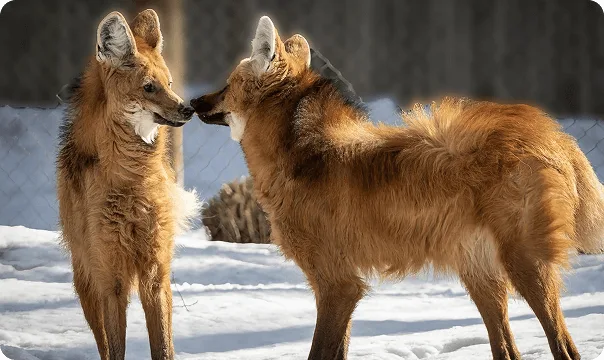
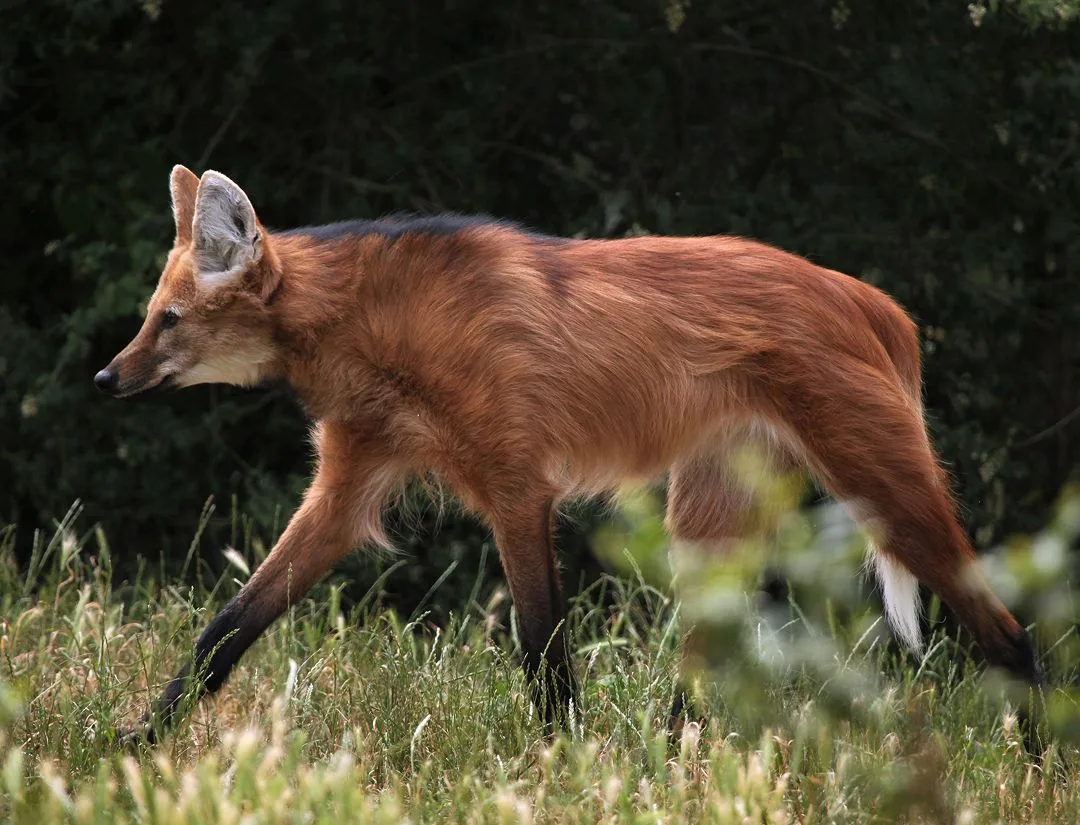
Maned Wolves are built for life in tall grass. Both males and females can grow to about 4 to 4.5 feet long, not including the tail, and stand up to 34 inches tall at the shoulder. They usually weigh between 44 and 50 pounds. They have long legs, large ears, and a distinctive reddish-orange coat. A dark stripe of longer fur, often called a mane, runs from the neck down the back and can stand upright when the animal feels threatened or alert. Their lower legs and feet are black, and they have white markings under the head and around the eyes.
Where They Live
Maned Wolves live in grasslands, savannas, and nearby wetland areas. Their long legs help them move through tall vegetation while scanning and listening for prey hidden below.
What They Eat
Maned Wolves are omnivores and eat both plant and animal matter. Their diet includes small mammals, birds, fruits, and vegetables. One especially important food source is the lobeira, also known as “wolf fruit,” which can make up a large portion of their diet.
Life & Family
Maned Wolves are usually solitary outside of breeding season. After a gestation period of about 9 weeks, females typically give birth to 2 to 5 cubs. Like many wild canids, they rely on quiet, hidden spaces to raise their young safely. In human care, they can live upwards of 13 years.
NOT A WOLF, NOT A FOX Despite its name, the Maned Wolf is not a true wolf and is not especially closely related to foxes either. It belongs to its own unique branch of the canid family tree. Its unusual appearance, long-legged silhouette, and fruit- heavy diet make it one of the most distinctive mammals in South America.
Status
Near Threatened