(Lontra canadensis)
North American River Otter
Physical Description
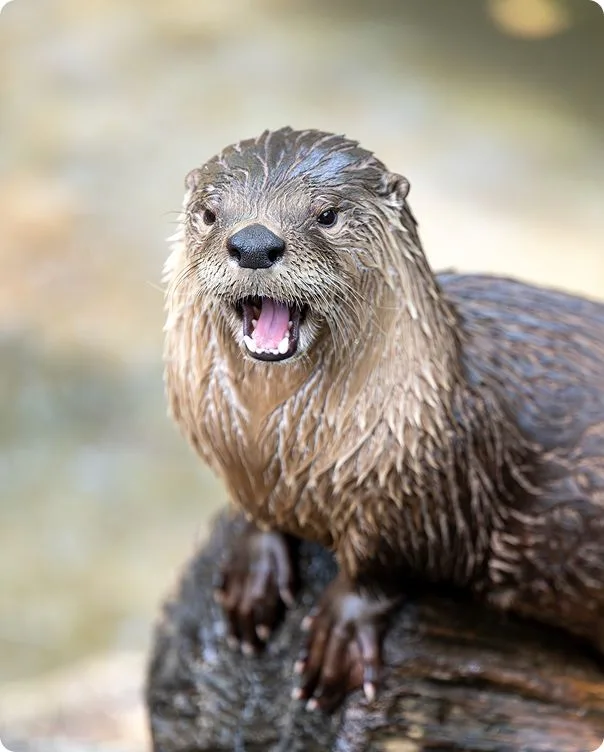
North American River Otters have long, streamlined bodies that help them move quickly through the water. Their bodies can range from about 18 to 42 inches long, not including the tail, and they typically weigh between 8 and 40 pounds, with males generally larger than females. Their brown fur is short, dense, and water-resistant, helping keep them warm while swimming. They also have a muscular tail that is thick at the base and tapers toward the tip, which helps power them through the water. Otters can even close their ears and nostrils when they dive underwater. Though they often look playful and curious, North American River Otters also have sharp teeth and powerful jaws.
Where They Live
North American River Otters live in a variety of wetland and freshwater habitats, including ponds, lakes, rivers, marshes, estuaries, and wooded shorelines. They are also found along some marine coasts, as long as they have access to food and shelter.
What They Eat
North American River Otters are carnivores and eat a wide range of aquatic animals. Their diet consists mostly of fish, but they also eat crabs, crayfish, waterfowl, eggs, turtles, freshwater clams, and small mammals.
Life & Family
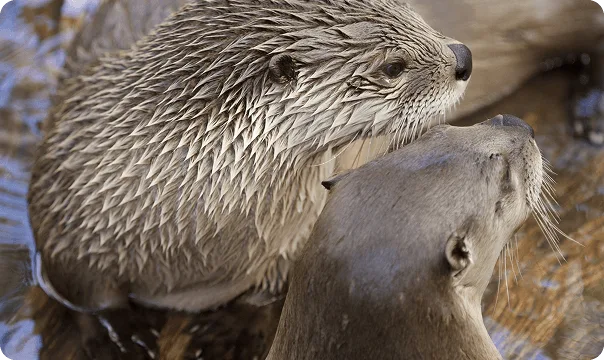
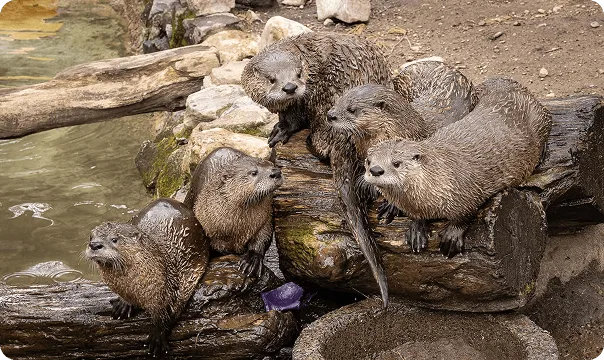
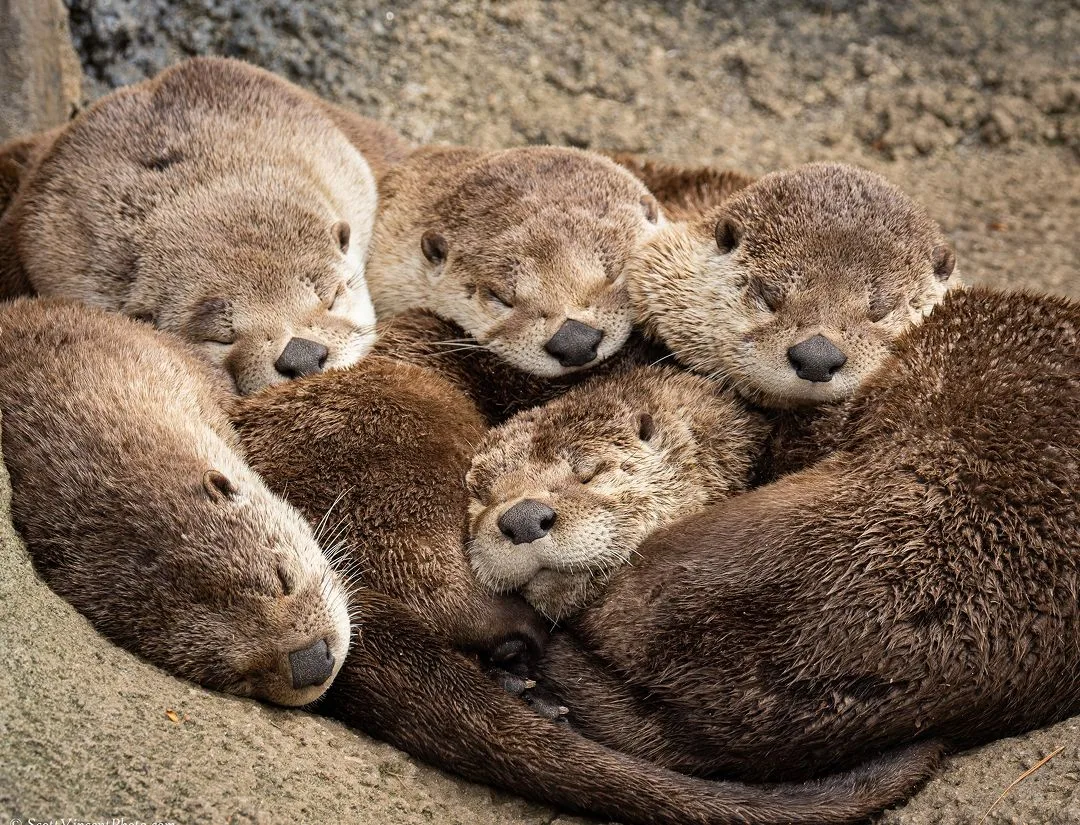
North American River Otters are generally social animals, though they may become more solitary during the breeding season. Females usually give birth to 1 to 4 pups after a gestation period of about 285 to 380 days. The pups stay with their mother for about one year as they grow and learn important survival skills. They live about 15 years on average in the wild and can live up to 23 years in human care.
Fun Fact
North American River Otters are excellent swimmers and can stay underwater for six to eight minutes at a time. When swimming, they use their tails and back legs to propel themselves through the water at speeds of up to 18 miles per hour. North American River Otters belong to a group of mammals called mustelids, which also includes animals like mink. In fact, American mink and their tracks have recently been observed along the banks of the Pequonnock River, connecting this species to the local environment around Connecticut’s Beardsley Zoo.
Status
Least Concern