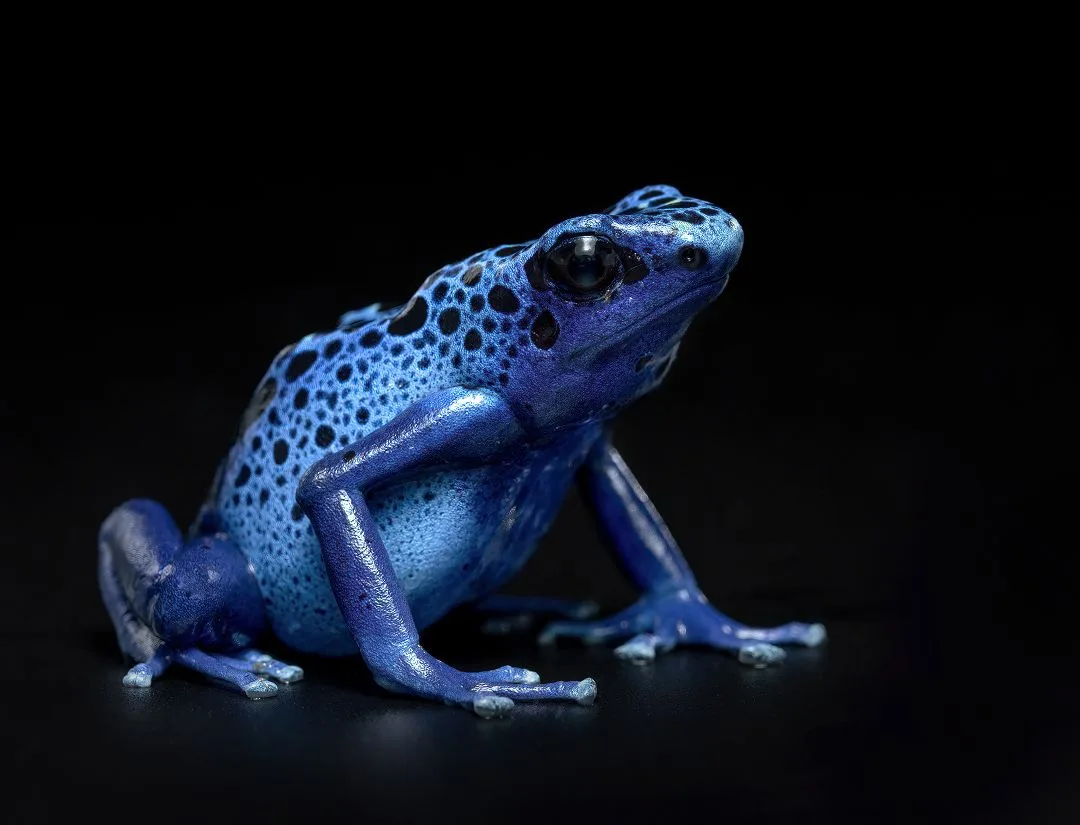
(Dendrobatidae family)
Poison Dart Frog
Physical Description
Poison Dart Frogs are small amphibians that usually grow between ½ inch and 2 inches long. They are best known for their bright, eye-catching colors and patterns, which can include shades of blue, yellow, green, black, and orange. These bold colors serve as a warning to predators that they may be toxic, a defense known as aposematic coloration. In many species, males are smaller than females, and some species, like the Blue Poison Dart Frog, have widened finger pads that help with climbing and gripping surfaces.
Where They Live
Poison Dart Frogs live in rainforest habitats throughout Central and South America. Depending on the species, they may spend time on the forest floor, in leaf litter, or in more elevated spaces such as trees, logs, stones, and plants. Some are mostly terrestrial, while others are partly arboreal.
What They Eat
Poison Dart Frogs are insectivores and feed on small insects and other invertebrates, especially ants. In the wild, certain prey species help some poison dart frogs build up the alkaloid toxins that make them poisonous.
Life & Family
Poison Dart Frogs have fascinating breeding and parenting behaviors. Females lay eggs in moist plant material or in water collected in plants such as bromeliads. Males then fertilize the eggs, and one parent—usually the male—guards them until they hatch, which usually takes 8 to 14 days. After hatching, the adult often carries the tadpoles to a larger water source, where they continue to grow and transform. Depending on the species, metamorphosis can take anywhere from 5 to 15 weeks. Poison Dart Frogs typically live 3 to 5 years in the wild and up to 10 years in human care.
Unlike many frogs, Poison Dart Frogs are active during the day, which means their bold colors are on full display. Their bright appearance warns predators that they may be toxic. This kind of warning coloration is also seen in some butterflies and snakes. In the wild, their toxicity comes from compounds in their diet. Frogs raised in human care generally do not develop the same toxicity because they eat different foods.
Status
Many Poison Dart Frog species are increasingly threatened by habitat loss, environmental change, and in some cases, overcollection for the pet trade.