(Ailurus fulgens fulgens)
Red Panda
Physical Description
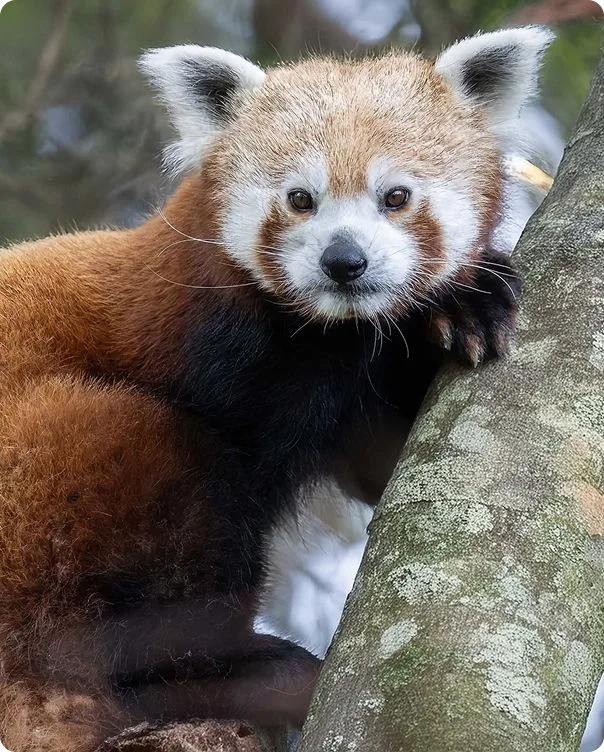
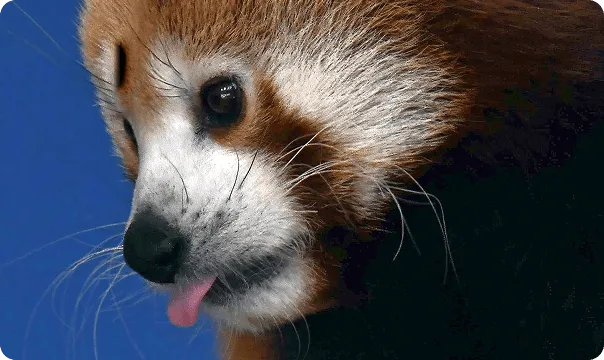
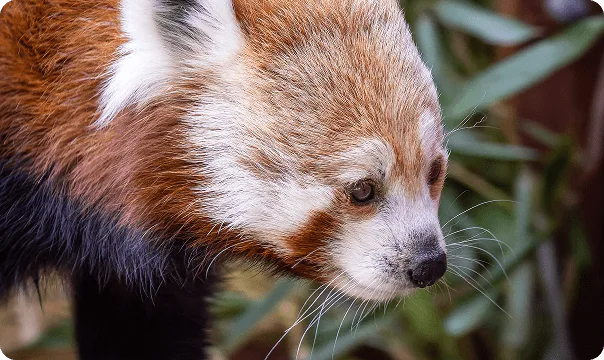
Red Pandas can grow up to 42 inches long, including their long, bushy tail, and typically weigh between 7 and 14 pounds. Their scientific name means “fire- colored cat,” which reflects their distinctive orange-red fur. This thick, soft fur even covers the soles of their feet, helping them stay warm in colder climates. Like Giant Pandas, Red Pandas have a modified wrist bone that acts like a sixth digit, helping them grasp bamboo and branches. Their long tail helps with balance in trees and can also be wrapped around their body for warmth. Though generally calm, Red Pandas can defend themselves by standing on their hind legs and using their sharp claws, and they can release a strong scent from glands near their tail.
Where They Live
Red Pandas live in cool, mountainous forests with dense bamboo growth. They are typically found at elevations between 7,000 and 12,000 feet, where thick vegetation provides both food and shelter.
What They Eat
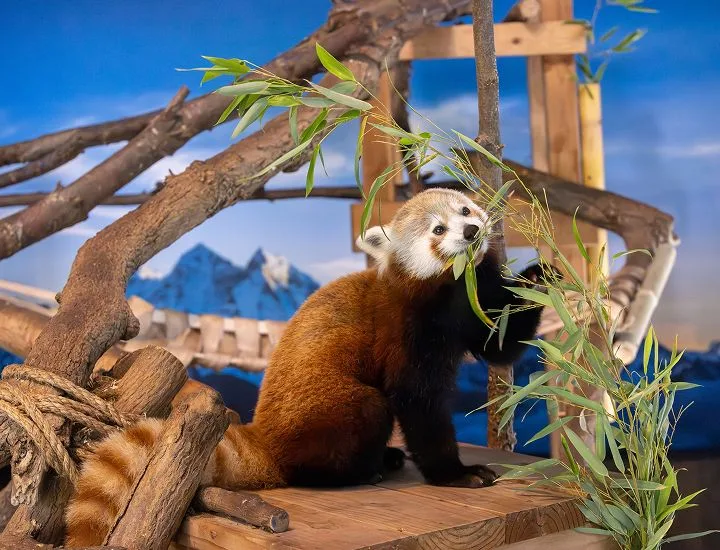
Red Pandas primarily eat bamboo leaves and shoots, but they also supplement their diet with berries, blossoms, bird eggs, and small plant leaves.
Life & Family
Red Pandas are generally solitary animals and are most active during the early morning, evening, and nighttime, making them both crepuscular and nocturnal. They come together during the breeding season, which is influenced by changing daylight. After birth, mothers care for their helpless young for the first few months of life. Red Pandas typically live up to 8 years in the wild and around 15 years in human care.
Built for Life in the Trees
Red Pandas are highly adapted for an arboreal lifestyle. Their strong limbs, sharp claws, and flexible ankles allow them to climb and move easily through branches, while their tail helps them stay balanced high above the ground. They also spend a significant amount of time resting, often sleeping 12 or more hours a day, conserving energy in their cool mountain habitats.
Status
Endangered