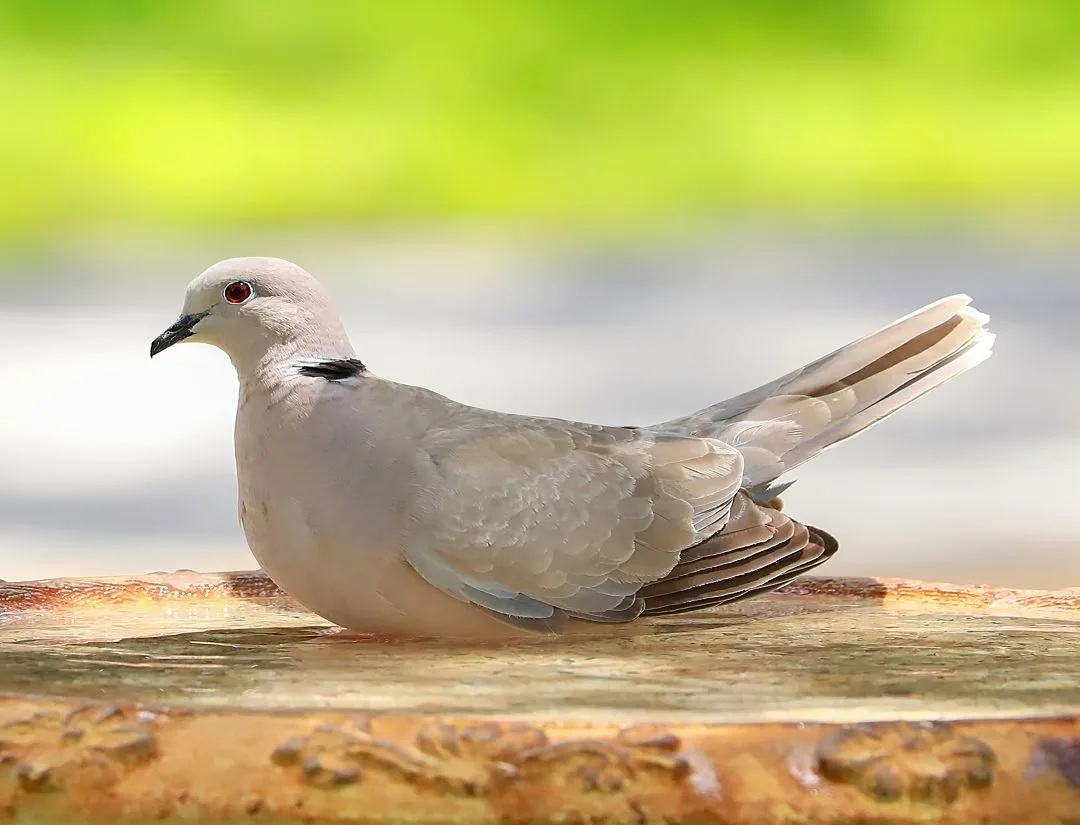
(Streptopelia capicola capicola)
Ring-Necked Dove
Physical Description
Ring-Necked Doves are slim birds that grow to about 10 inches long and weigh between 3 and 6 ounces. They have a 14-inch wingspan, a somewhat long rounded tail, and are usually a pale sandy brown color with a narrow black half-collar on the back of the neck. Their plumage can vary from very light to much darker shades, and juveniles tend to be duller in color and lack the signature neck marking. Their feathers are soft and detach easily, which can help them escape predators.
Where They Live
Ring-Necked Doves are commonly found in urban and suburban areas, especially in warmer climates. They do not usually thrive in heavily forested or especially cold environments.
What They Eat
Ring-Necked Doves eat a diet of seeds, berries, insects, and other small invertebrates. Their small pointed beaks are also used for preening, nest- building, drinking, and vocalizing.
Life & Family
Ring-Necked Doves are often seen alone, in pairs, or gathered in larger flocks near food and water. They are monogamous and usually mate for life, breeding throughout the year. Nests are built above ground using twigs, grasses, and roots, and pairs often reuse or renovate old nests for future broods. Females usually lay two or three eggs, and both parents help incubate them for about 15 days. Once hatched, the chicks are fed a special substance called crop milk, produced by both parents, until they are old enough to eat on their own. Ring- Necked Doves live about 12 years on average in human care.
Gentle Birds With Strong Instincts
Although Ring-Necked Doves are known for being calm around people, they still carry instincts that helped their wild relatives survive. They may freeze when a shadow passes overhead, a response that helps protect them from birds of prey. They are also known for their impressive navigational abilities, and doves throughout history have been used as messenger birds because of their remarkable sense of direction.
Status
Least Concern