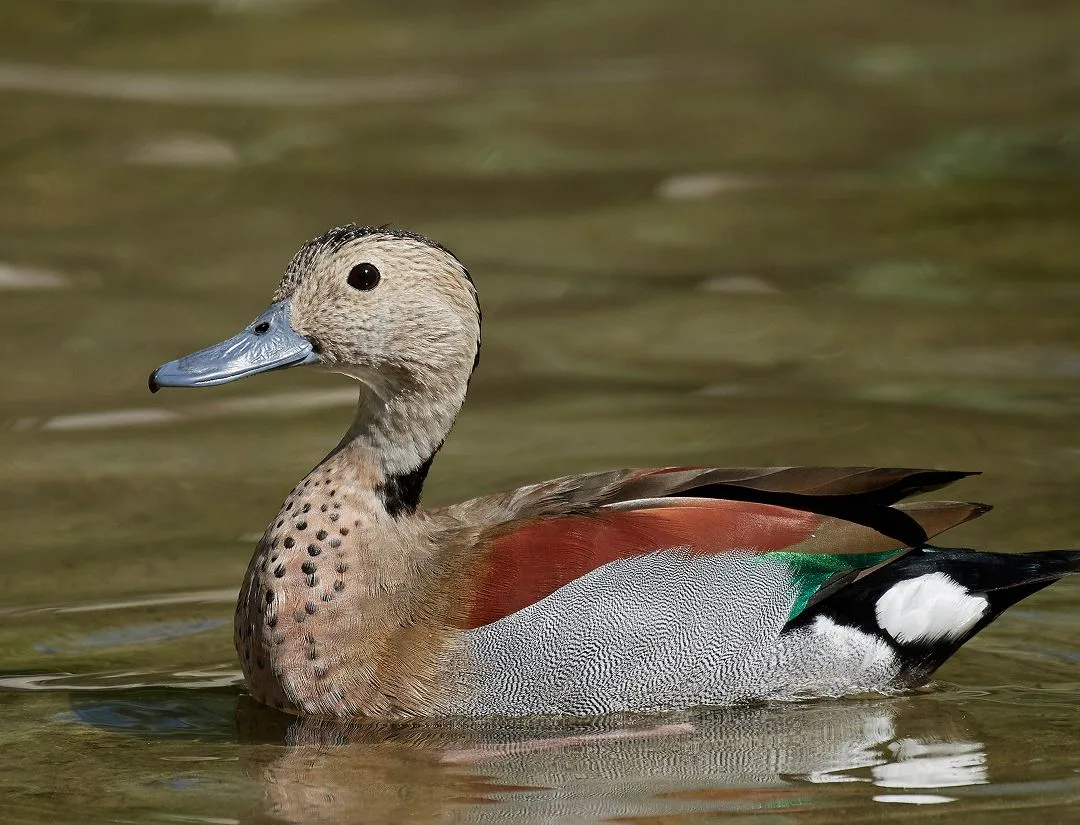
(Callonetta leucophrys)
Ringed Teal
Physical Description
Ringed Teals are among the smaller duck species, measuring about 14 to 15 inches long with a 28-inch wingspan and weighing around 12 ounces. They have slender gray-blue bills lined with tiny ridges called lamellae, which help them filter and cut through vegetation. Their plumage is especially eye-catching, with iridescent green feathers and a distinctive white patch near the wing. Males (drakes) are more colorful, with a pinkish speckled chest, a light tan head, and a bold black line forming a partial ring around the neck. Females (hens) are more muted, with olive-brown coloring, barred patterns, and lighter markings on the face. Their light pink legs and sharp claws allow them to perch easily, a trait that places them among the wood ducks.
Where They Live
Ringed Teals live in forested wetlands, including swampy tropical forests, ponds, marshy clearings, and slow-moving streams. They are most often found in areas that provide both water and nearby tree cover.
What They Eat
Ringed Teals are omnivores. They feed on a mix of aquatic plants, seeds, insects, snails, and small fish, using a dabbling feeding style where they dip their heads and bills into the water without fully submerging.
Life & Family
Ringed Teals often form strong pair bonds, which may last for a season or longer. They nest in tree cavities, lining the space with soft down. Females typically lay 6 to 11 eggs, and both parents take part in incubation. When the ducklings hatch, they are precocial, meaning they are well developed and able to move right away. They leave the nest by leaping down and quickly begin following their mother to water, where they feed independently. They usually reach flight at around 53 days old and live about 13 years on average.
Built for Water and Trees
Unlike many ducks, Ringed Teals are comfortable both in the water and in the trees. Their ability to perch, combined with their dabbling feeding style, makes them especially adaptable in forested wetland environments. Their slightly uneven, almost limping walk on land is another unique trait, giving them a distinctive presence both in and out of the water.
Status
Least Concern