(Grus canadensis)
Sandhill Crane
Physical Description
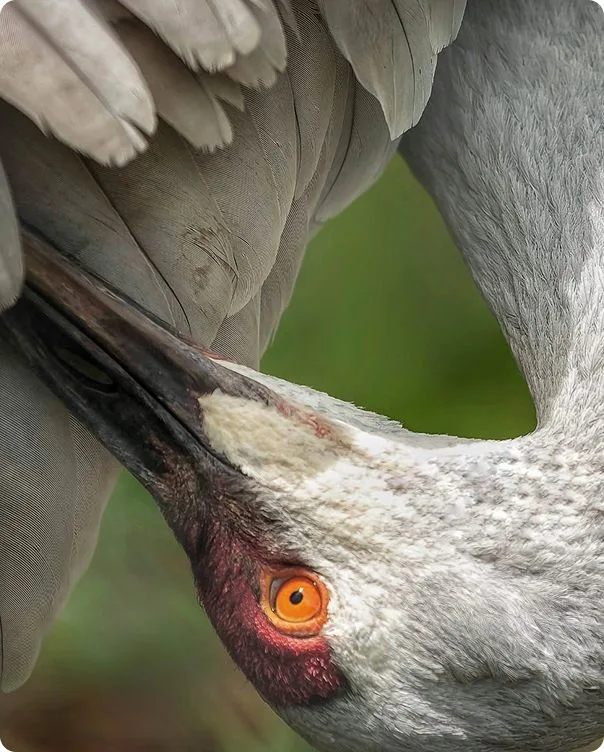
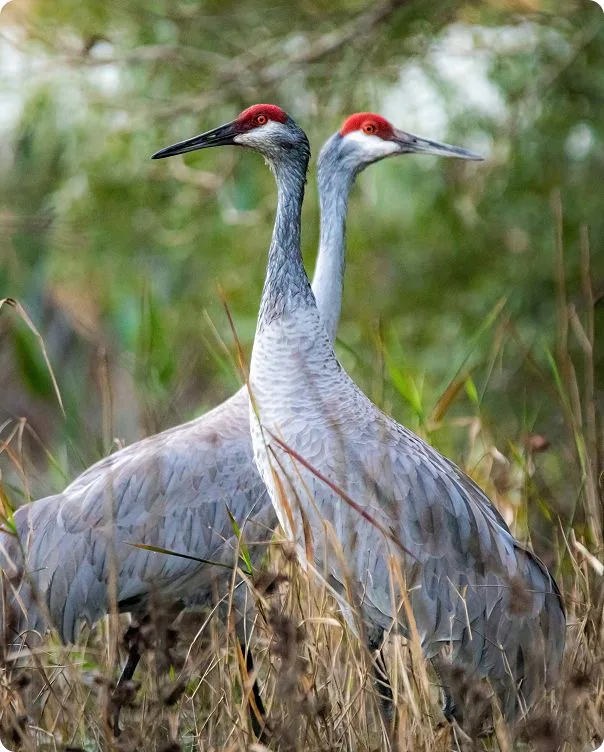
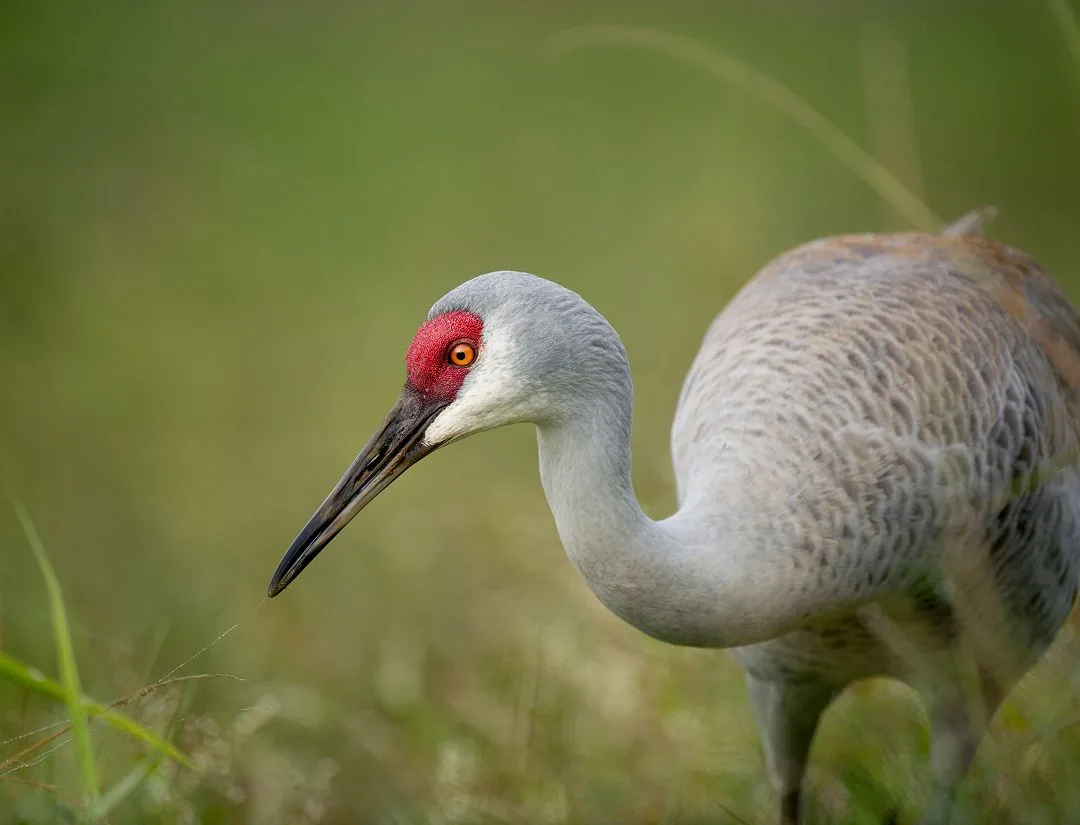
Sandhill Cranes are large birds with long legs, long necks, broad wings, and straight pointed bills. They grow to about 47 inches tall on average, with a wingspan of around 78 inches, and typically weigh between 7 and 10 pounds.
Their bodies are covered in gray feathers, and adults are easy to recognize by the red patch on top of the head and their pale-colored faces. They also have black legs that help them move through wetland habitats.
Where They Live
Sandhill Cranes breed and forage in open prairies, grasslands, and wetlands.
Outside of breeding season, they often roost in shallow water near ponds or lakes, where they can rest more safely overnight.
What They Eat
Sandhill Cranes are omnivores.
Their diet includes seeds, grains, berries, insects, snails, amphibians, reptiles, small mammals, and even nestling birds.
Life & Family
Sandhill Cranes typically mate for life and stay with the same partner year-round.
Females usually lay one to three eggs, though often only one chick survives to fledge. Once hatched, chicks are surprisingly capable and can leave the nest and even swim within hours.
Young cranes stay with their parents for about 9 to 10 months, learning important survival behaviors before becoming independent.
In the wild, Sandhill Cranes live about 20 years on average.
A Bird Known For Its Voice And Dance
Sandhill Cranes are especially famous for their loud, rolling, trumpet-like calls, which can carry long distances. Their sound comes in part from a long windpipe that coils into the sternum, helping amplify their voice.
They are also known for their elaborate courtship dances, which can include bowing, wing stretching, jumping, and head-pumping. These displays are one of the most memorable behaviors associated with the species.
Status
Least Concern