(Eudocimus ruber)
Scarlet Ibis
Physical Description
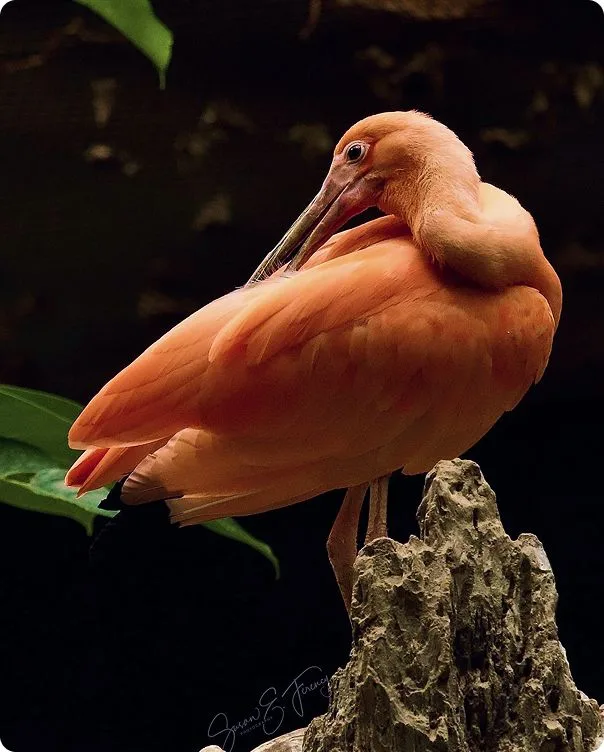
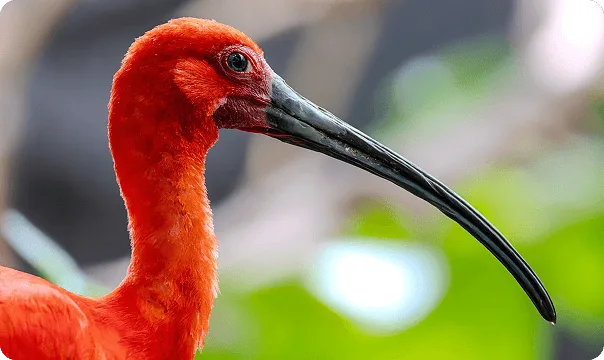
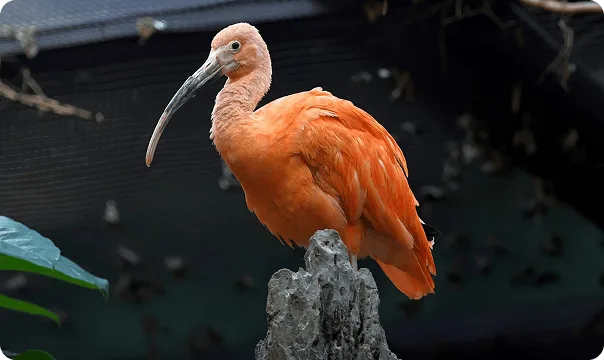
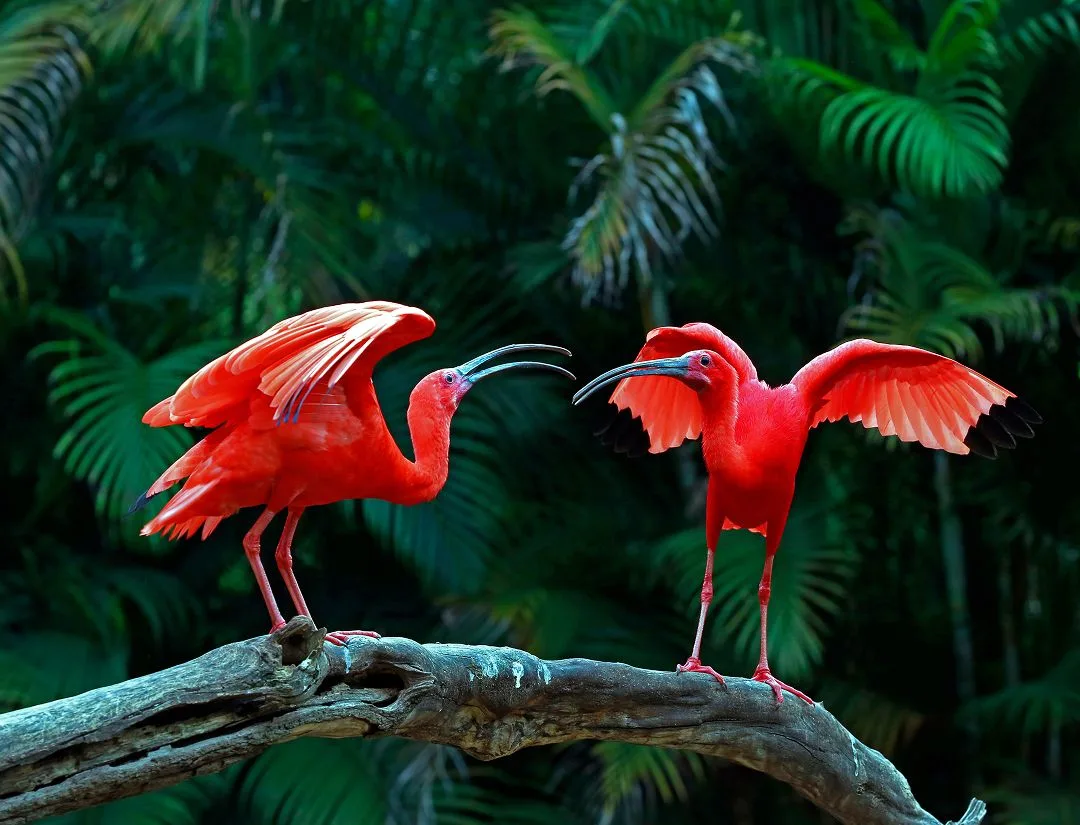
Scarlet ibises are medium-sized wading birds that stand about 21½ to 27½ inches tall, with a wingspan of approximately 38 inches. They have long legs, a slender body, and a distinctive downward-curving bill that ranges in color from pink- brown to black. Their most recognizable feature is their bright pink-orange to scarlet plumage. This color comes from pigments found in the crustaceans they eat. In human care, they are provided with a specialized diet to help maintain this vibrant coloration. If their diet changes, new feathers that grow in after molting may appear more faded.
Where They Live
Scarlet ibises live in coastal environments such as mangrove swamps, muddy estuaries, and tidal flats. These habitats provide the shallow waters and soft mud they rely on for feeding.
What They Eat
Scarlet ibises are omnivores that feed primarily in shallow water. Their diet includes fiddler crabs, aquatic insects, fish, snails, green algae, and other small animals they find by probing through mud with their curved bills.
Life & Family
Scarlet ibises are social birds that often nest in large groups. Nesting typically takes place during the rainy season, usually in May and June. The male gathers sticks while the female builds the nest. Females typically lay 2 to 3 eggs, which are dull olive-green to buff in color. The eggs incubate for about 21 to 23 days. Young birds begin climbing through branches at around 2 to 3 weeks old and are able to fly at about 28 days. On average, scarlet ibises live around 7 years.
Built for Wetland Feeding
The Scarlet Ibis’s long, curved bill is specially adapted for finding food in soft mud. By sweeping and probing, they can detect and capture prey without needing to see it. Their bright coloration also plays a role in communication and mate attraction, making them one of the most visually striking birds in their habitat.
Status
Least Concern