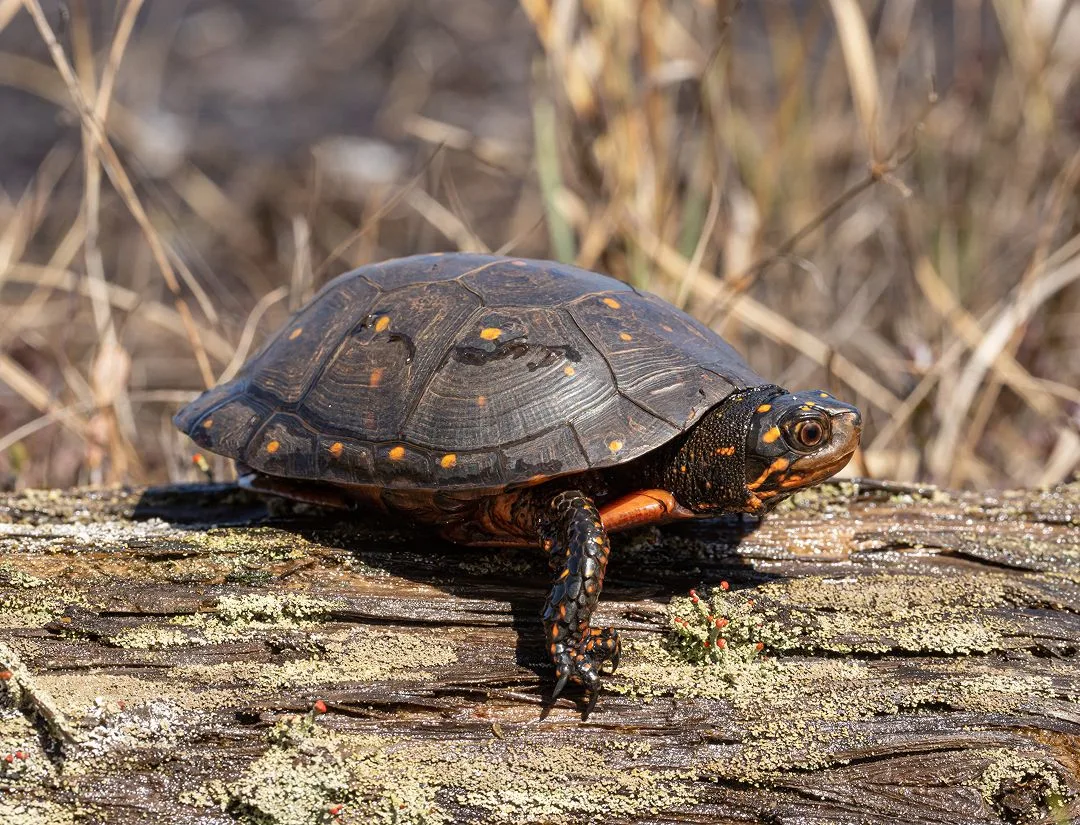
(Clemmys guttata)
Spotted Turtle
Physical Description
Spotted turtles are small, smooth-shelled turtles with black or dark brown shells marked by bright yellow to orange spots. They typically grow to about 3.5 to 5 inches in shell length and weigh between half a pound and three-quarters of a pound. Their compact size and distinctive markings make them one of the easiest turtles in their range to identify.
Where They Live
Spotted turtles live in a variety of freshwater wetland habitats, including marshy meadows, bogs, wet woodlands, springs, beaver ponds, and shallow, muddy- bottomed streams. They prefer areas with soft soil and shallow water, where they can easily move between land and water.
What They Eat
Spotted turtles are omnivores. Their diet includes aquatic insects, plants, mollusks, and occasionally small amphibians such as frogs, as well as small fish.
Life & Family
Spotted turtles typically lay their eggs in early summer, most often in June. Females usually lay 3 to 4 small eggs, which hatch after about 2 to 3 months. Unlike many animals, spotted turtles do not provide parental care. Hatchlings are fully independent from the moment they emerge. These turtles grow slowly and usually reach maturity between 8 and 10 years of age. They can live a long time, with lifespans ranging from 25 to 50 years.
Built for Cooler Conditions
Unlike many reptiles, spotted turtles prefer cooler temperatures. During hot summer weather, they may burrow into mud or retreat underground to stay cool. This behavior helps them avoid overheating and allows them to remain active during times when other turtles may be less active.
Status
Endangered