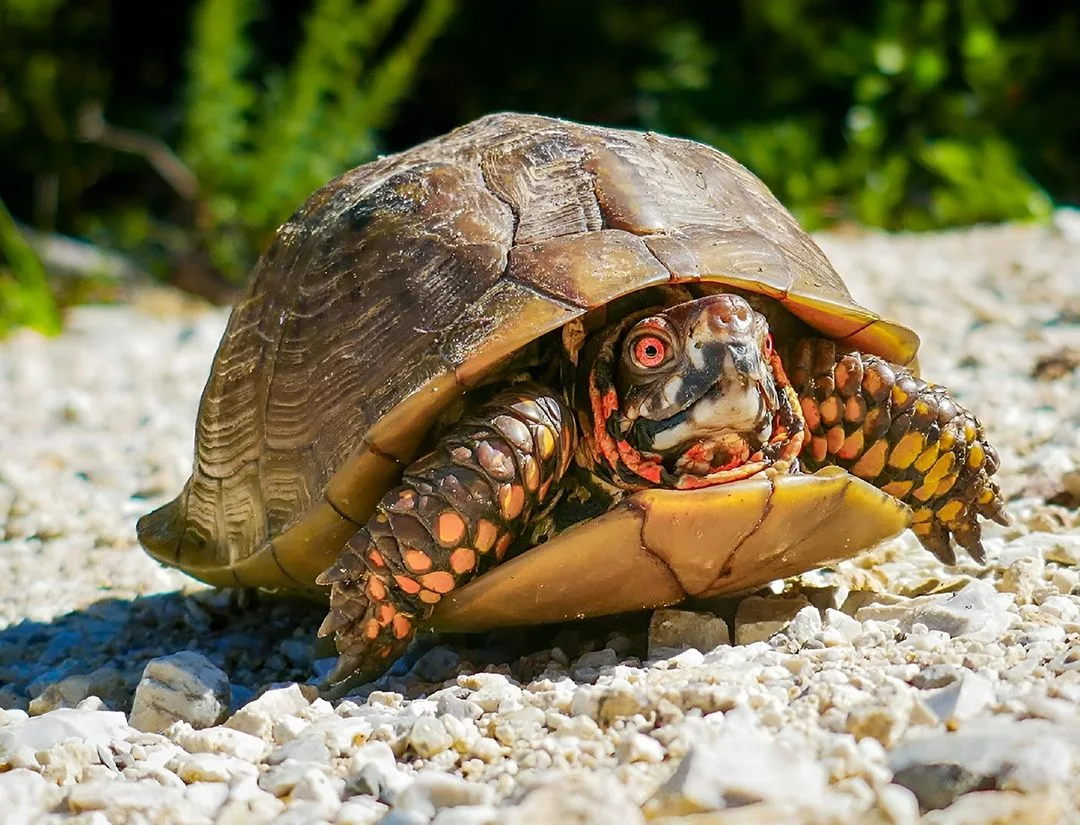
(Terrapene carolina triunguis)
Three-Toed Box Turtle
Physical Description
The Three-Toed Box Turtle is the smallest of the Eastern Box Turtle subspecies, growing up to about 6 inches long and weighing up to 2 pounds. It gets its name from the three toes on each hind foot. Its shell is typically brown or gray, sometimes with hints of red or orange. One of its most notable features is its hinged plastron, which allows it to fully close its shell for protection.
Where They Live
Three-Toed Box Turtles live in wetlands, grasslands, and wooded areas, often near water. They are found in the south-central United States and rely on access to sunlight and warm surfaces like rocks to regulate their body temperature. Temperature also plays an important role in determining the sex of their offspring during development.
What They Eat
Three-Toed Box Turtles are omnivores, feeding on a mix of insects, plants, seeds, and small vertebrates.
Life & Family
Three-Toed Box Turtles are solitary animals and do not provide parental care after eggs are laid. They tend to stay within a relatively small home range, often no larger than the size of a football field. They can live a long time, often reaching 30 to 50 years.
Shell & Survival
The Three-Toed Box Turtle’s hinged shell is one of its most effective defenses. When threatened, it can pull its head and limbs inside and close itself up tightly, protecting its soft body from predators. Because they live in small, familiar ranges, relocating a turtle in the wild can disrupt its ability to survive.
Status
Vulnerable