(Cathartes aura)
Turkey Vulture
Physical Description
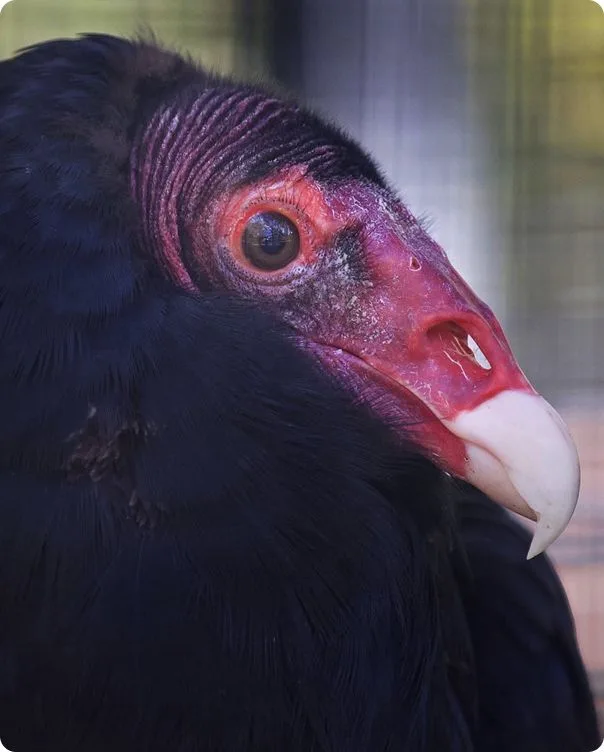
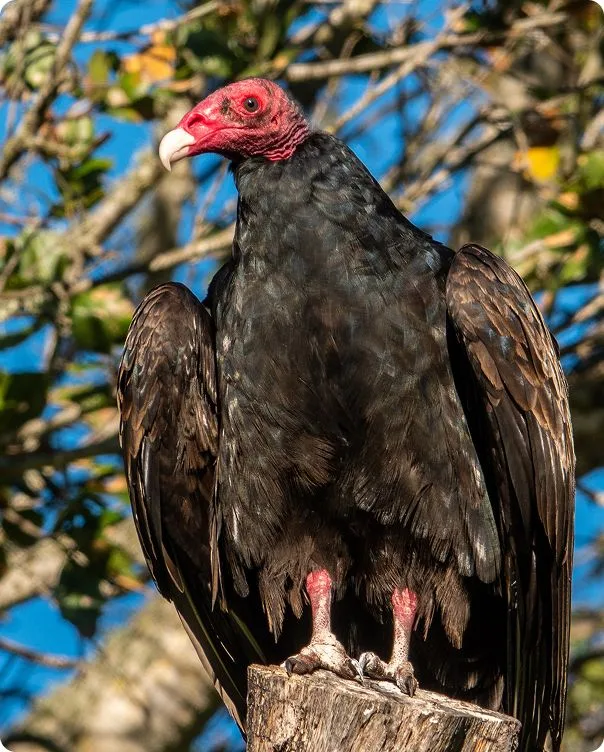
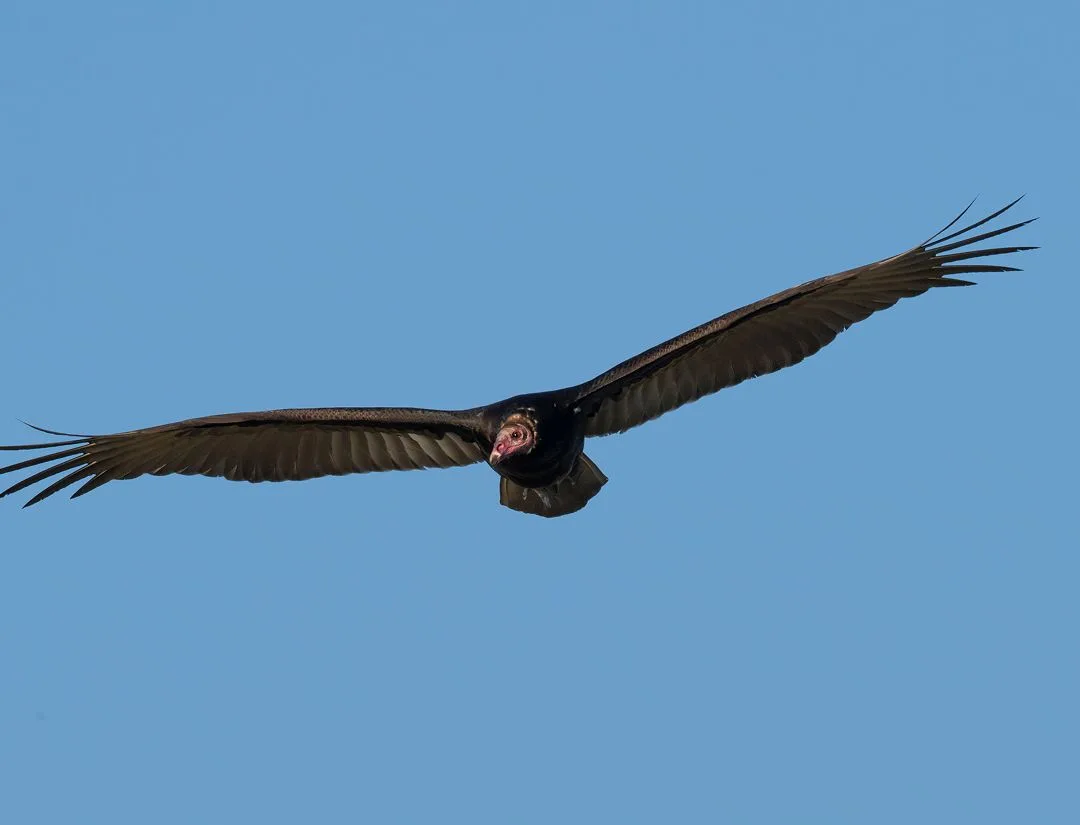
Turkey vultures are large, dark brown birds with long, broad wings and a distinctive bare red head. Adults can grow up to 31 inches long and have wingspans of up to 70 inches. They are often seen soaring high overhead in wide circles, using warm air currents to glide with very little effort as they search for food below.
Where They Live
Turkey vultures are highly adaptable birds and can be found in many different habitats. They live in mountains, forests, plains, swamps, coastal regions, and even urban and suburban areas. Their ability to thrive in a wide range of environments has helped them remain one of the most familiar vultures in North America.
What They Eat
Turkey vultures are scavengers and feed mostly on carrion, or dead animals. Their diet can include roadkill, washed-up fish, rotten fruit and vegetables, insects, other invertebrates, reptiles, bird nestlings, and even animal dung. By cleaning up animal remains, they help keep ecosystems healthier.
Life & Family
Turkey vultures typically breed once each year between March and June. They usually lay up to 3 eggs, which incubate for about 30 to 40 days. Young vultures develop their flight feathers within about 80 days and usually become independent by around 90 days. In the wild, turkey vultures can live up to 16 years, and in human care they may live as long as 33 years.
A Bird With an Incredible Sense of Smell
Unlike many birds, turkey vultures have an exceptionally strong sense of smell. They are able to detect the scent of decaying animals from great distances, helping them locate food that may be hidden beneath trees or vegetation. In fact, their sense of smell has even helped people. Engineers have used turkey vultures to help locate leaks in natural gas pipelines because the added odor in the gas resembles the scent of decaying carrion.
Status
Least Concern