(Choloepus hoffmanni)
Two-Toed Sloth
Physical Description
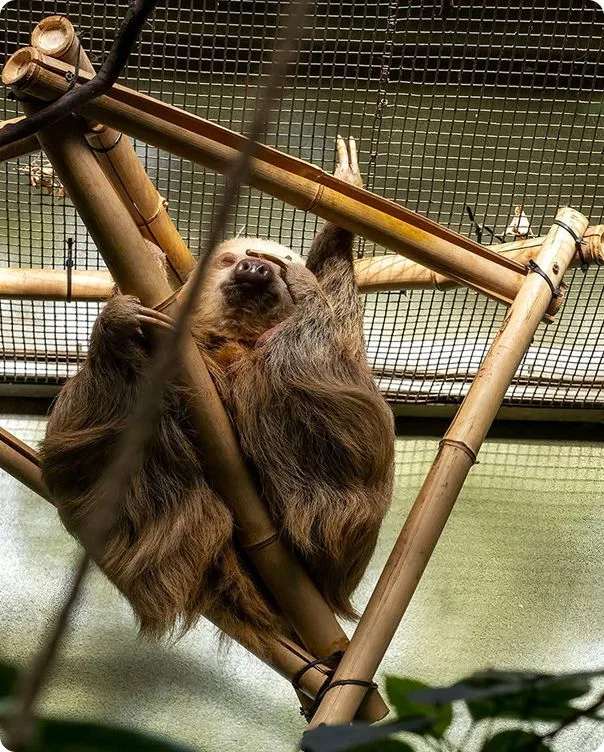
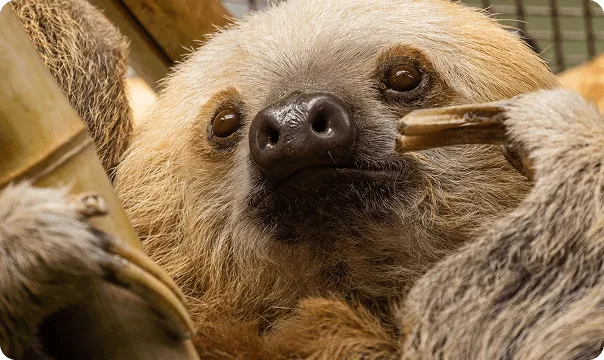
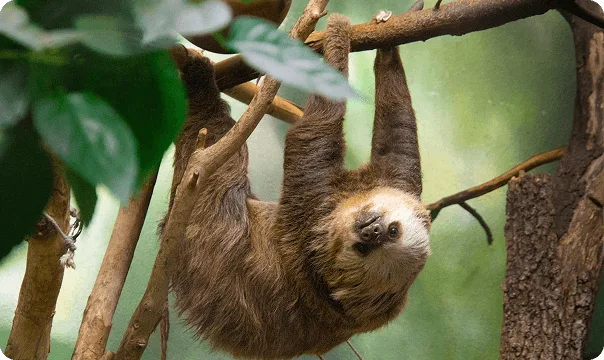
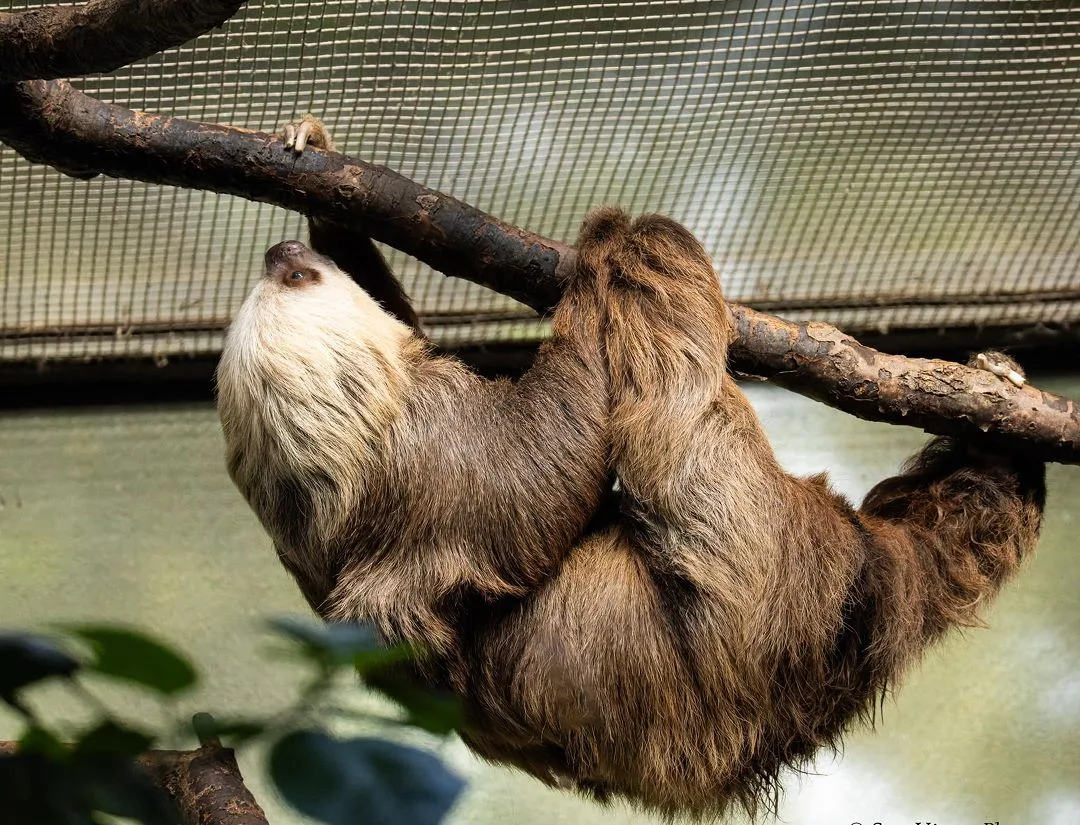
Hoffmann’s Two-Toed Sloths are small mammals that typically grow to about 2 to 2.5 feet long and weigh between 9 and 20 pounds. They have dense brownish-green fur, rounded heads, and lighter fur around their large eyes. Their fur often appears green because blue-green algae can grow on it, helping provide camouflage among the leaves and branches of the rainforest. Sloths are also unusual because their hair grows in the opposite direction of most mammals. This helps rainwater run off their bodies while they hang upside down. They have long limbs and powerful claws that help them move through the treetops. Their front feet have two claws, while their hind feet have three. They have poor eyesight and hearing and rely mostly on their senses of touch and smell.
Where They Live
Two-toed sloths live high in the canopies of tropical rainforests. They spend nearly their entire lives in the trees, where they move carefully through branches and rest among the leaves. They are found in tropical forests throughout Central and South America.
What They Eat
Hoffmann’s Two-Toed Sloths are herbivores. They eat a variety of leaves, tender shoots, moss, and fruit. They get the water they need from the plants and fruits they eat. Sloths also play an important role in their ecosystem. Some tropical plant seeds only germinate after passing through a sloth’s digestive system, making them important helpers in rainforest plant growth.
Life & Family
Two-toed sloths are mostly solitary animals, though females may gather occasionally. Males are generally solitary. Females usually give birth to a single baby that weighs about 1 pound. The young sloth clings to its mother’s chest and nurses for the first several months of life. Babies can begin hanging upside down within about 20 to 25 days, but they often stay close to their mothers for up to two years before becoming independent. In the wild, two-toed sloths live about 20 years on average and can live 30 years or more in human care.
Built for Life Upside Down
Two-toed sloths are specially adapted for a slow-moving life in the trees. Their extremely slow metabolism helps them conserve energy, and they have one of the lowest and most variable body temperatures of any mammal. Because of this slow metabolism, sloths only need to climb down from the trees about once a week to go to the bathroom. The rest of their lives are spent eating, resting, and moving carefully through the canopy above the rainforest floor.
Status
Least Concern