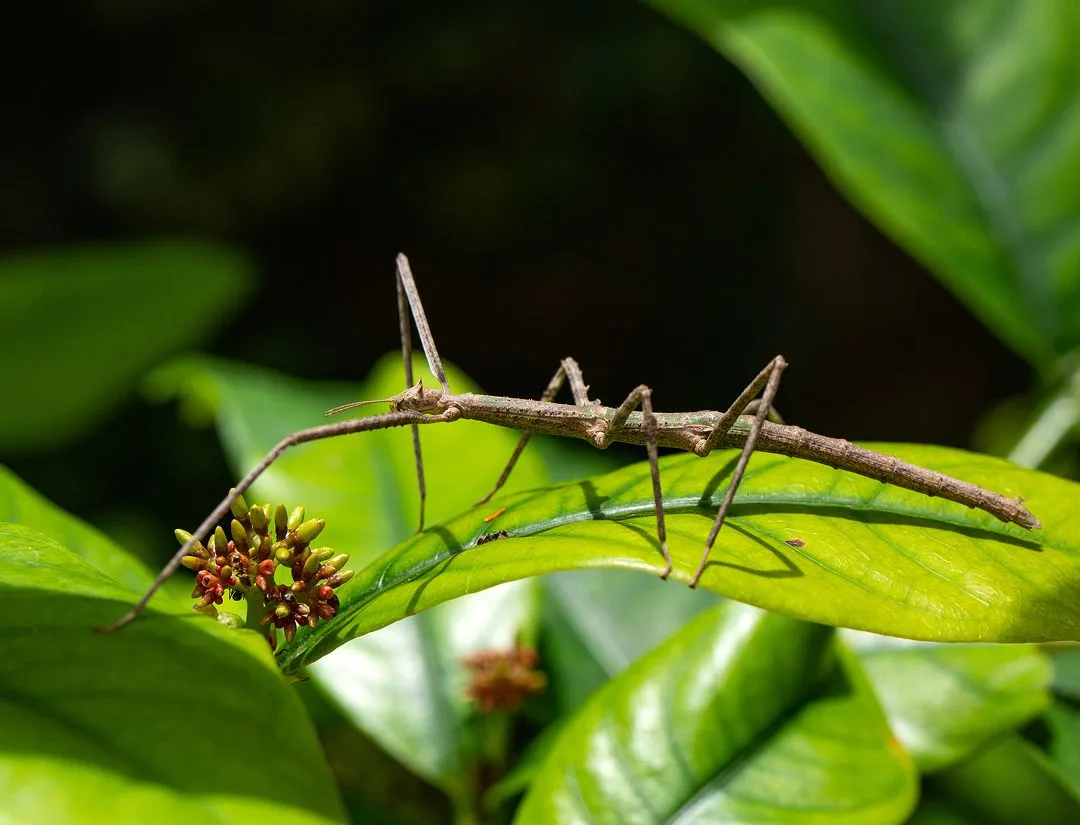
(Medauroidea extradentata)
Vietnamese Walking Stick
Physical Description
Vietnamese Walking Sticks are long, slender insects that typically grow to about 4 to 5 inches in length. They are usually brown or green in color, helping them blend into leaves and branches. They have six thin legs, two small antennae, and elongated heads with chewing mouthparts adapted for eating plant material. Their front legs are often held out in front of the body like feelers, which adds to their stick-like appearance. Small pointed bumps along the thorax also help break up their outline and improve their camouflage. Unlike some other insects, Vietnamese Walking Sticks do not have wings. Specialized structures on their feet allow them to cling to and climb straight up vertical surfaces with ease.
Where They Live
Vietnamese Walking Sticks live in the trees of tropical rainforests, where they spend most of their lives hidden among branches and leaves. As arboreal insects, they rely on trees both for food and for shelter. Their ability to remain nearly invisible helps protect them from predators in the forest canopy.
What They Eat
Vietnamese Walking Sticks are herbivores. They feed on plant material, especially leaves. Their chewing mouthparts are specially adapted for this plant-based diet.
Life & Family
Vietnamese Walking Sticks can reproduce both sexually and asexually, meaning females do not always need a mate to produce offspring. Because of this, males are very rare in the species. Females drop hundreds of eggs onto the forest floor and do not care for them after laying. The eggs usually hatch in about 2 to 6 months. Nymphs look very similar to adults, just smaller, and molt several times as they grow. By about 3 months of age, they reach adult size and are able to reproduce. In the wild, they typically live about 6 months, though they may live up to a year in human care. Young walking sticks can even regenerate damaged or missing legs, though adults cannot.
Masters of Disguise
The Vietnamese Walking Stick’s greatest defense is its camouflage. These insects can remain perfectly still for long periods of time, making them extremely difficult for predators to spot. If threatened, they may stretch their front legs out in front of their bodies and freeze in place, blending in even more closely with the branch they are standing on. Their order name, Phasmatodea, comes from the Latin word phasma, meaning “ghost,” a fitting name for insects that seem to disappear into their surroundings.
Status
Not Listed