(Antigone vipio)
White-Naped Crane
Physical Description
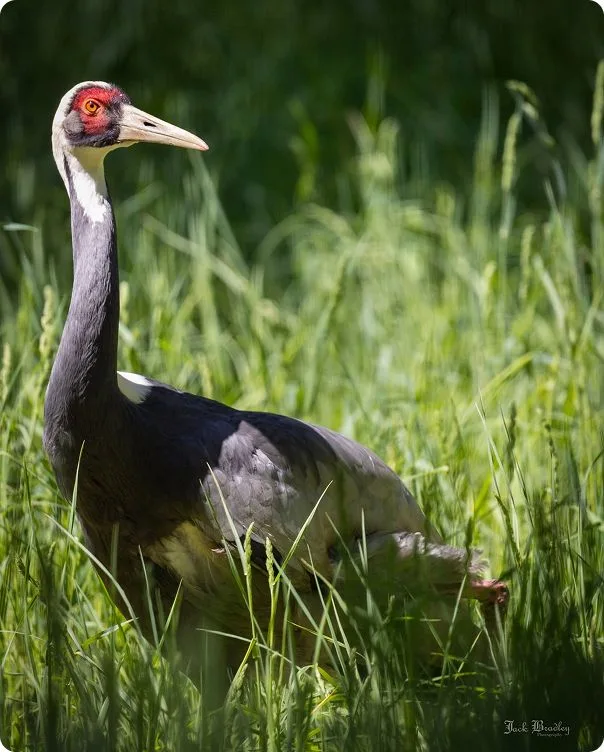
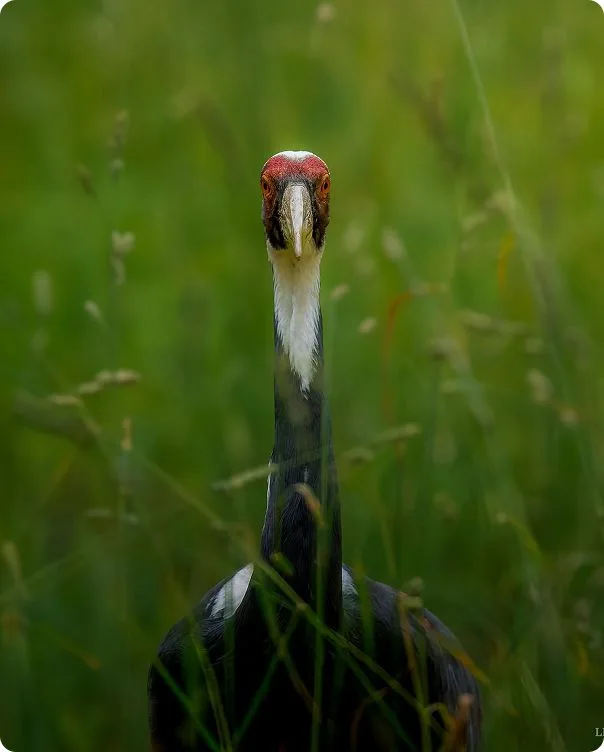
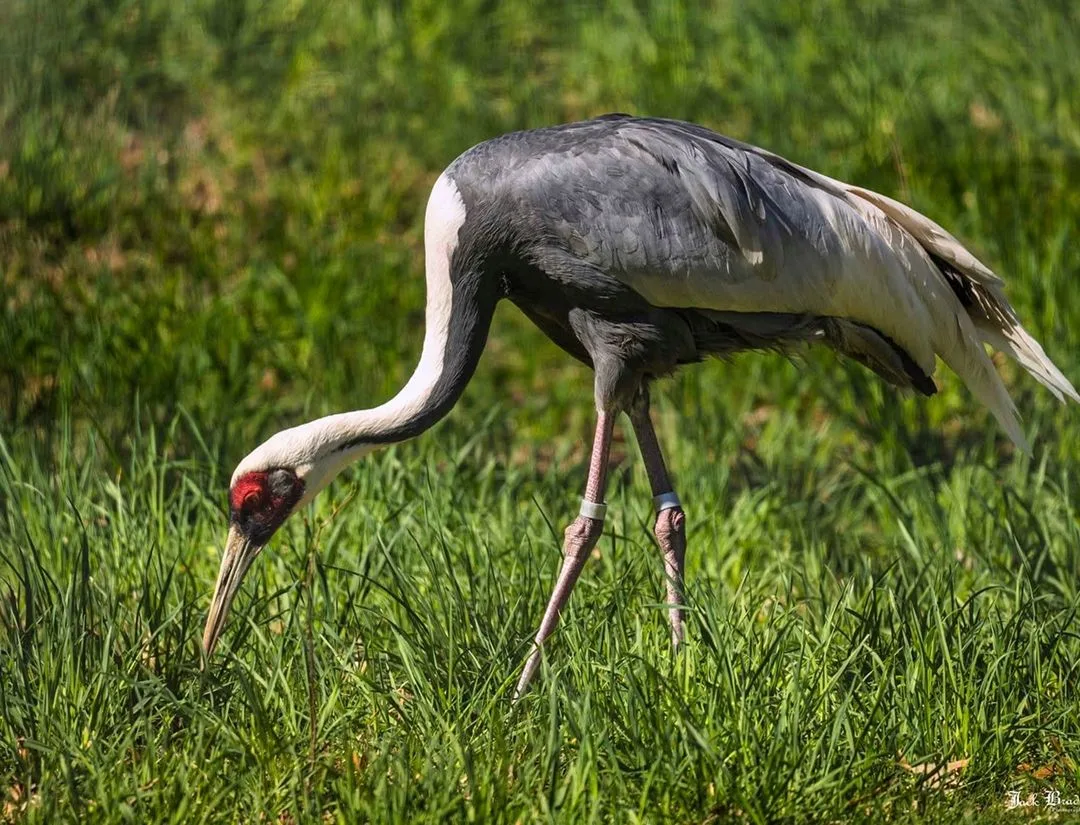
White-Naped Cranes are tall, elegant birds that stand about 4 feet tall and weigh around 12 pounds on average. Their wingspan can exceed 6 feet, making them one of the tallest flying birds in the world. They are named for the white feathers on the back of the neck, called the nape, along with the white coloring on the top of the throat and top of the head. Adults have mostly dark gray plumage, with silver-gray wings and wing coverts, along with a distinct red patch around the eyes that helps identify the species. Juveniles look different from adults, with brown heads and paler throats, while chicks are usually yellow-brown with darker spots.
Where They Live
White-Naped Cranes live in a variety of wetland habitats, including grassy marshes, wet sedge meadows, reed beds, river valleys, boggy uplands, freshwater lakes, and farmland. They may also occasionally be found in coastal flats.
What They Eat
White-Naped Cranes are omnivores and eat both plant and animal matter. They are especially good at digging up seeds, roots, and tubers of aquatic plants, but they also eat insects, small amphibians, and rodents.
Life & Family
White-Naped Cranes typically breed from April to June. They build nests made of dried sedges and grasses in open wetland areas where surrounding vegetation still provides some cover. Females usually lay two eggs, spaced two to three days apart. Both parents help build the nest, incubate the eggs, and raise the chicks, though the male often takes the lead in defending the nest. The eggs incubate for about 28 to 32 days. Chicks can run soon after hatching and usually fledge at around 75 days old. In the wild, White-Naped Cranes can live up to 15 years, and in human care they may live up to 45 years.
Cranes Love to Dance
Like many crane species, White-Naped Cranes are known for their dramatic and expressive dancing behavior. Their dances can include bowing, jumping, running, tossing sticks or grass, and flapping their wings. While dancing is often part of courtship, it can also help cranes relieve tension, reduce aggression, and strengthen pair bonds. White-Naped Cranes are also an important cultural symbol in parts of Asia and are especially associated with Korean New Year celebrations, where they often appear in art and folklore.
Status
Vulnerable