(Odocoileus virginianus)
White-Tailed Deer
Physical Description
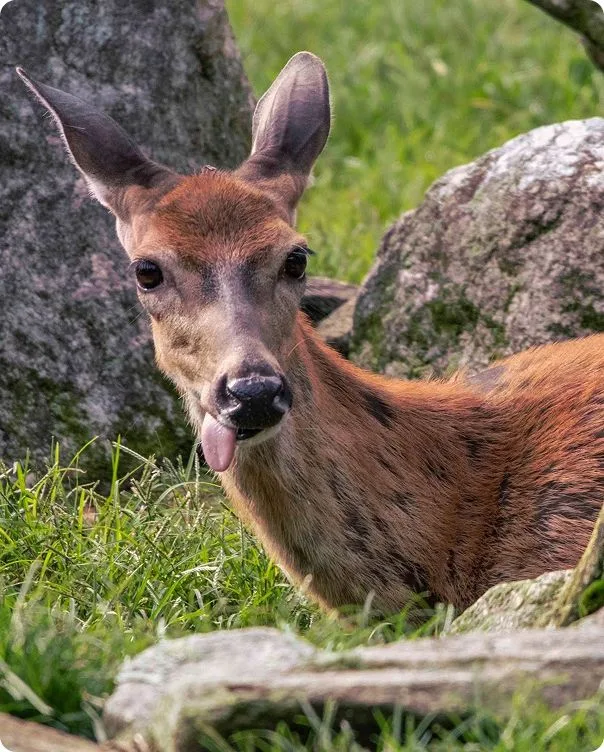
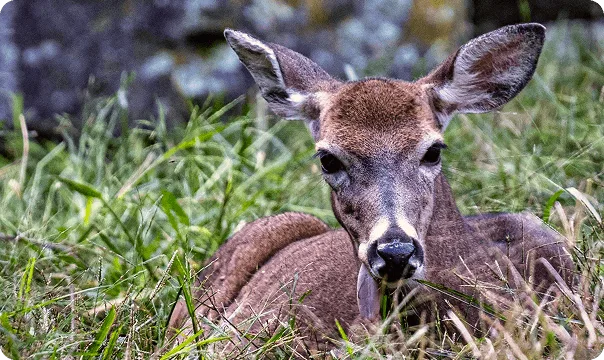
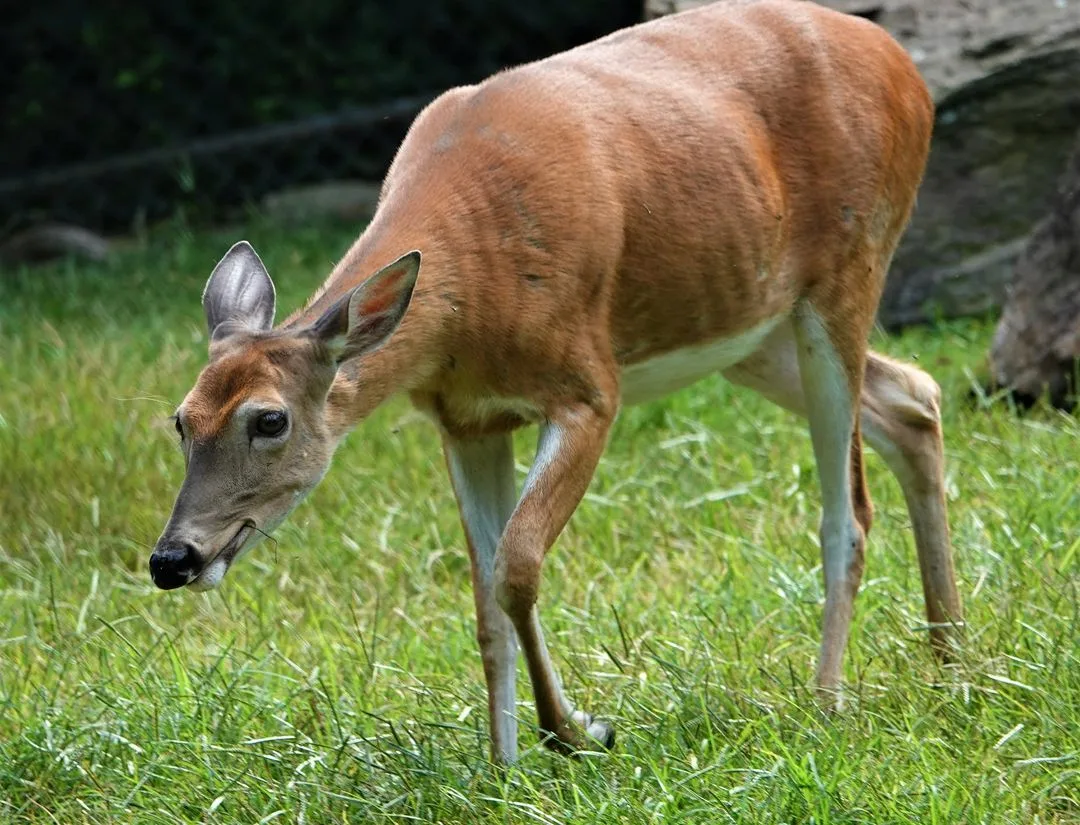
White-Tailed Deer change with the seasons. In winter, their coats are gray, while in warmer months they shift to a reddish-brown, helping them stay camouflaged year-round. Their coloring is darker on the back and lighter underneath, a form of camouflage called countershading. Fawns are born with reddish coats covered in white spots, which help them blend into their surroundings. Adult males, called bucks, grow antlers each year, beginning in spring. These antlers are covered in a soft layer called velvet until late summer, when the velvet sheds and the antlers are used in sparring matches. Antlers fall off in winter and regrow the following year, often becoming larger with age. White-Tailed Deer typically weigh between 125 and 300 pounds, measure 5 to 7 feet long, and stand 2 to 4 feet tall at the shoulder. They have good eyesight and hearing, but their sense of smell is their strongest defense.
Where They Live
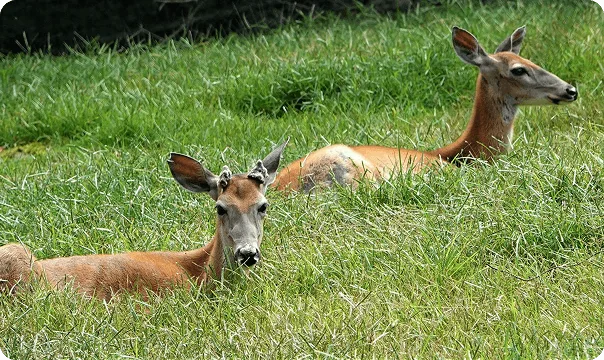
White-Tailed Deer live in a variety of habitats and adjust their behavior with the seasons. In warmer months, they are often found in fields and meadows near forests, where they can feed and then retreat to shaded areas. In colder weather, they move into coniferous forests for protection from harsh conditions.
What They Eat
White-Tailed Deer are herbivores and eat a wide range of plant material. Their diet includes leaves, twigs, grasses, corn, acorns, lichen, and fungi, and it changes depending on what is available throughout the year. Adults typically eat 5 to 7 pounds of food per day.
Life & Family
White-Tailed Deer live in family groups, or herds. Females, called does, usually give birth to one fawn in their first year, and often two or three fawns in later years. Fawns can stand and walk shortly after birth. To keep them safe, mothers will leave their fawns hidden while they forage. Fawns remain still and camouflaged, sometimes lying flat for hours at a time. After about a month, they begin to follow their mothers. Young males typically stay with their mother for about one year, while females may stay for up to two years. In the wild, White-Tailed Deer live an average of 3 years, though some can live up to 10 years. In human care, they may live up to 23 years.
Built for Speed and Survival
White-Tailed Deer rely on speed and agility to escape predators. They can run up to 30 miles per hour, leap as high as 10 feet, and cover distances of up to 30 feet in a single bound. They are also strong swimmers and may use water to escape danger. They are typically most active at dawn and dusk (crepuscular), though they may occasionally be seen during the day. White-Tailed Deer communicate through scent, body language, and vocalizations, including grunts, bleats, and sharp snorts when alarmed.
Status
Least Concern