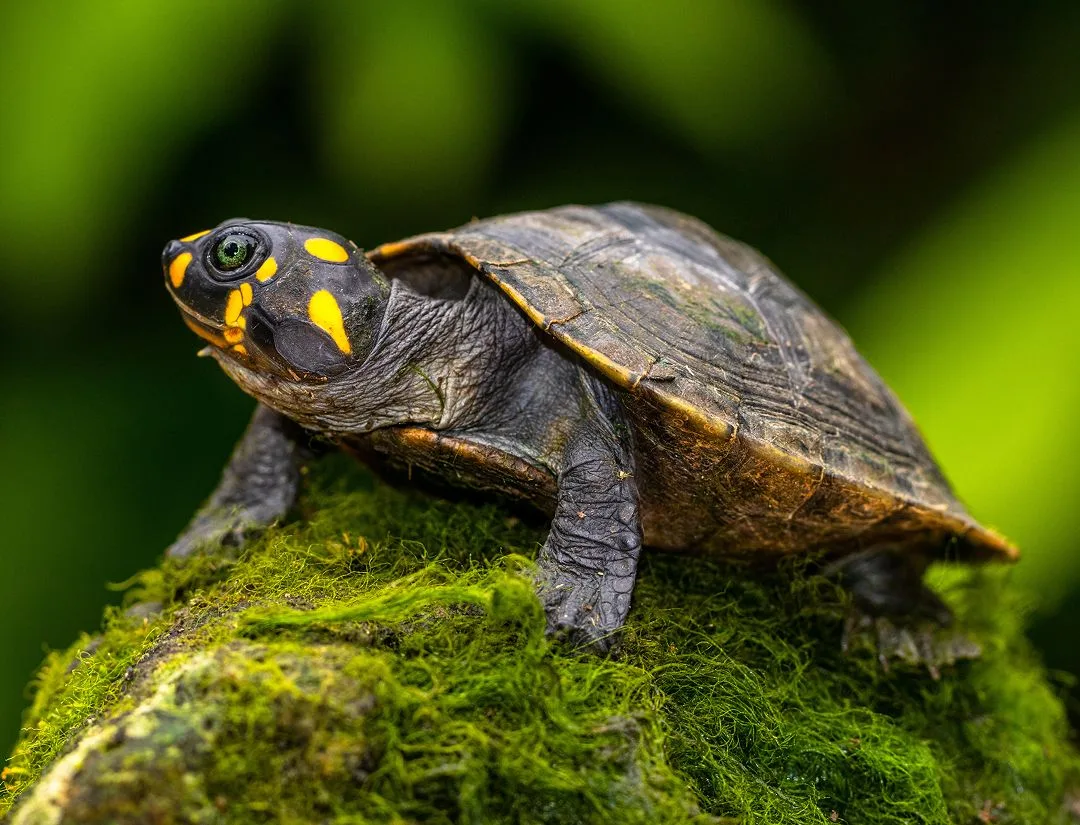
(Podocnemis unifilis)
Yellow-Spotted Amazon River Turtle
Physical Description
Yellow-Spotted Amazon River Turtles are named for the bright yellow spots on their heads, which stand out against an olive green or brown base color. These spots are most noticeable in younger turtles. As females age, the spots tend to fade, while males often retain their brighter markings. Females are larger than males, growing up to 20 inches long and weighing as much as 25 pounds. Males are smaller, reaching up to about 15 inches in length and weighing up to 10 pounds. Their top shell, or carapace, is slightly domed with a raised ridge down the center called a keel. The underside, or plastron, is yellow and may have darker markings. These turtles are also known as side-necked turtles, meaning they tuck their heads to the side rather than pulling them straight back into their shells. Yellow-Spotted Amazon River Turtles are diurnal, meaning they are most active during the day, especially in the mid-morning and afternoon. Unlike turtles in colder climates, they do not need to hibernate.
Where They Live
Yellow-Spotted Amazon River Turtles live in calm freshwater habitats such as large rivers, streams, and flooded forests. They typically stay in slower-moving waters and avoid fast currents. They are found throughout the Amazon and Orinoco River systems in northern South America. During seasonal flooding, they may move into flooded forest habitats as river levels rise.
What They Eat
Yellow-Spotted Amazon River Turtles are omnivores. Their diet includes aquatic vegetation as well as small animals such as fish and mollusks. They also use a specialized feeding method that allows them to extract fine food particles from the water’s surface.
Life & Family
During breeding season, males court females by gently nipping at their feet and tails. Females dig shallow nests and lay between 20 and 30 eggs at a time. The eggs hatch after about two months, and the hatchlings emerge as fully formed miniature turtles, about the size of a quarter. Within just a few days, they begin foraging on their own. Yellow-Spotted Amazon River Turtles can live up to 70 years.
A Turtle That Turns Its Head Sideways
Unlike most turtles, Yellow-Spotted Amazon River Turtles cannot pull their heads straight back into their shells. Instead, they bend their necks sideways to tuck their heads in, which is why they are also known as side-necked turtles. Another unusual trait of this species is temperature-dependent sex determination. The temperature inside the nest helps determine whether hatchlings are male or female. Warmer nests tend to produce females, while cooler nests tend to produce males.
Status
Vulnerable