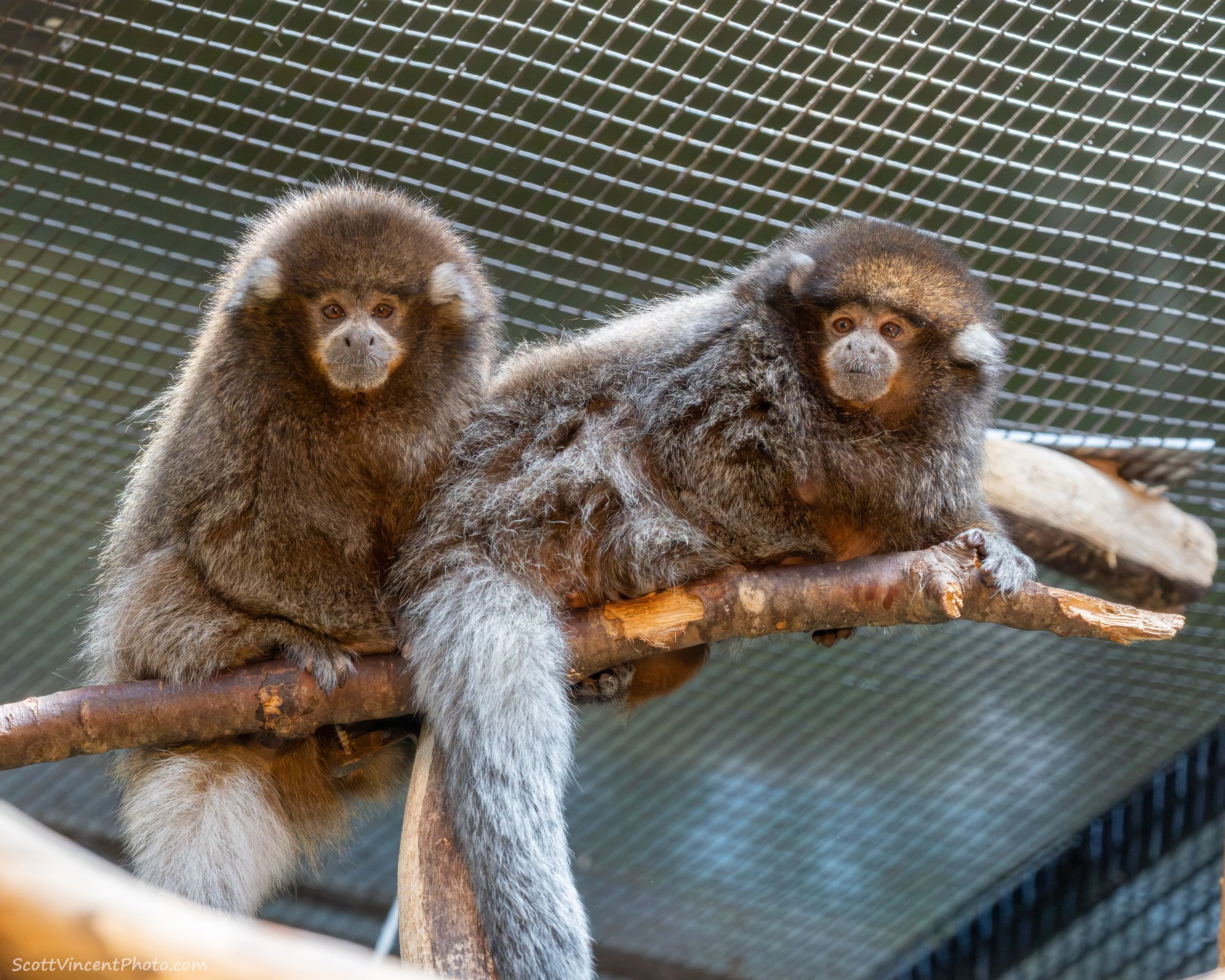
(Plecturocebus donacophilus)
Bolivian Gray Titi Monkey
Physical Description
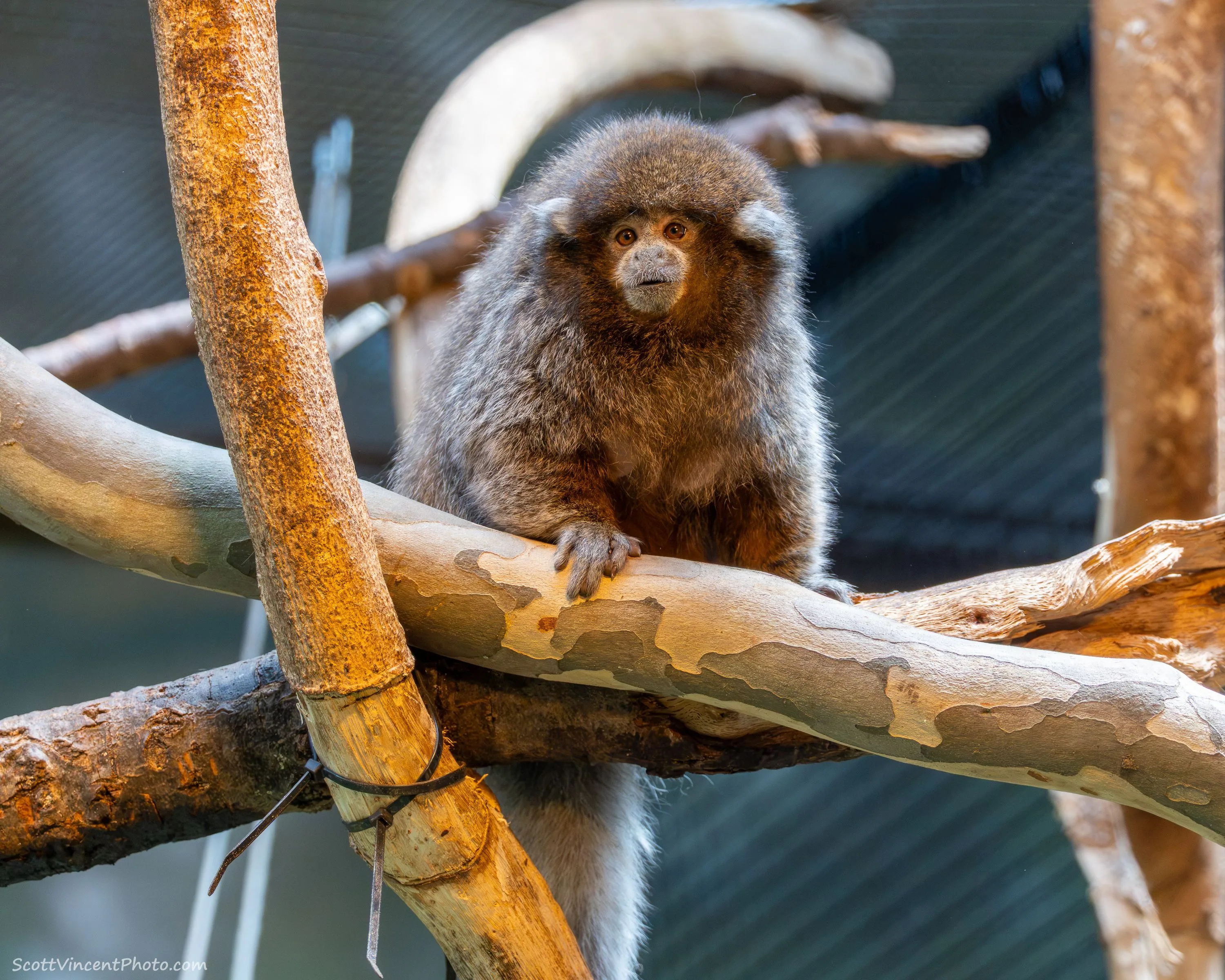
You can identify them by their long tails, white fluffy ear tufts, and thick chestnut-brown fur, which helps them camouflage while leaping between rainforest trees in Brazil and Bolivia. Bolivian gray titi monkeys are known for their vocalizations of various pitches, which they use to communicate within their family groups and to protect themselves against monkeys, such as howler, spider, and saki monkeys, trying to invade their territory. Bolivian gray titi monkeys are important to the environment because they disperse seeds through their fecal matter, supporting forest growth. Interestingly, babies spend most of the time with their fathers, relying on their mothers mainly for nursing.
Where They Live
Bolivian gray titi monkeys inhabit the lower canopy of drier subtropical forests near the grasslands and freshwater systems of western Brazil and northeastern Bolivia.
What They Eat
Bolivian gray titi monkeys are omnivorous, mainly eating fruit, plants, and the occasional insect, especially when nursing. In the daytime, they will search for food in groups, often taking a break in the middle of the day and making chirping noises to communicate with one another.
Life & Family
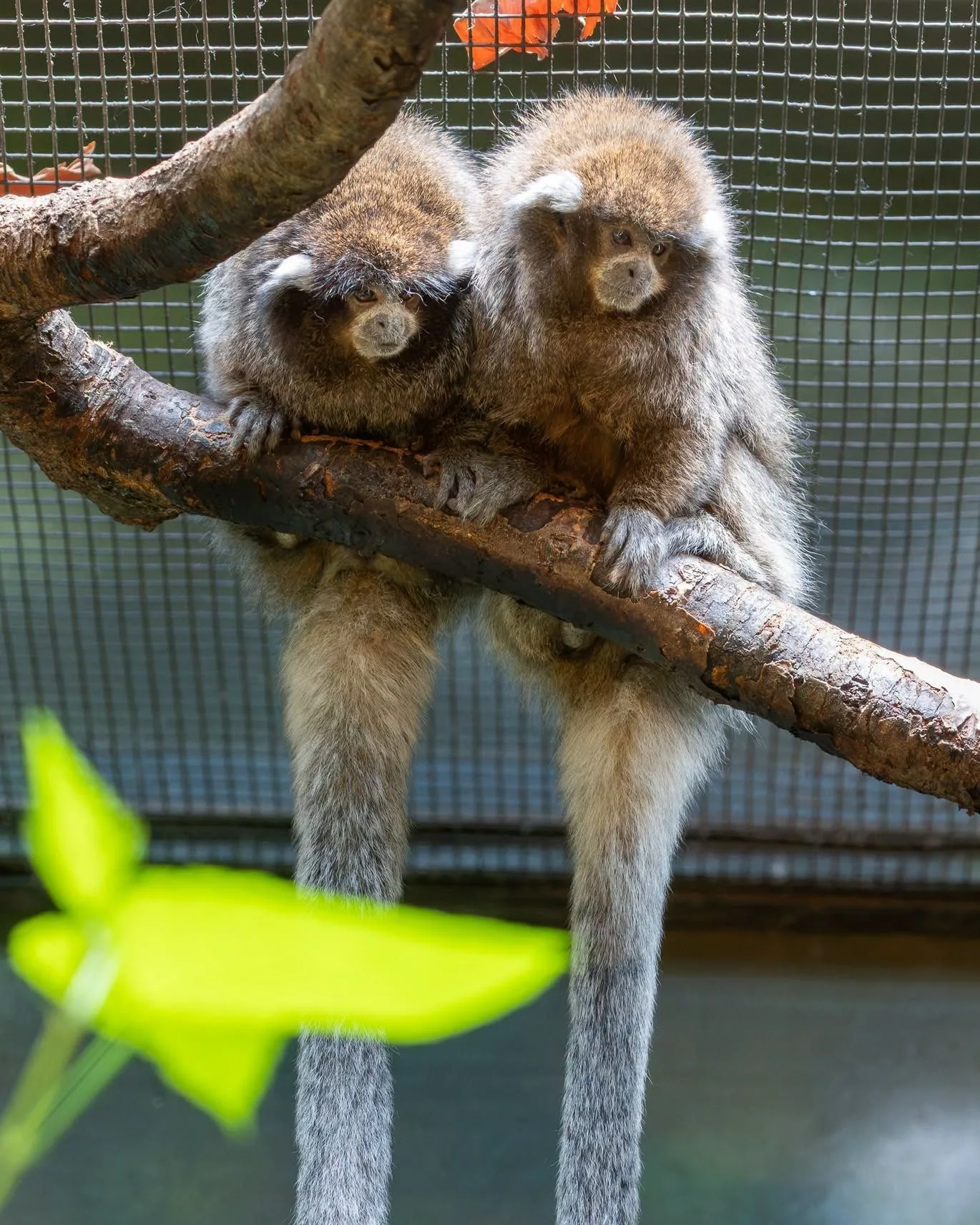
Bolivian gray titi monkeys live in family groups of approximately two to seven individuals, comprising a female, a male, and their young. Individuals in the same group are highly social, often seen sleeping in proximity at nighttime, playing, grooming, nuzzling, and wrapping their tails around one another. Bolivian gray titi monkeys generally have one mate, and mates demonstrate increased stress when they are not together.
Females can have young once they are two years old and are no longer living with their parents and siblings. However, the average age when female Bolivian gray titi monkeys have their first born is 4 years old. After the spring rainy season, Bolivian gray titi monkeys breed, and gestation lasts approximately 160 days. Therefore, females will give birth to one baby between November and March. Although females nurse the young, males provide most of the care. Bolivian gray titi monkeys typically live 20 years in the wild and 25 years under human care.
Individuals of the same group typically communicate through lower-pitched noises, such as moans and bellows. Interestingly, these sounds tend to differ by gender, which helps group members determine which individual is making each call. Additionally, Bolivian gray titi monkeys may grind their teeth together in hostile (ex., competition) and non-hostile (ex., mating) contexts.
Groups of Bolivian gray titi monkeys will protect their homes in the mornings by surrounding the border of their habitat, making complex, high-pitched, and loud vocalizations such as trills and grunts to prevent other groups of monkeys from entering their territory. These monkeys may also be territorial through body language: snarling, whipping their tail, and more. If an unwelcome male enters the same space as a female to mate, a female may make a whistle noise to demonstrate her disinterest.
Threats
Bolivian gray titi monkeys are prey for many animals, including jaguars, arboreal snakes, and ornate hawk eagles. Young are especially susceptible to being eaten by tufted capuchins. The chestnut-brown fur of Bolivian gray titi monkeys allows them to camouflage against the trees of their natural environment, protecting them from being easily seen by predators.
The agricultural industry also threatens Bolivian gray titi monkeys. Unfortunately, areas of Bolivian gray titi monkey habitat have been lost due to agricultural clearing. However, these monkeys are quite adaptable, as they have been found surviving in cities and outside rural neighborhoods.
Status
Least concern
References
https://animaldiversity.org/accounts/Callicebus_donacophilus/
https://nationalzoo.si.edu/animals/titi-monkey
https://resourcelibrary.clevelandmetroparks.com/animals/272
https://neprimateconservancy.org/bolivian-gray-titi/
https://www.iucnredlist.org/species/41548/192451894
https://www.inaturalist.org/taxa/43671-Callicebus-donacophilus
https://www.bpzoo.org/animals/mammals/bolivian-gray-titi-monkey/
https://zoo-guide.com/bolivian-gray-titi-monkey-key-facts-and-insights/